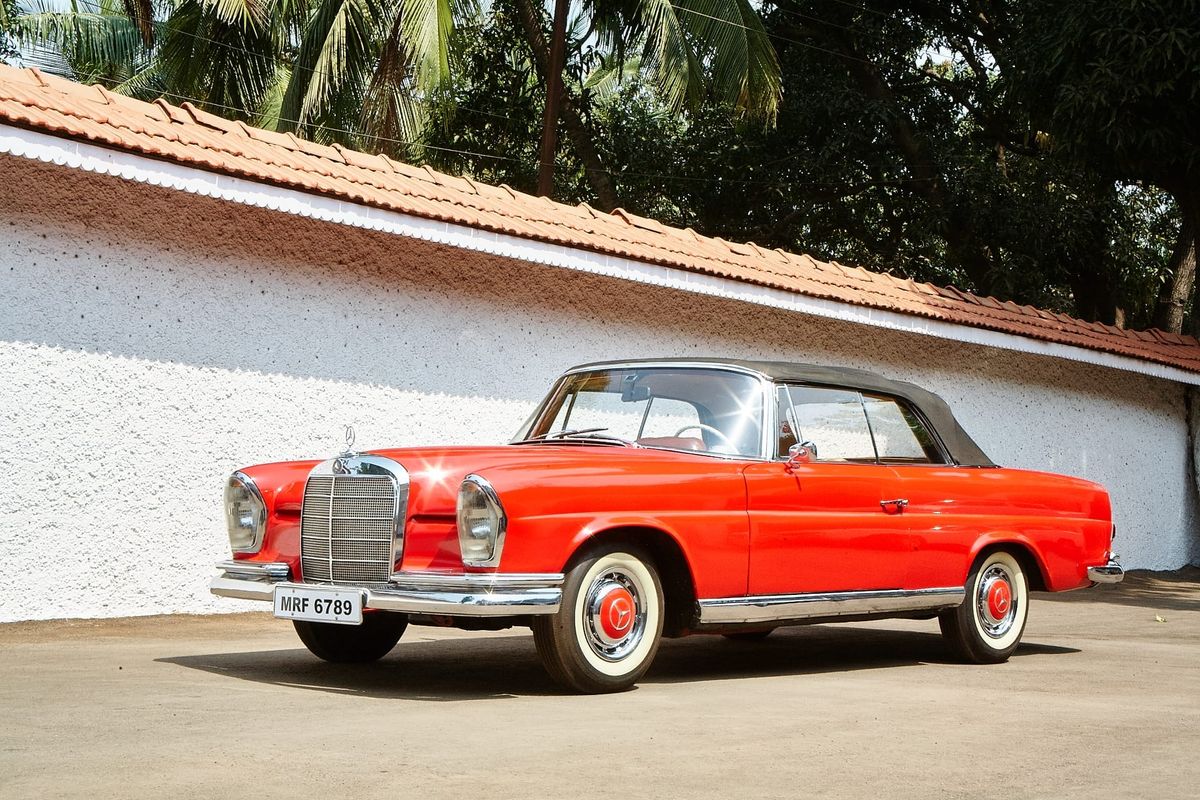
1965 Mercedes-Benz 220SE Cabrio – Class & Dash
Strongly influenced by American styling trends of the era, the Mercedes-Benz W111 quickly became a commercial success, with a number of examples finding their way to markets such as India
Text: Gautam Sen
Images: Makarand Baokar
When Fritz Nallinger, then technical director of Daimler-Benz, presented plans in 1956 for a successor to the Mercedes-Benz W180 Ponton range, he outlined three clear priorities: the new model had to be ready by autumn 1959, it had to offer significantly improved interior space, and, perhaps most importantly, it had to set new standards in safety.
From these objectives emerged one of the most important developments in automotive engineering: the concept of a rigid passenger safety cell combined with front and rear crumple zones. This groundbreaking approach was championed by Béla Barényi, the Austro-Hungarian engineer widely regarded as the father of passive safety. His ideas would go on to influence virtually every modern automobile.
The resulting car, codenamed W111 by Mercedes-Benz, retained much of the mechanical foundation of its predecessor, including elements of the chassis and drivetrain. However, its design and packaging were entirely modern. Strongly influenced by American styling trends of the era, the W111 featured subtle rear tailfins, earning it the nickname “Heckflosse” (German for “fintail”). When it debuted in 1959, the saloon quickly became a commercial success, with a number of examples finding their way to markets such as India.
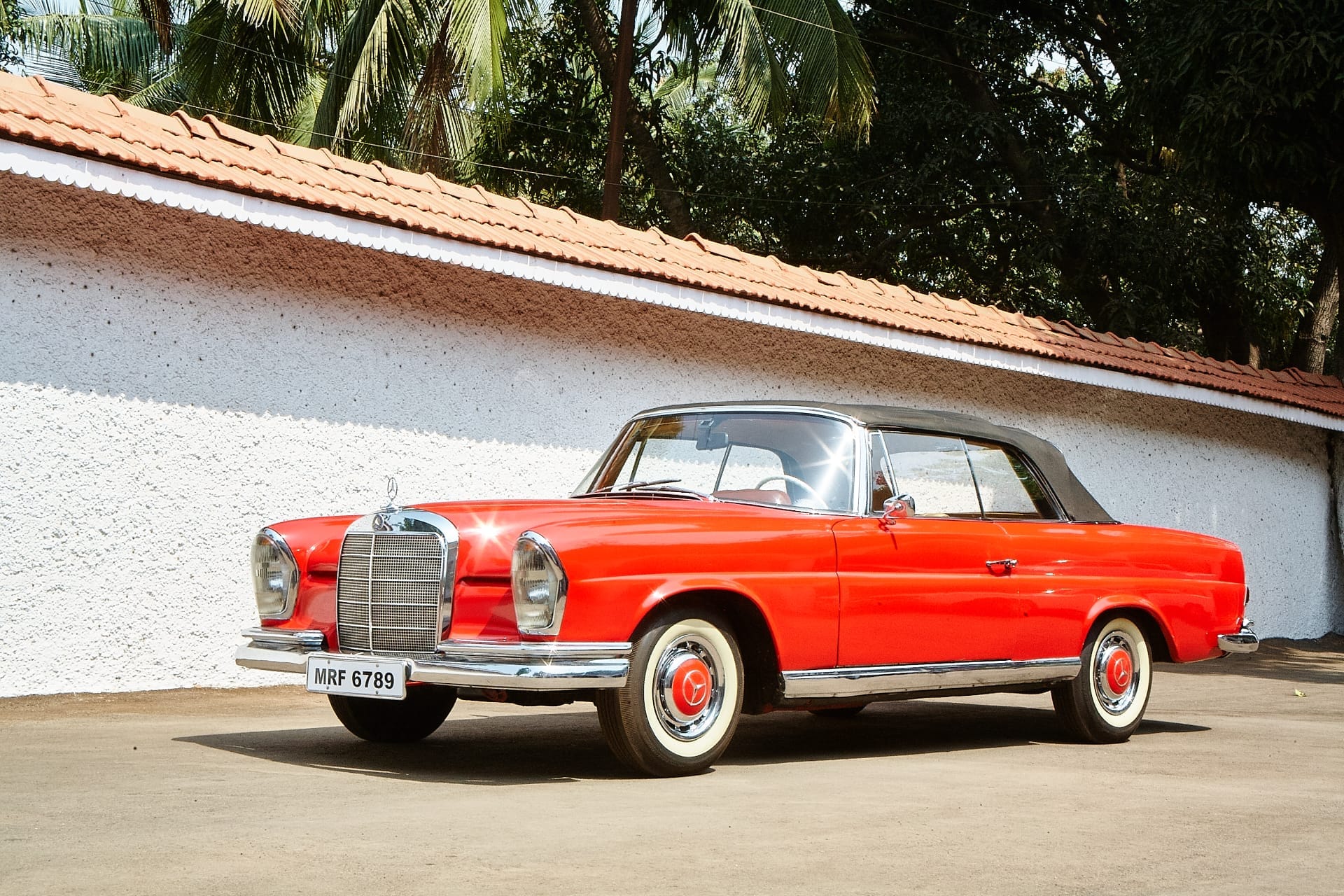
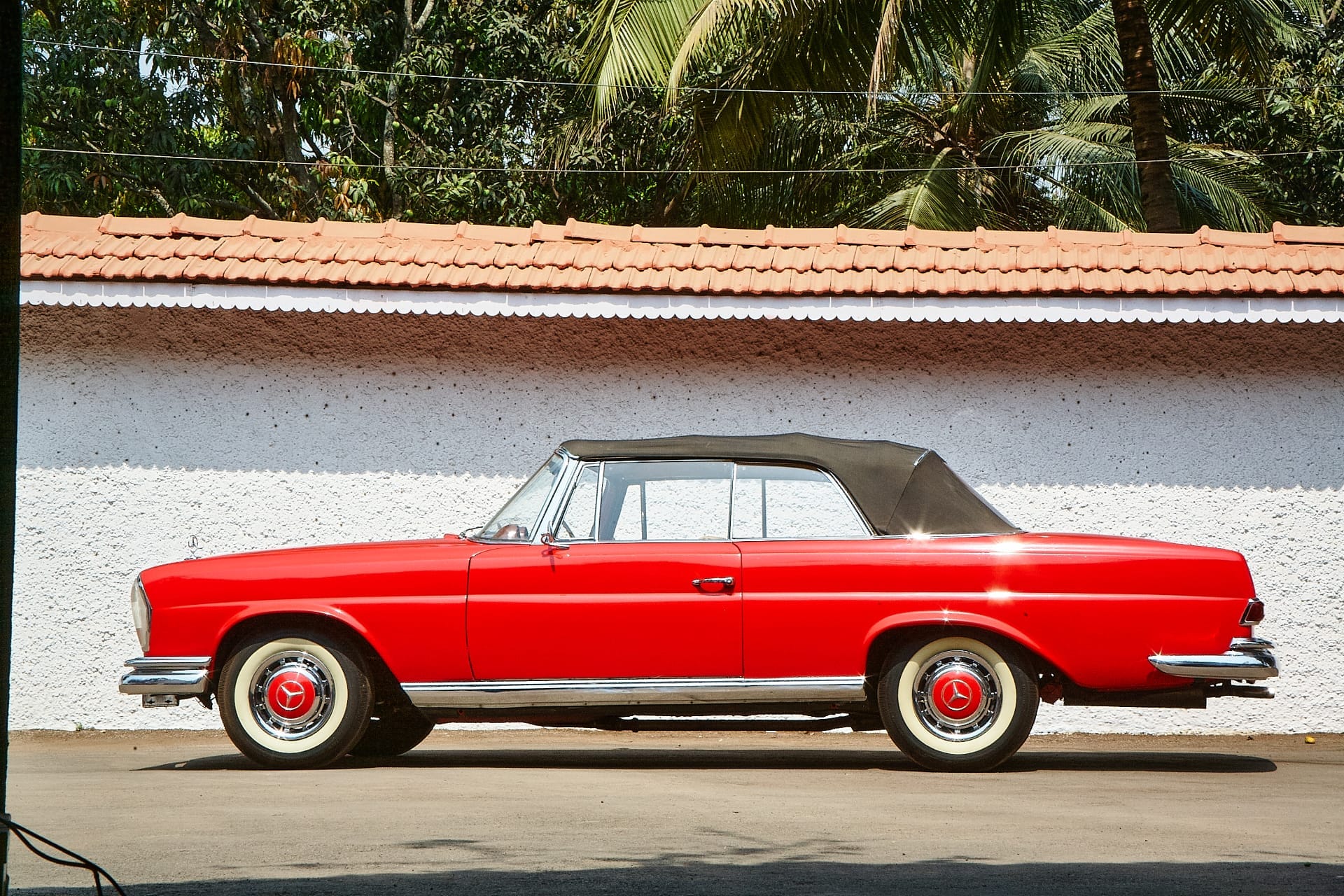
Far more exclusive, however, were the coupé and convertible versions derived from the W111 platform. Introduced in the early 1960s, these models were lower, wider, and considerably more elegant than the saloon, with toned-down fins and entirely new bodywork, designed by French design legend Paul Bracq.
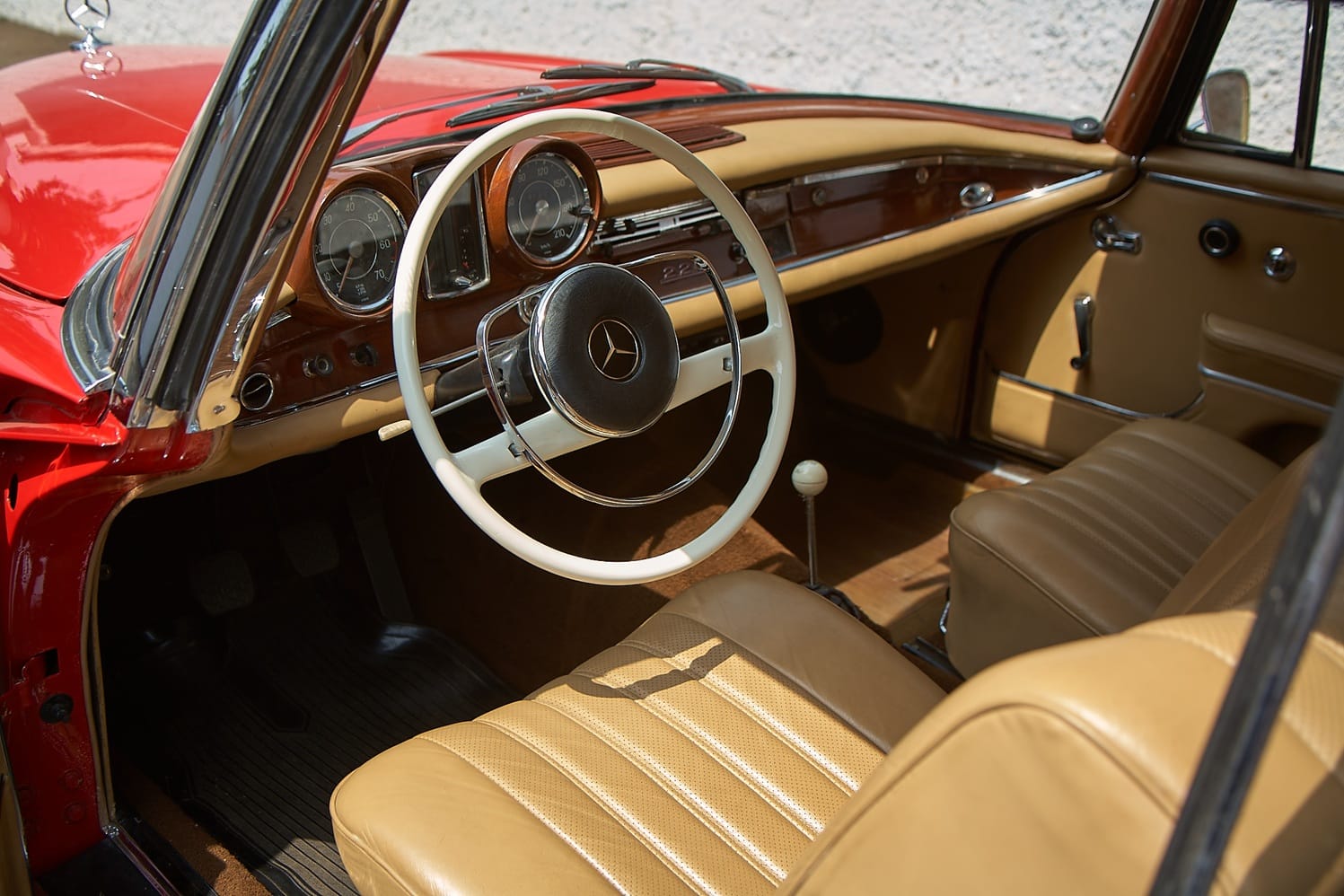
Unlike the mass-produced sedan, these cars were largely hand-built, with a significantly higher proportion of handcrafted components. This level of craftsmanship made them not only more refined but also far more expensive, nearly twice the price of the standard saloon.
As a result, production numbers remained limited. Between 1961 and 1965, just over 14,000 coupés were built, while the convertible was even rarer, with only 2,729 examples produced. Among these few is a particularly fascinating car with an unusual and distinguished history, one that has spent most of its life in India.
This car’s story begins not in India, but in the Himalayan kingdom of Bhutan. It was originally purchased by Jigme Dorji Wangchuck, who reigned from 1952 to 1972 and is often credited with initiating Bhutan’s modernisation. The presence of such a sophisticated European automobile in Bhutan at the time reflects both the King’s progressive outlook and the exclusivity of the model itself.
In January 1970, the car changed hands when it was sold directly to Mumbai-based Parsi businessman Russa Ginwala. Importing a luxury car into India at the time was no simple matter, given strict regulations, but Ginwala managed to bring the car into the country with special government permission, bypassing the usual State Trading Corporation procedures.
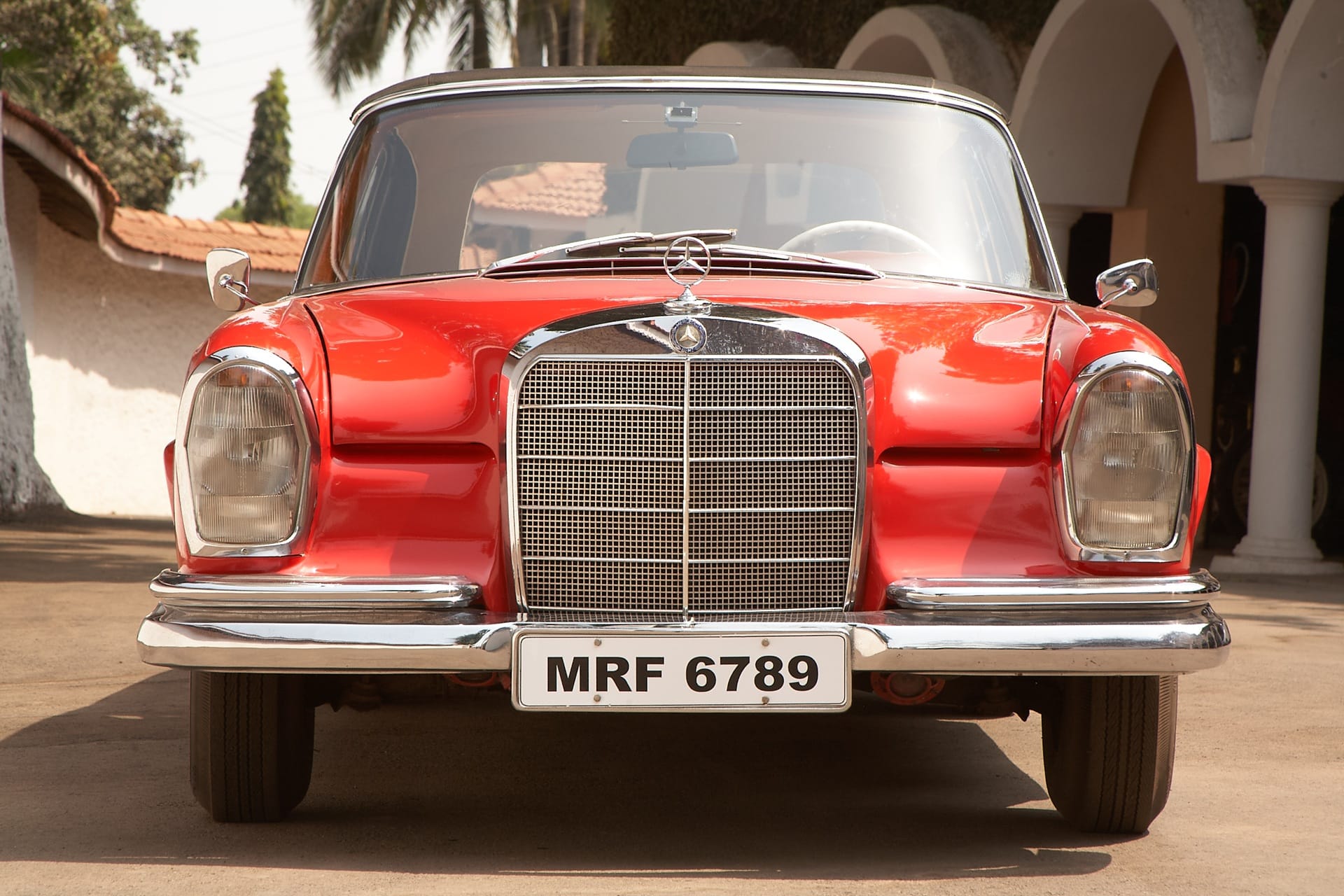
When the car arrived in Bombay, it still bore its original Bhutanese registration BHUTAN 11, along with the national flag mounted on its fenders. For a brief period, Ginwala drove the car in this unique configuration, reportedly enjoying an unusual degree of deference on the road before authorities intervened. The car was subsequently re-registered as MRF 6789, a number it retains to this day.
In late 1972, Ginwala parted with the Mercedes in order to acquire a Lancia Flaminia convertible. The W111 was sold to his nephew, Byram Jeejeebhoy, and soon thereafter passed into the hands of a prominent collector, where it has remained ever since as part of a distinguished collection.
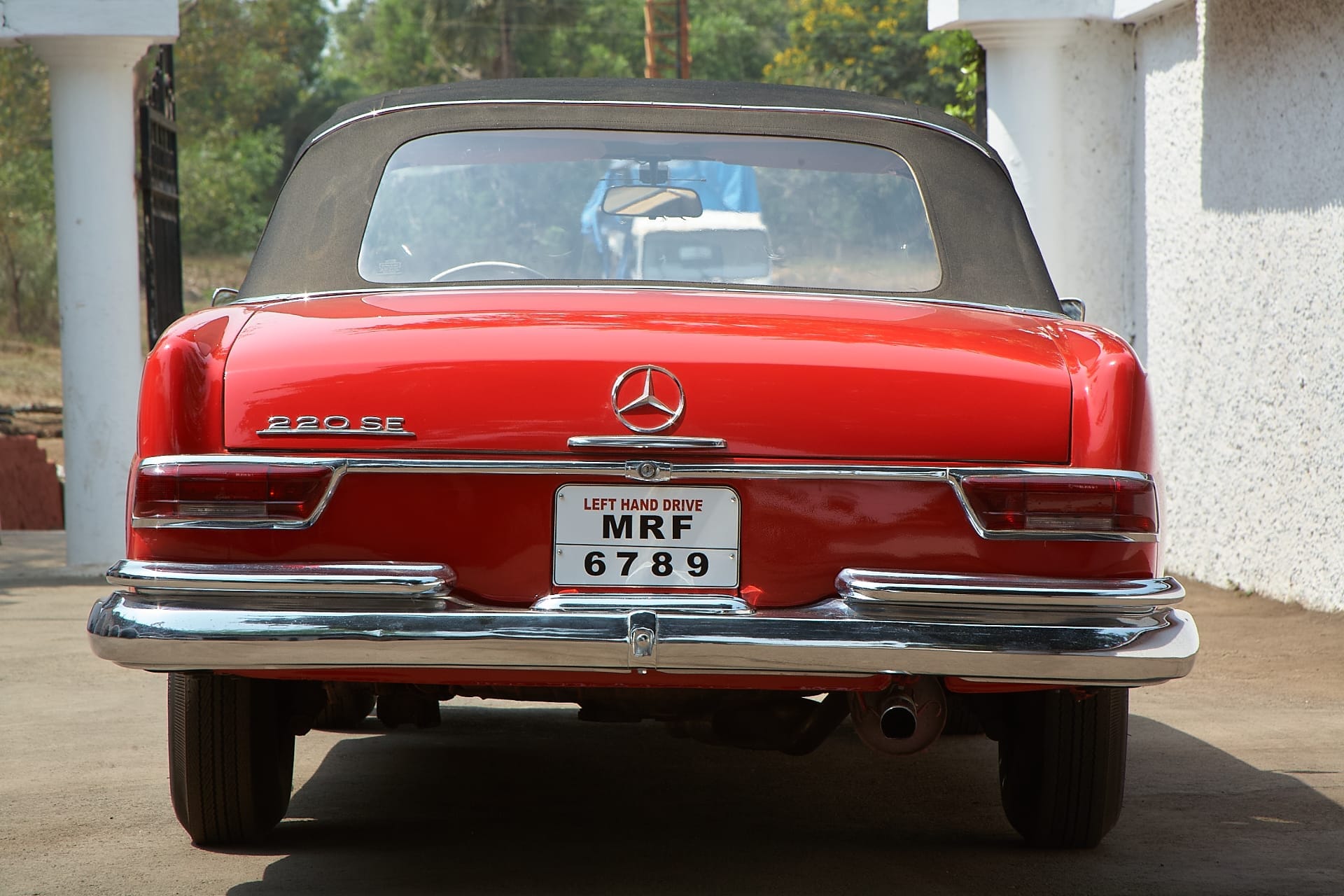
For much of its life, the car was finished in an elegant ivory shade that perfectly complemented the refined lines penned by Paul Bracq. In more recent years, it has been repainted in red, giving it a more dramatic visual presence while still preserving its timeless character.
Today, this rare Mercedes-Benz W111 Cabriolet stands as far more than a beautifully crafted automobile. It represents a pivotal moment in automotive history, when safety engineering took a decisive leap forward, while also carrying a unique cross-cultural story that spans Europe, the Himalayas, and India.
Comments ()