1967 Pontiac Firebird 326 HO – An American in India
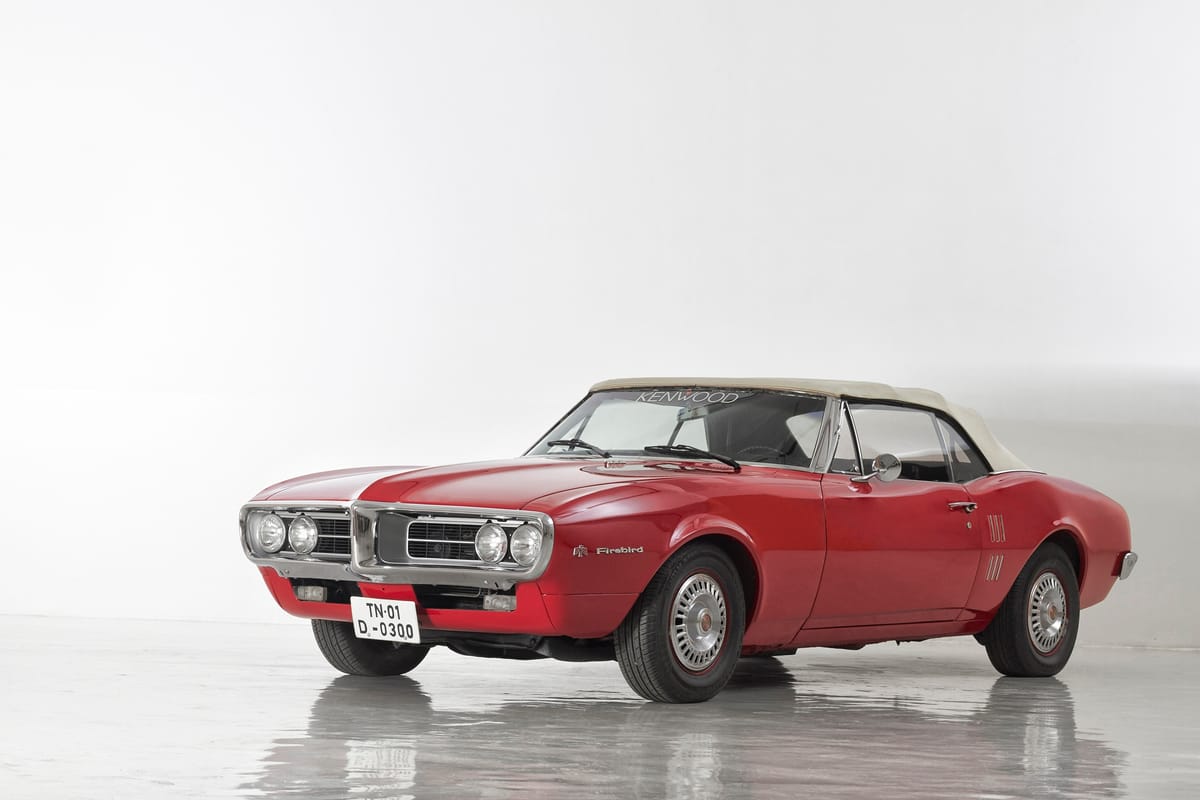
Sharing the Camaro’s F-body platform, the Firebird featured similar “coke-bottle” styling and shared significant body panels, including identical doors and front fenders
Text: Gautam Sen Images: Makarand Baokar
Founded by General Motors in 1926 as a companion brand to Oakland, Pontiac took its name from the city of Pontiac, Michigan, which itself honoured the renowned Ottawa Native American chief. The marque achieved instant success: in its inaugural year, sales surpassed 75,000 units, rapidly outpacing Oakland, which was discontinued entirely by 1933. Pontiac subsequently carved out a distinct position within GM’s line-up as a sportier, slightly more upscale alternative to Chevrolet, blending improved performance and styling with broad mass-market appeal.
When Ford’s Mustang transformed the American automotive landscape in 1964, GM answered with the Chevrolet Camaro. Pontiac, however, pursued a more ambitious vision, unveiling the radical two-seat Banshee concept in the same year. Although corporate strategy ultimately shelved the Banshee project, Pontiac was compensated with its own interpretation of the Camaro platform.
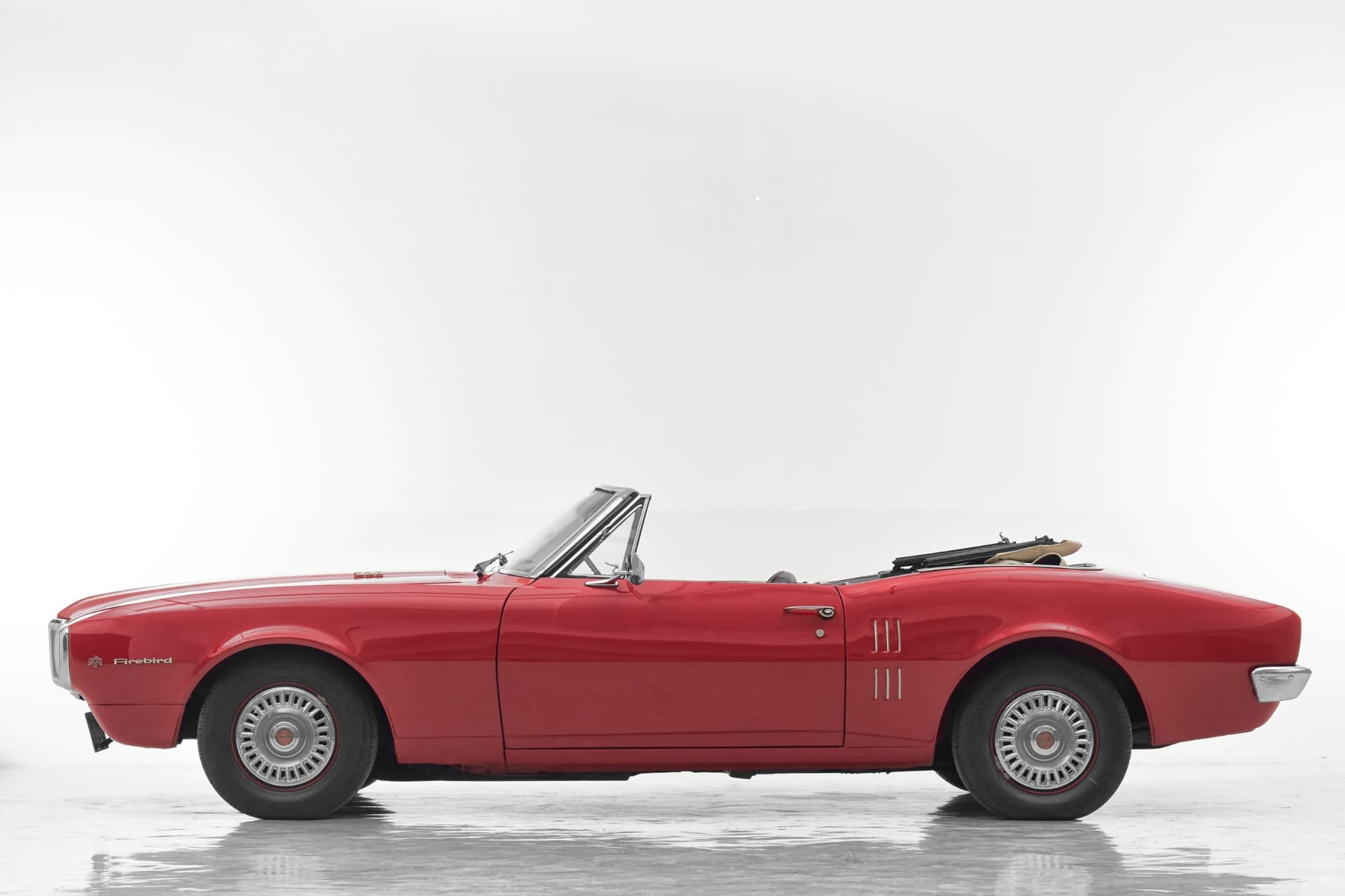
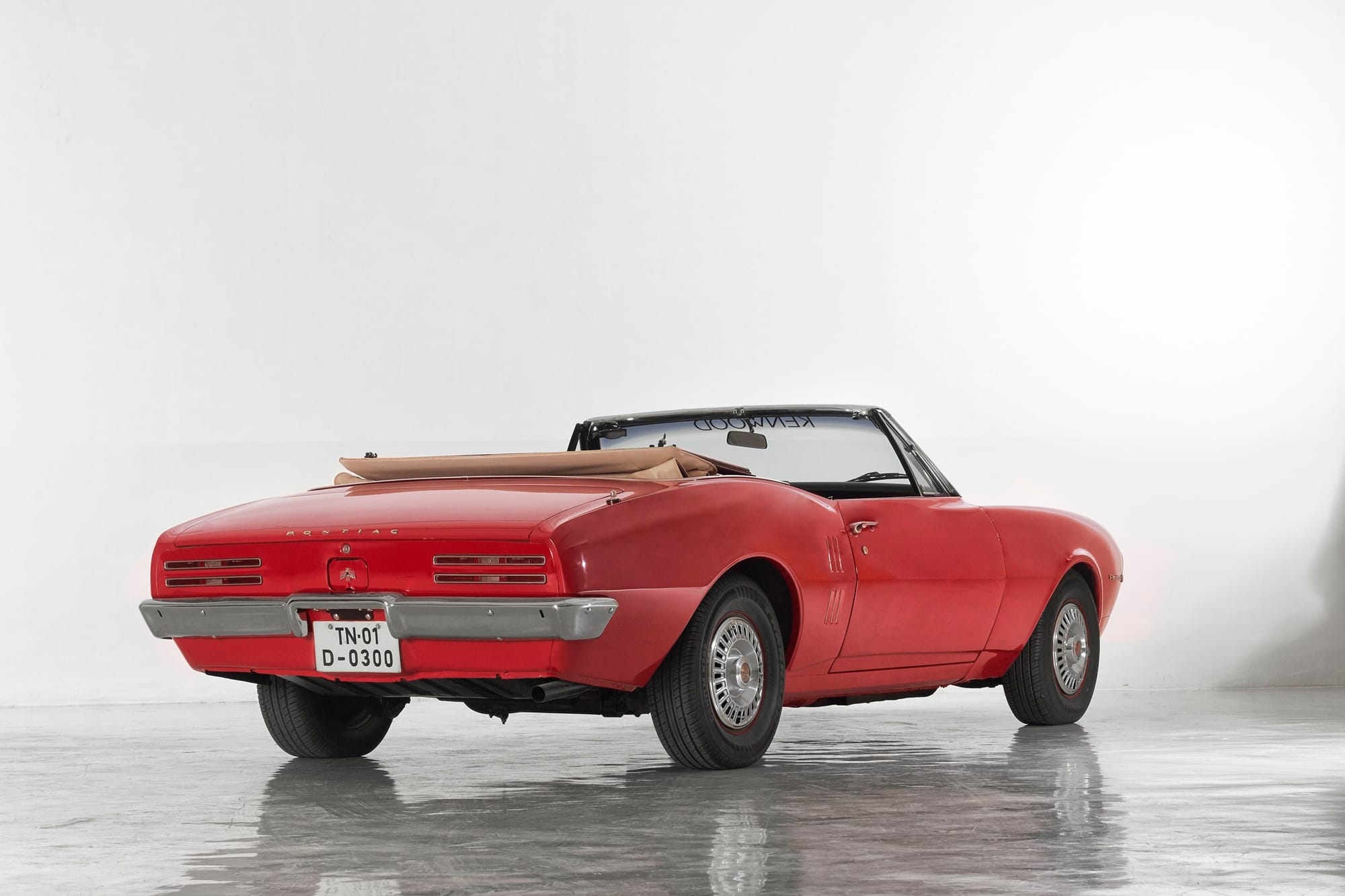
The resulting Pontiac Firebird debuted on 23 February 1967 in Lordstown, Ohio, just six months after the Camaro and nearly three years after the Mustang. Despite its later arrival, the Firebird quickly earned a reputation as one of the most visually striking pony cars of its time, embodying the late-1960s ethos of power, drama, and American self-confidence. Built on GM’s shared F-body platform, it adopted the Camaro’s distinctive “coke-bottle” proportions and shared major body components, including the doors and front fenders. Crucially, Pontiac preserved the Firebird’s distinct identity by equipping it exclusively with Pontiac-designed engines.
For 1967, the Firebird was offered with five engines. The standard unit was a 230 cubic inch (3.8-litre) single overhead cam inline-six producing 165bhp, while the Sprint version, with higher compression and a four-barrel carburettor, delivered 215bhp. Buyers could choose three- or four-speed manual transmissions or the two-speed Powerglide automatic.
Most customers, however, opted for V8 power. The entry-level 326 cubic inch (5.3-litre) V8 produced 250bhp with a two-barrel carburettor, rising to 285bhp in 326 HO form. At the top of the range sat the 400 cubic inch (6.6-litre) V8, rated at 325bhp.
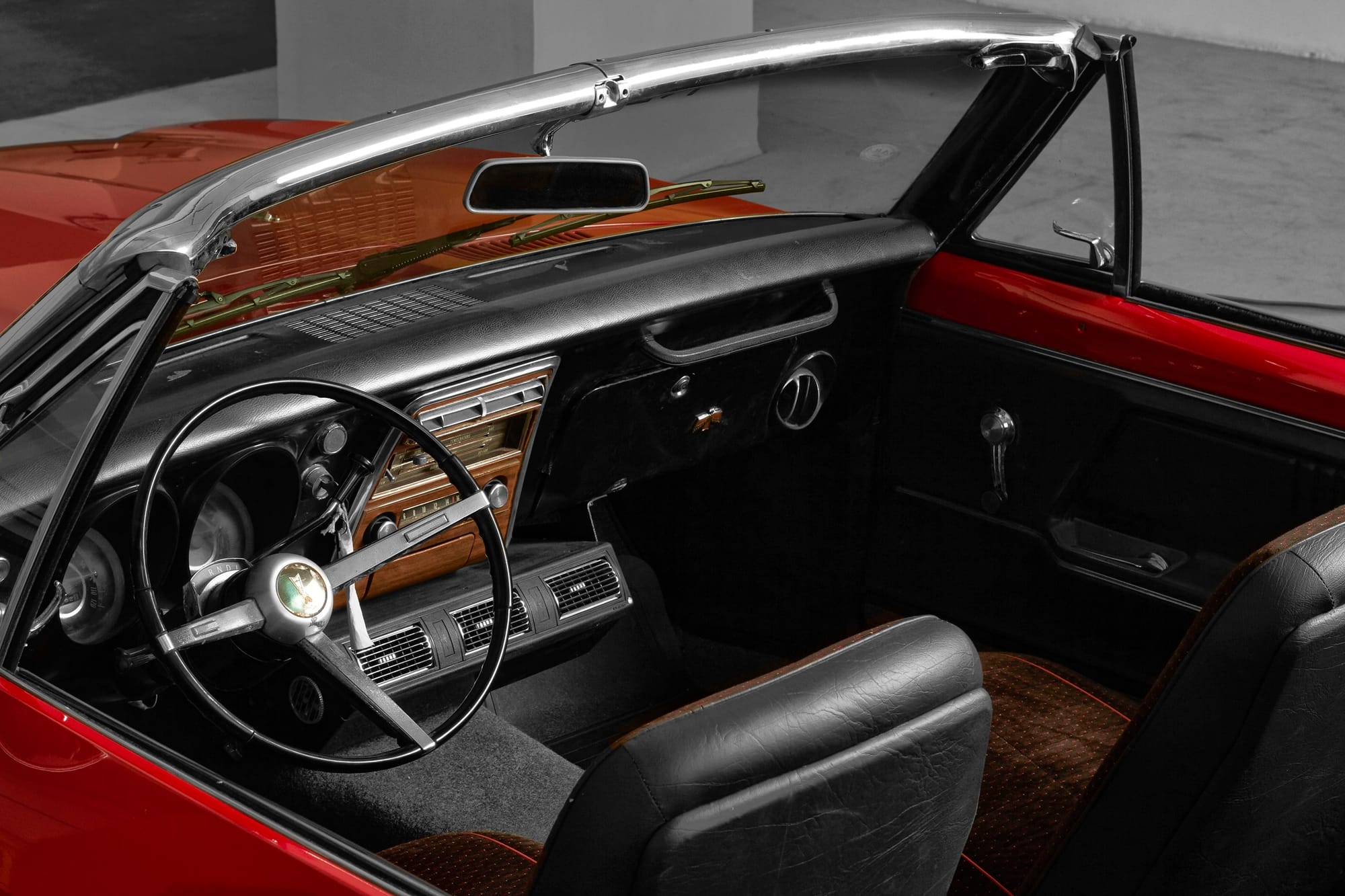
An optional Ram Air package boosted performance by channeling cooler air through functional bonnet scoops, allowing higher revs and increased output. V8 models offered the same transmissions as six-cylinder cars, with the addition of a three-speed Turbo-Hydramatic automatic. Performance was notable for the era: a Firebird 400 with the Sprint package could accelerate from 0 to 100 km/h in 6.5 seconds and cover the standing quarter-mile in 14.3 seconds.
Despite its later arrival and slightly higher price, the Firebird was a commercial success. In its first ten months of 1967, Pontiac sold 67,032 hardtop coupés and 15,528 convertibles. The example featured here is believed to be the only surviving Firebird convertible in India, making it particularly significant as one of the earliest Firebirds produced.
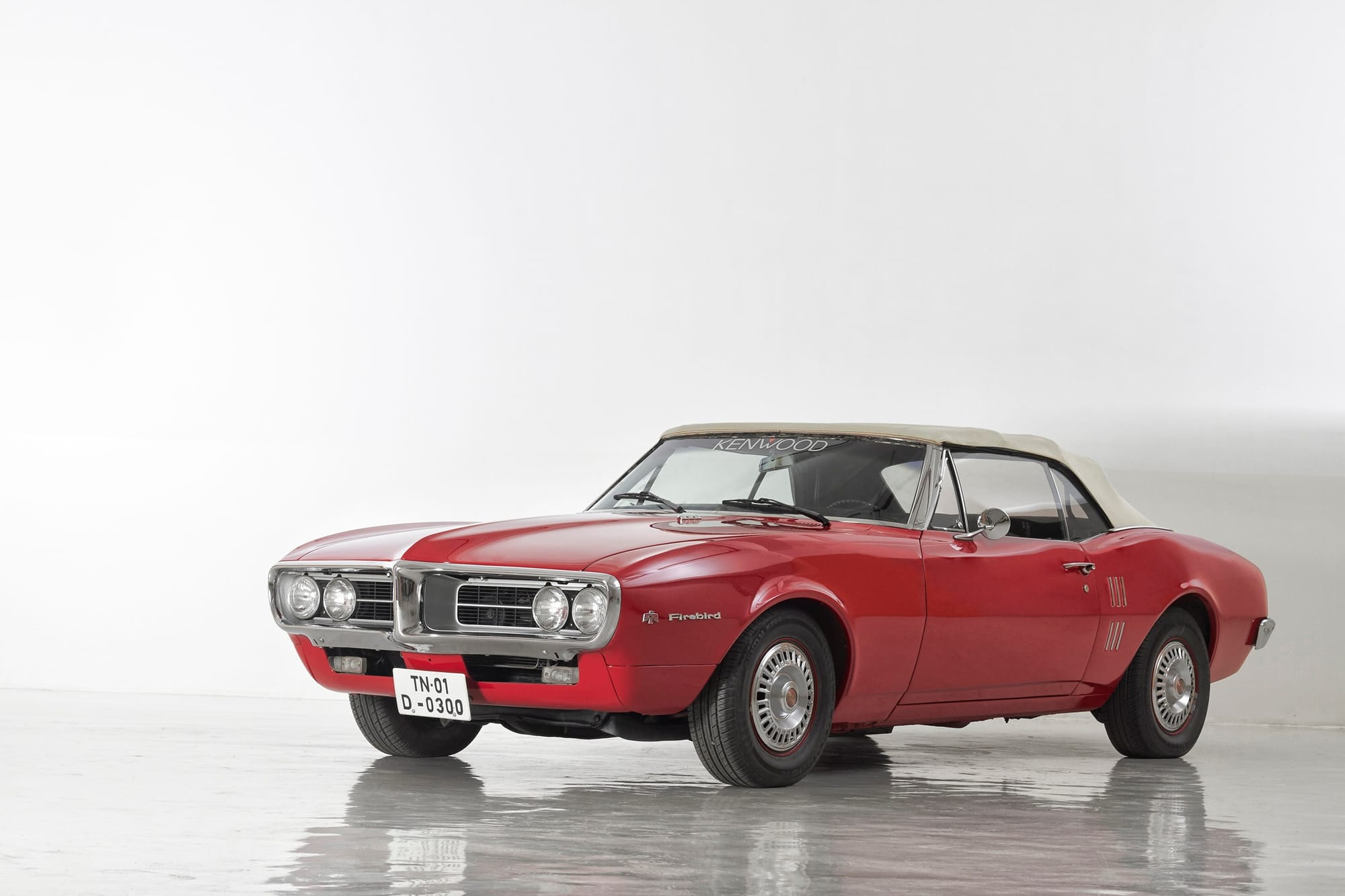
This car is part of Viveck Goenka’s collection and has been in his care since the early 1980s. It was among the first historic vehicles he acquired, purchased as one of seven cars from a Chennai collector. Of the four convertibles from that group that Goenka retained, the Pontiac Firebird 326 HO stands out. “It is arguably the most beautiful,” he admits, a fitting tribute to one of the most iconic American performance cars of its era.
Comments ()