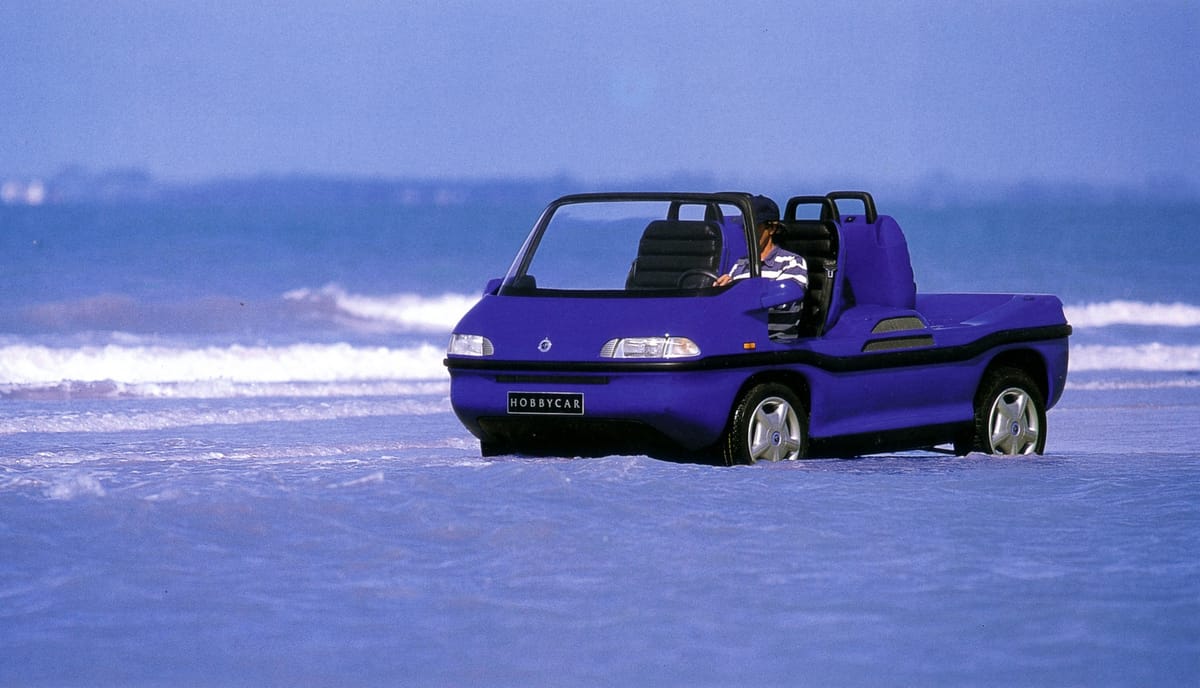
1995 Hobbycar B-612 – A Shooting Star
Few attempts at amphibious vehicles were as technically ambitious as the French Hobbycar. Conceived by former Formula One engineer François Wardavoir, the Hobbycar featured a genuine mid-engine layout, with a transversely mounted Peugeot diesel engine positioned between the axles
Text: Gautam Sen
Images: Makarand Baokar & Hobbycar
The concept of a car that can travel on both land and water is far from new. As early as 1935, German industrial designer Hans Trippel developed the Trippel SG6 after abandoning a brief career in motor racing. Although the German military showed some interest, only about 800 units were acquired by the Wehrmacht.
By contrast, the amphibious Volkswagen Schwimmwagen, derived from the Volkswagen Kübelwagen and developed under Ferdinand Porsche, proved far more successful, with around 15,000 built during the war.
The demands of World War II encouraged several experiments with amphibious vehicles, including troop carriers built by companies such as Studebaker. After the war, however, most manufacturers returned to producing conventional automobiles.
Trippel remained committed to the amphibious concept and, in 1961, introduced the Amphicar, a personal amphibious car based on the mechanical components of the Triumph (Standard) Herald. Over the next seven years, roughly 3,800 Amphicars were produced.
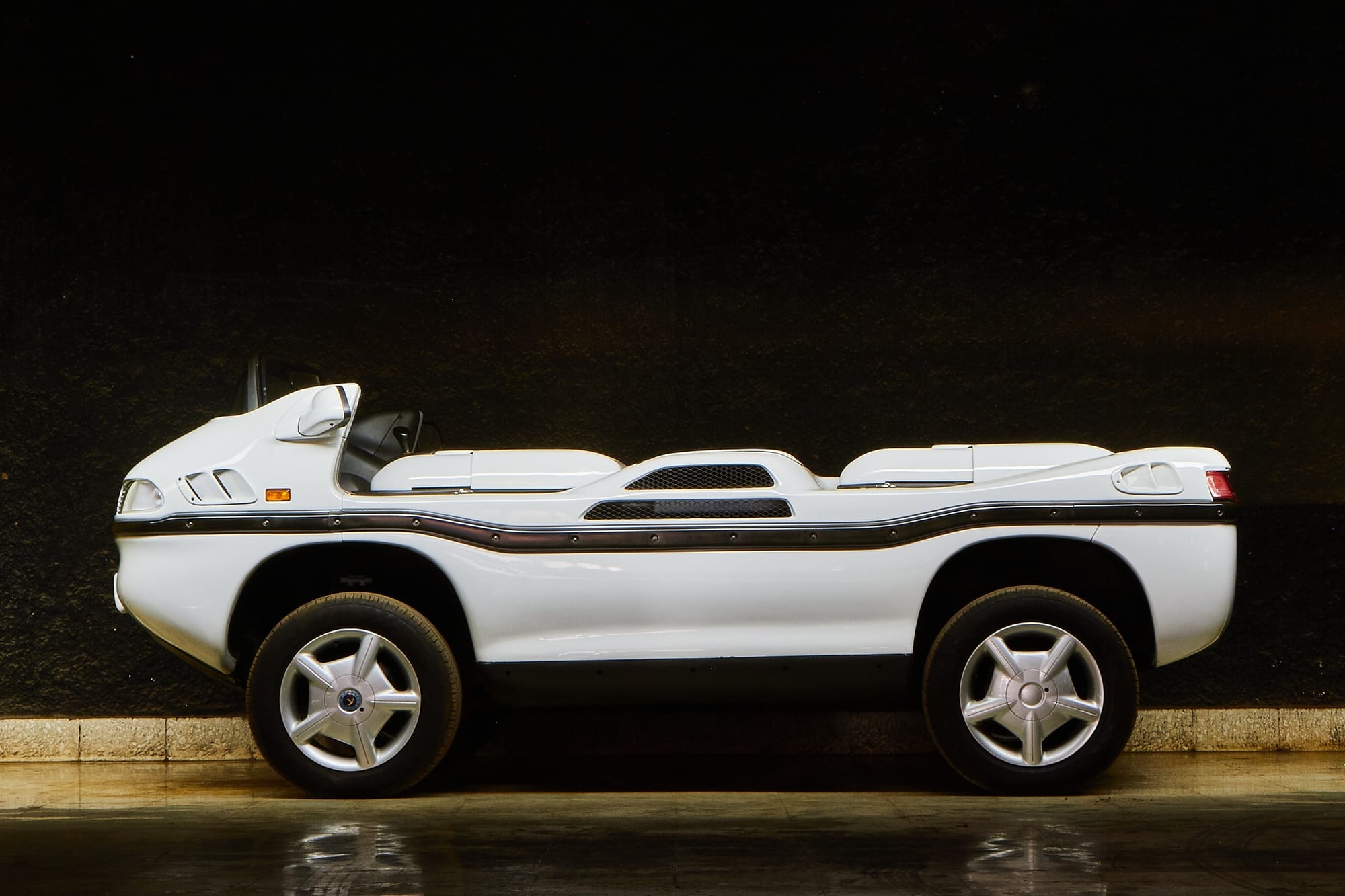
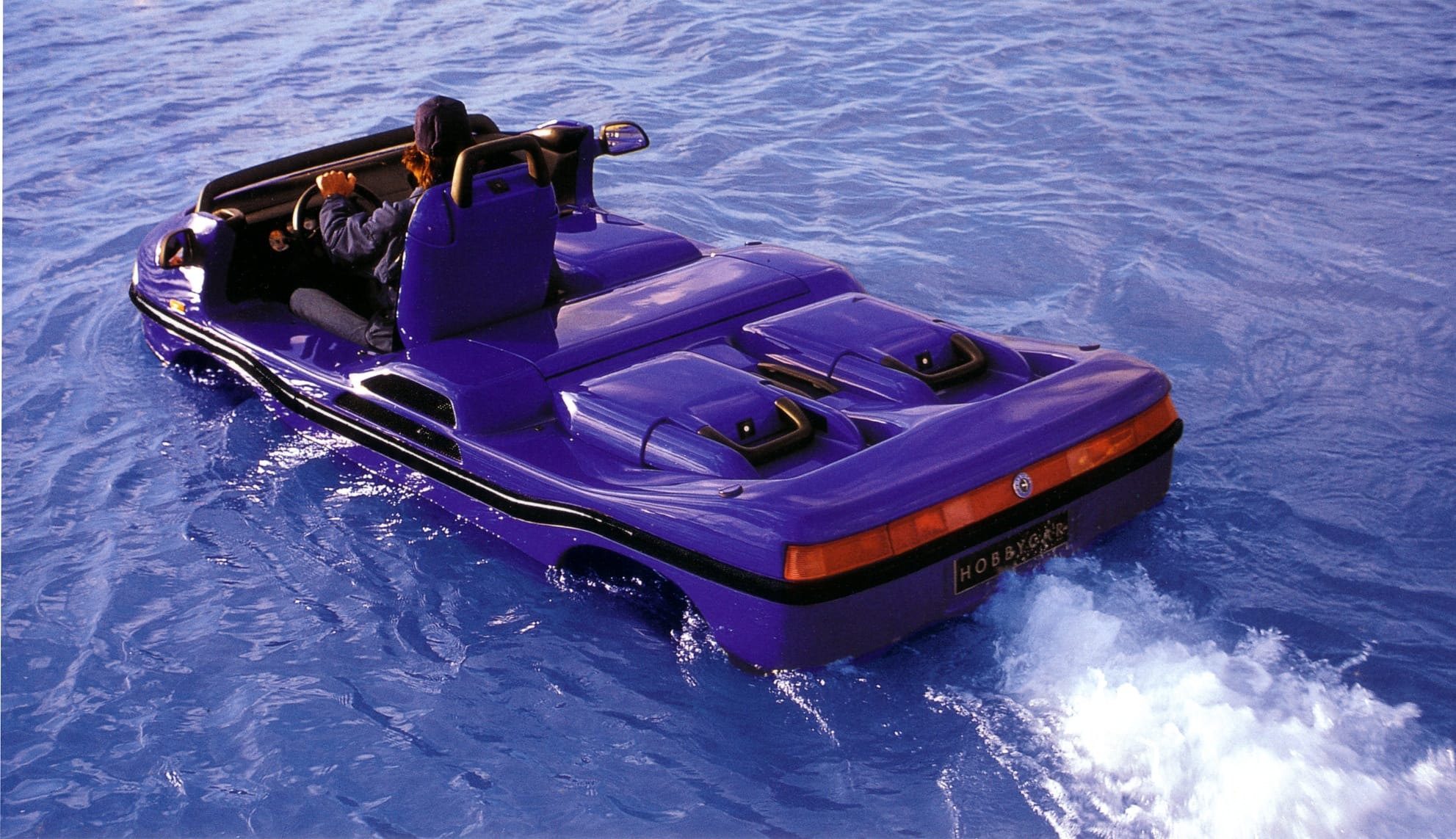
Many attempts at amphibious vehicles followed, but few were as technically ambitious as the French Hobbycar. Conceived by former Formula One engineer François Wardavoir, the Hobbycar featured a genuine mid-engine layout, with a transversely mounted Peugeot diesel engine positioned between the axles.
This configuration ensured optimal weight balance, an essential quality for stable operation on water, avoiding the need for ballast often required in conventional amphibious vehicles.
To realise the project, Wardavoir recruited two leading French specialists: Philippe Belou, a Le Mans-winning engineer, and renowned designer Gérard Godfroy. Both had previously worked on the mid-engined Venturi sports car, often described as France’s answer to Porsche. A few years later, the same duo would also collaborate on the San Storm, India’s first convertible two-seater.
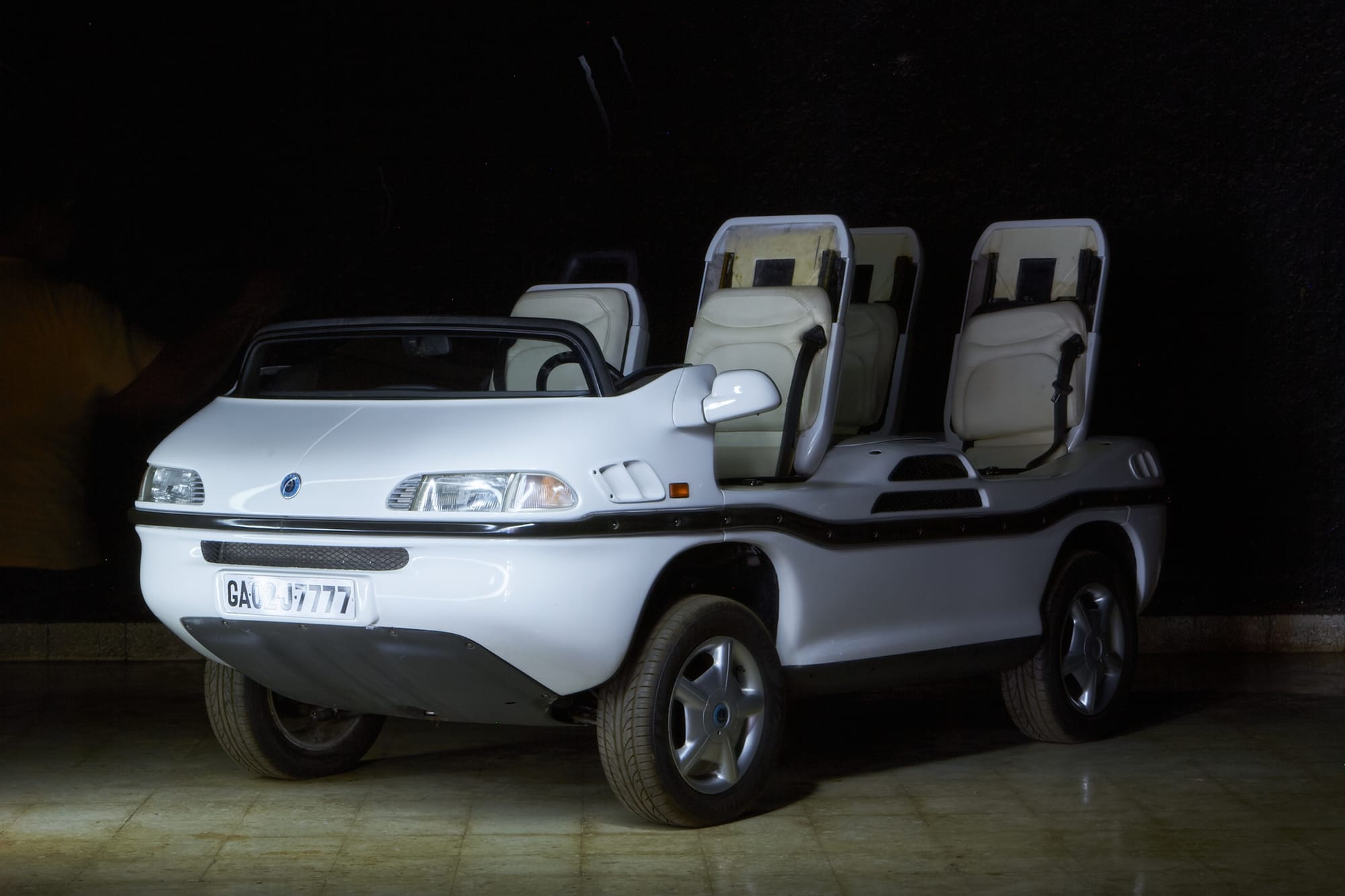
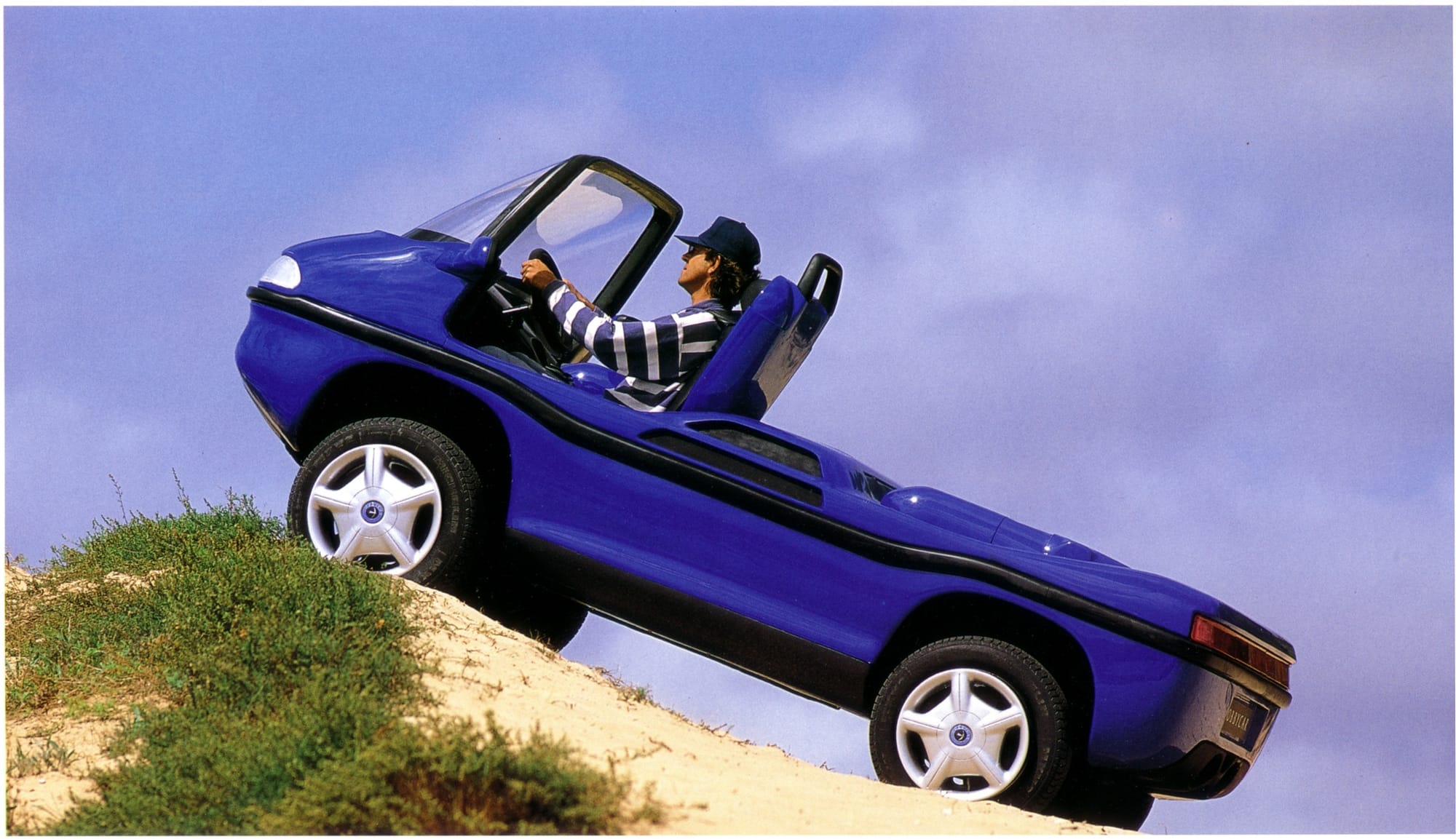
Power came from a 92bhp 1.9-litre Peugeot diesel engine driving all four wheels through a five-speed gearbox, giving the Hobbycar a top speed of around 140 km/h on land. The suspension employed Citroën hydropneumatic suspension, allowing the ride height to be raised or lowered, particularly useful when leaving the water or climbing slippery banks.
In water, twin hydrojets producing a combined thrust of about 300kg propelled the 1.2-tonne vehicle at speeds of up to six knots.
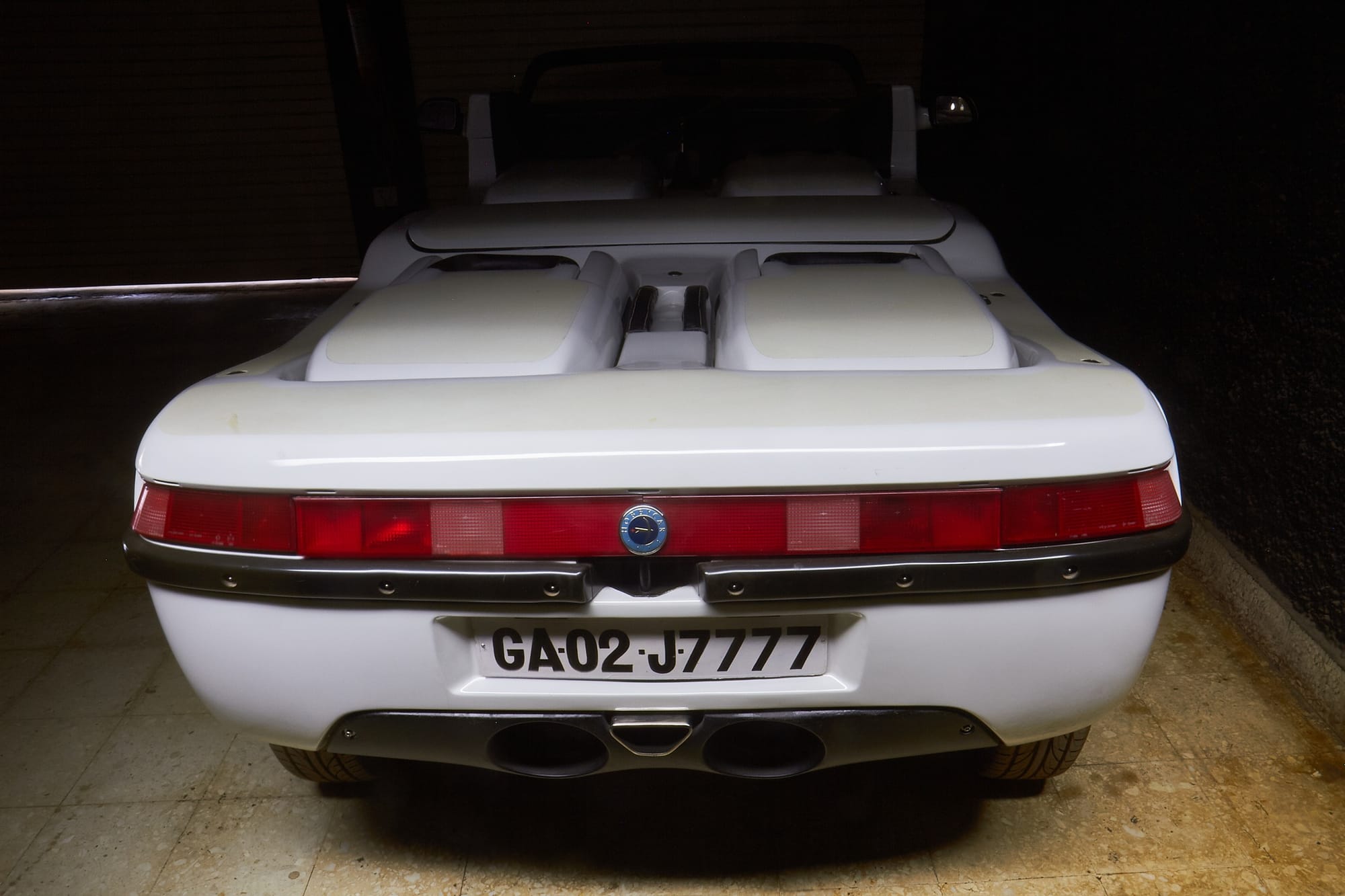
The ambitious amphibious concept attracted the backing of wealthy entrepreneur Serge Desmarais, who invested some 67 million French francs (a little more than € 10 million) in the project. A modern factory complex covering 30 hectares was constructed, complete with a dedicated off-road track, a testing lake, and even a helipad to welcome affluent clients.
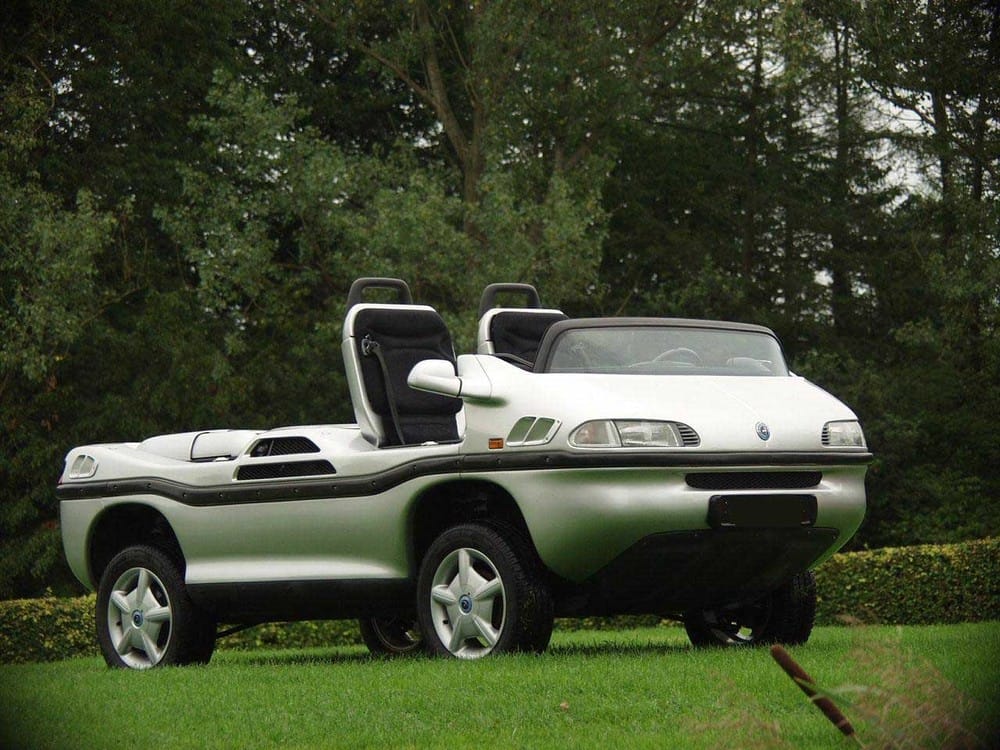
The Hobbycar was designed with yacht owners in mind: its seatbacks folded electrically, the windscreen could retract, and with the suspension lowered the vehicle stood just 1.09 metres high, compact enough to be stored aboard large yachts.
With the suspension fully raised and the windscreen up, the height increased to 1.68 metres. The vehicle measured a compact 3.45 metres in length and 1.68 metres in width. Its corrosion-resistant stainless-steel chassis was combined with a lightweight body made from fiberglass and Kevlar, ensuring both strength and durability in marine conditions.
Although the Hobbycar debuted at the Paris Motor Show 1992, production began only in 1995. By then, the price had climbed to about 370,000 French francs, roughly ₹46 lakh at the time, making it an expensive indulgence. Initial interest from wealthy buyers was strong, but demand quickly faded. Production ended after just around sixty examples of the Hobbycar B-612 had been built.
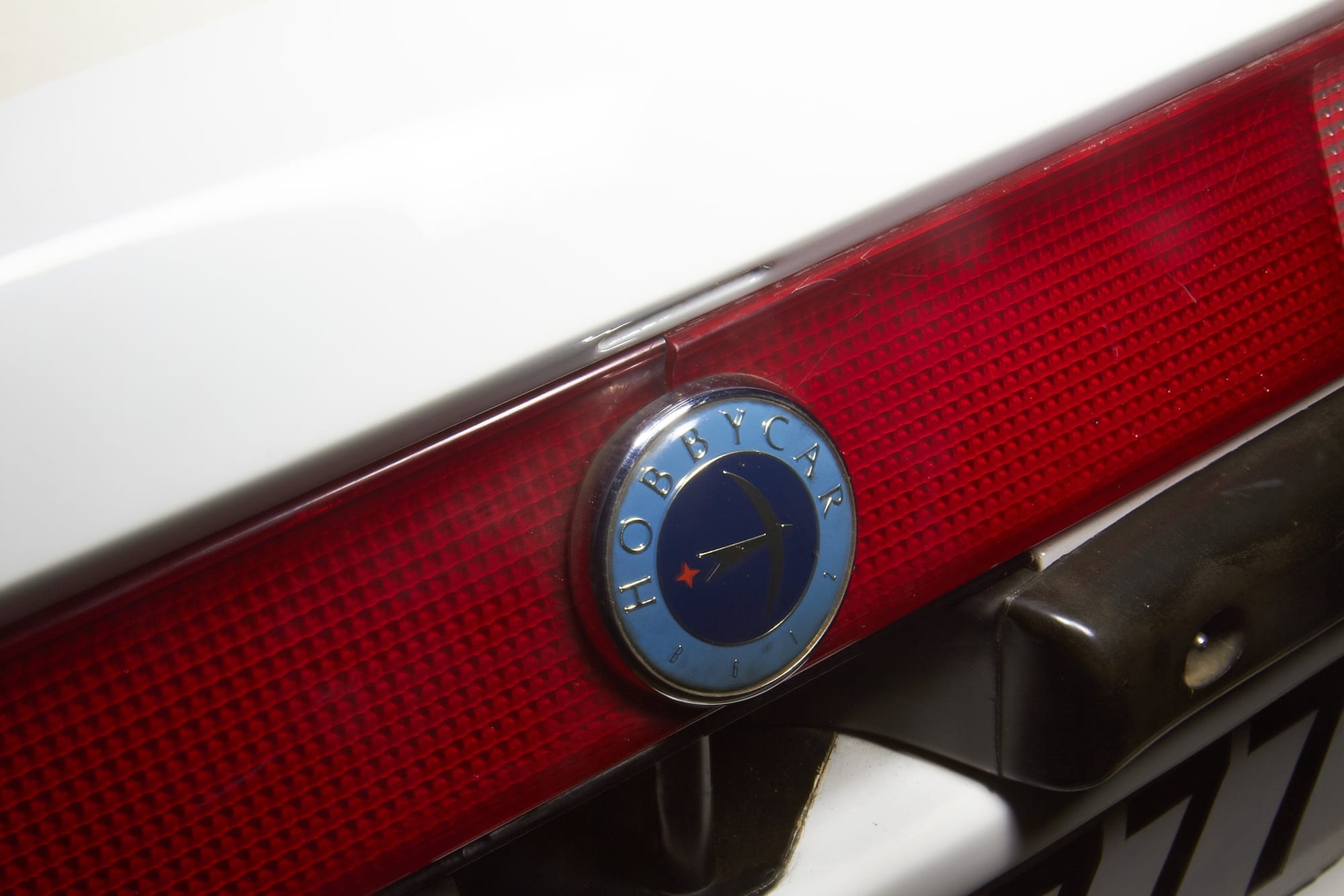
Designer Godfroy believes that between 60 and 65 were produced, while some sources claim exactly 62 units. Whatever the precise number, the Hobbycar is today an exceptionally rare vehicle.
One example reportedly reached India almost by accident, when a wealthy industrialist purchased a luxury yacht and discovered the white amphibious car included in the deal, ensuring that this unusual piece of automotive engineering survived on Indian shores.
The name B-612 itself has a poetic origin. Wardavoir was a devoted admirer of Antoine de Saint‑Exupéry and his beloved book The Little Prince.
In the story, the Little Prince comes from the asteroid B-612, known in French as “Besixdouze.” Like the celestial body that inspired its name, the Hobbycar B-612 proved to be something of a shooting star: briefly brilliant, technically fascinating, and ultimately rare.
Comments ()