2003 smart crossblade – A Future Classic
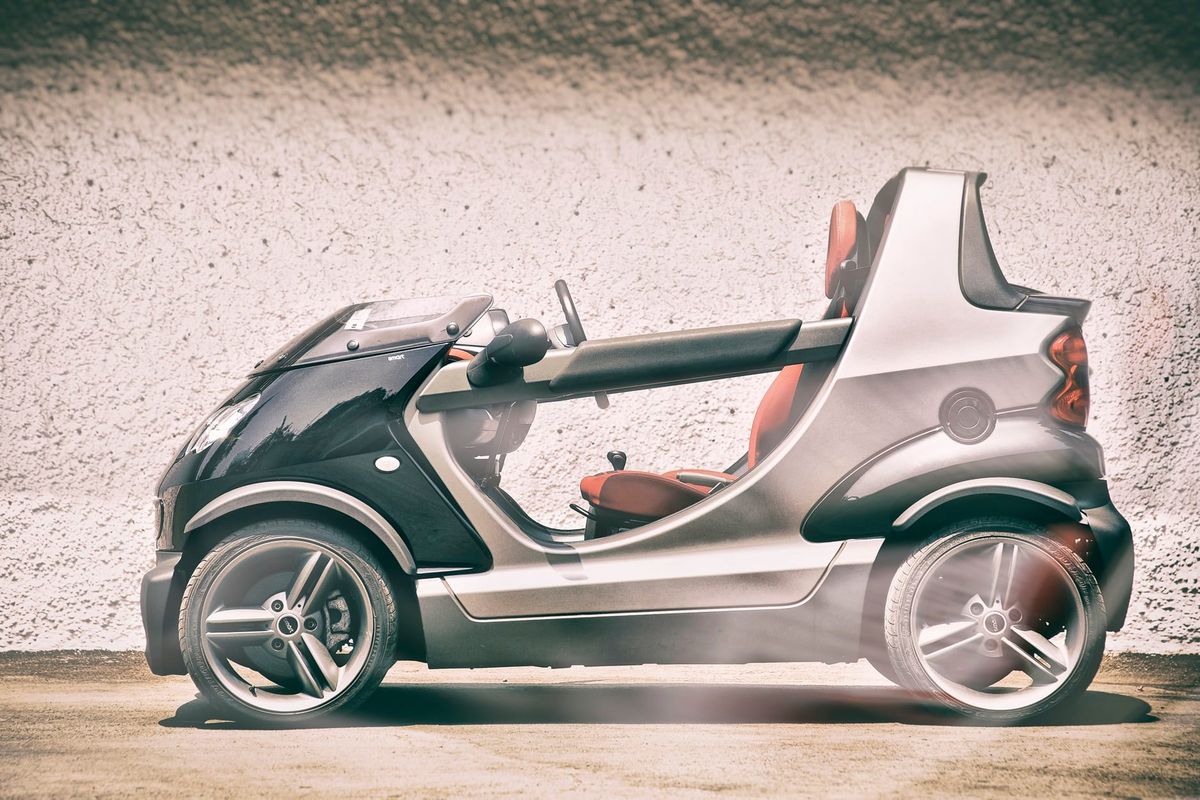
First revealed as a concept at the 2001 edition of the Geneva Motor Show, the crossblade was conceived as a radical open-air leisure vehicle
Text: Gautam Sen
Images: Makarand Baokar
In the major European capitals of Berlin, London, Paris and Rome, the diminutive two-seat smart (always spelt with a lower-case s…) city car is a familiar presence on crowded urban streets. In India, however, the quirky little runabout remains an uncommon sight, having never been officially imported into the country. Only a handful of privately imported examples have made their way here over the years — among them this exceptionally rare and fascinating variant: the smart crossblade.
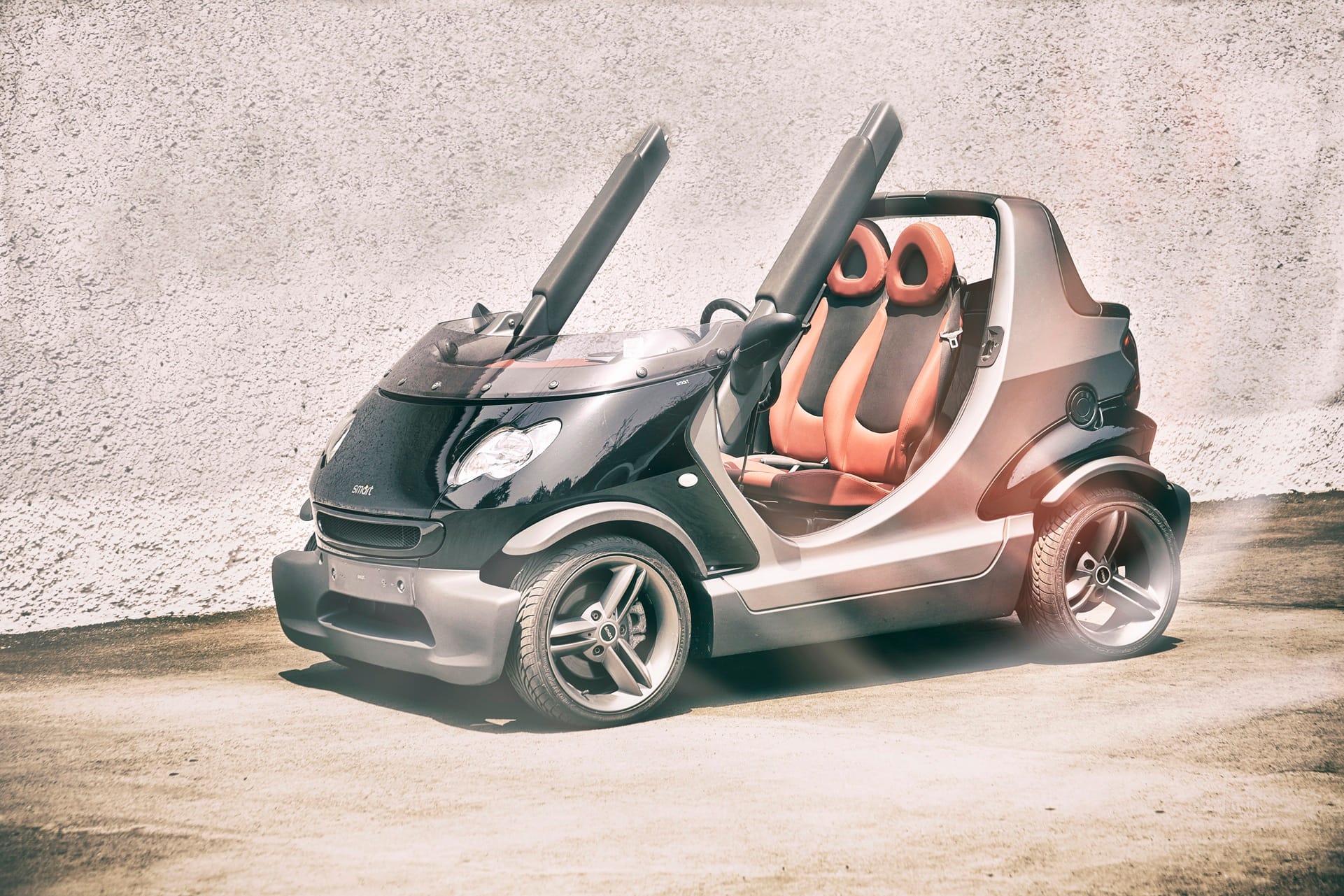
First revealed as a concept at the 2001 edition of the Geneva Motor Show, the crossblade perfectly embodied smart’s unconventional philosophy of “reduce to the max.” Conceived as a radical open-air leisure vehicle, the concept dispensed with virtually every conventional automotive comfort. There was no roof, no doors and not even a proper windshield. smart described it as “an open leisure car uncompromisingly designed for blue skies and high spirits,” and the result looked more like a futuristic toy than a production automobile.
The outlandish concept immediately became one of the stars of the show, drawing huge crowds and widespread media attention. Encouraged by the overwhelmingly enthusiastic response, smart GmbH — then the youthful subsidiary brand of Mercedes-Benz — made the bold decision to produce the car in a strictly limited series. For the task, smart enlisted the expertise of Stuttgart-based coachbuilder Binz, which was commissioned to build just 2,000 individually numbered examples of the crossblade.
At the 2002 edition of the Geneva Motor Show, the production-ready crossblade made its official debut, with customer deliveries beginning shortly afterwards in June that year. Remarkably, the production car remained astonishingly faithful to the original concept. It retained its roofless, doorless and windshield-free layout, offering occupants an utterly exposed driving experience unlike anything else on the road.
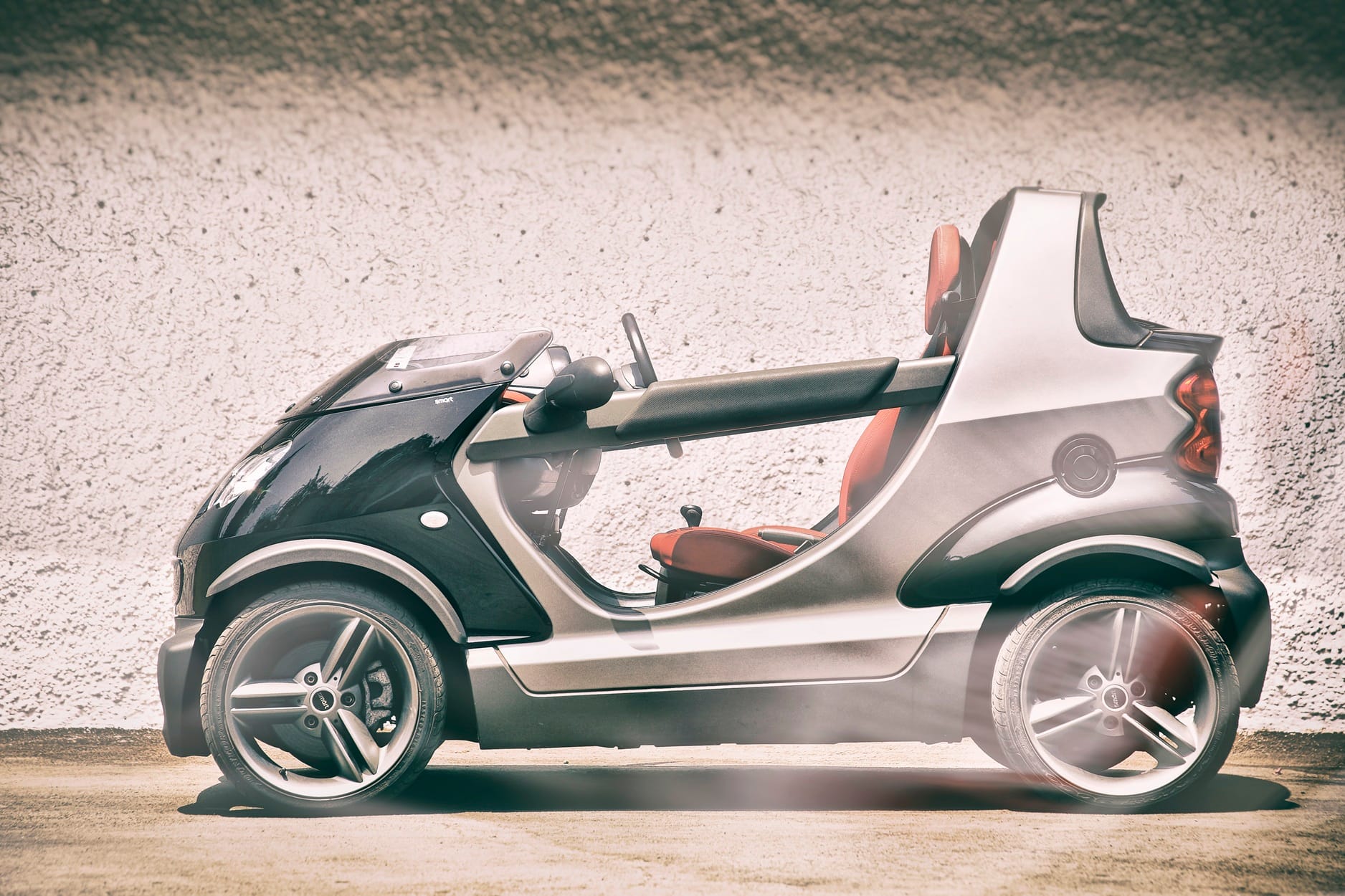
Drivers and passengers travelled with nothing separating them from the outside world except the open sky above and a small dark-tinted wind deflector designed to provide minimal protection from the airflow. Whether basking in sunshine or enduring an unexpected downpour, the crossblade promised an unforgettable sensory experience.
Instead of conventional doors, the car featured distinctive steel safety bars positioned at shoulder height. These bars pivoted upwards in dramatic scissor-door fashion with the assistance of gas struts, adding yet another theatrical touch to the already eccentric design.
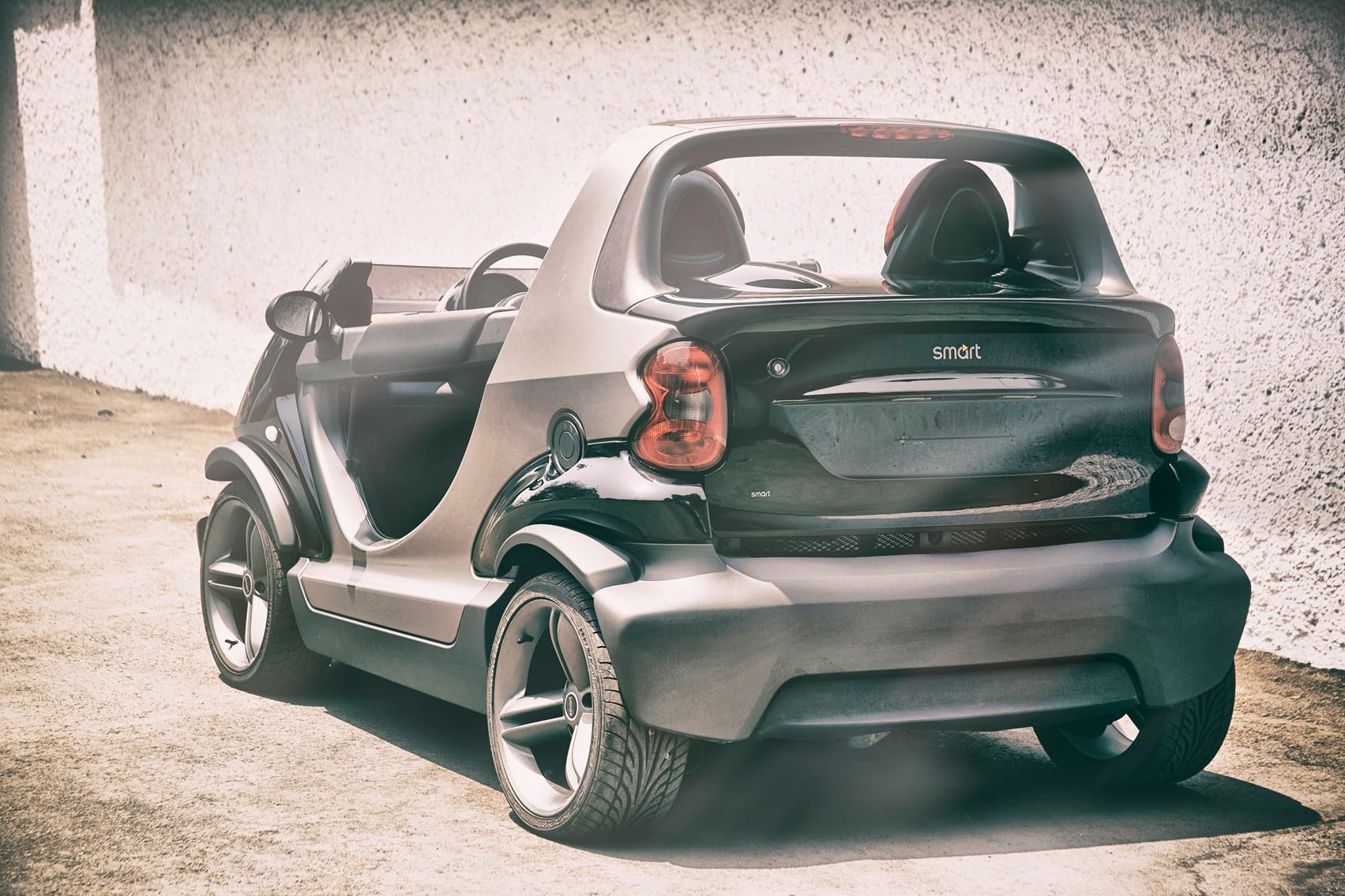
Mechanically, the crossblade was based on the first-generation smart city car and retained its compact rear-mounted, turbocharged three-cylinder engine driving the rear wheels through an automated manual gearbox. However, renowned tuning specialist Brabus was tasked with enhancing performance, increasing output to 70bhp and 108Nm of torque. Despite the extra power, top speed remained electronically limited to 135 km/h, preserving the car’s urban-focused character.
Even with a hefty price tag of around €21,000 – nearly double the cost of a standard smart at the time – the crossblade sold out rapidly. Its exclusivity and eccentric personality attracted a number of celebrity buyers, including pop superstar Robbie Williams, who eagerly added one to his garage.
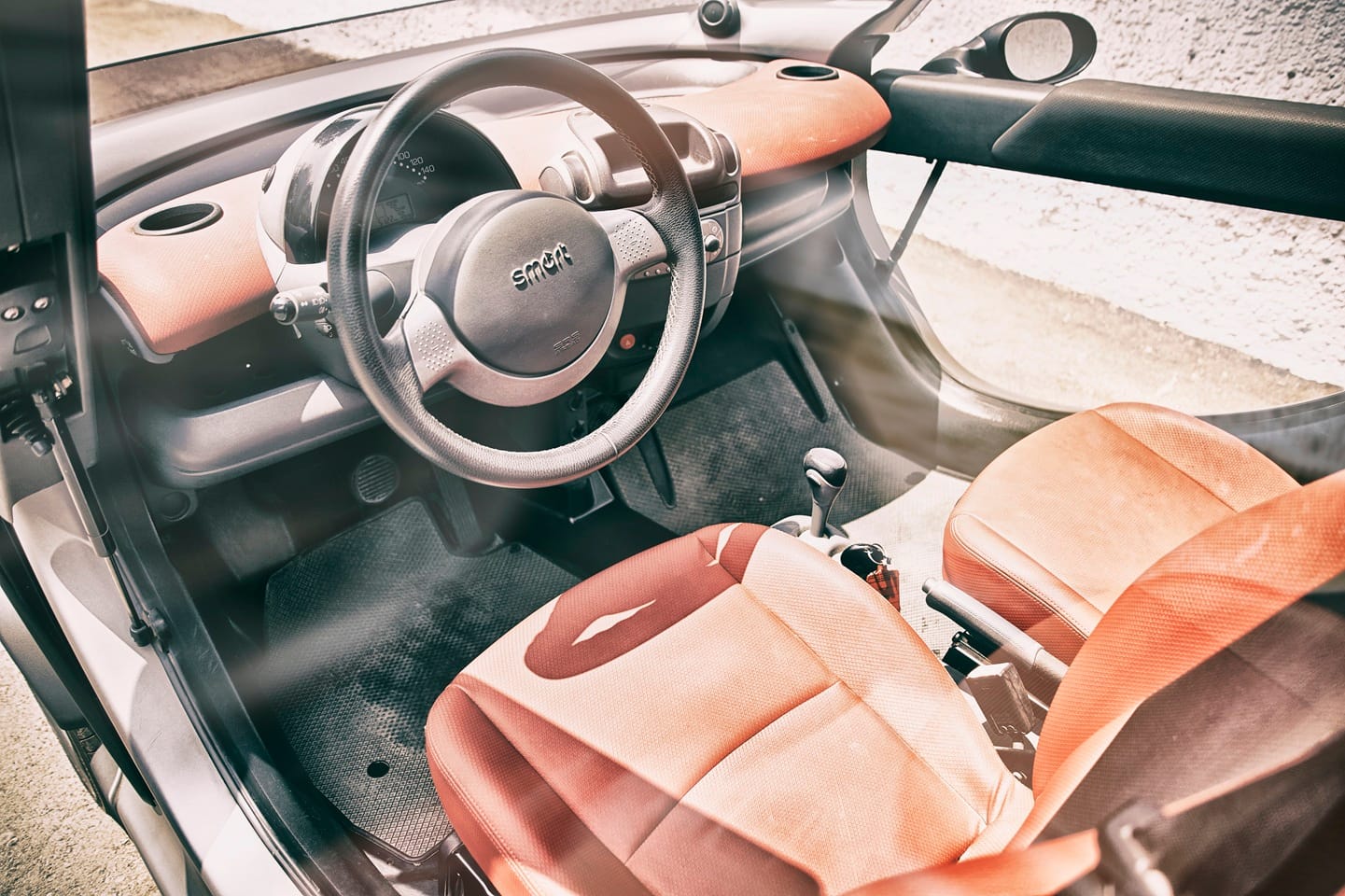
Recognising that the crossblade’s tiny production numbers and outrageous design would inevitably make it a highly desirable collector’s item, one noted Indian automobile collector arranged for this rare example to be imported into the country. Today, it remains not only an extraordinary automotive curiosity, but also one of the rarest and most unconventional smart cars ever built.
P.S.: Founded in 1994 as a joint venture between Swiss watchmaker Swatch and Daimler-Benz, the company evolved into smart in 1998 under the full ownership of Daimler-Benz. In 2019, Smart Automobile Company became jointly owned by Mercedes-Benz and Chinese automotive giant Geely, with production subsequently shifting to China, where the brand now focuses exclusively on electric vehicles, which are mostly bigger than the original smart.
Comments ()