2003 smart crossblade – reduce to the max
the smart crossblade, one of the most radical production cars of the early twenty-first century
Text: Gautam Sen Images: Makarand Baokar
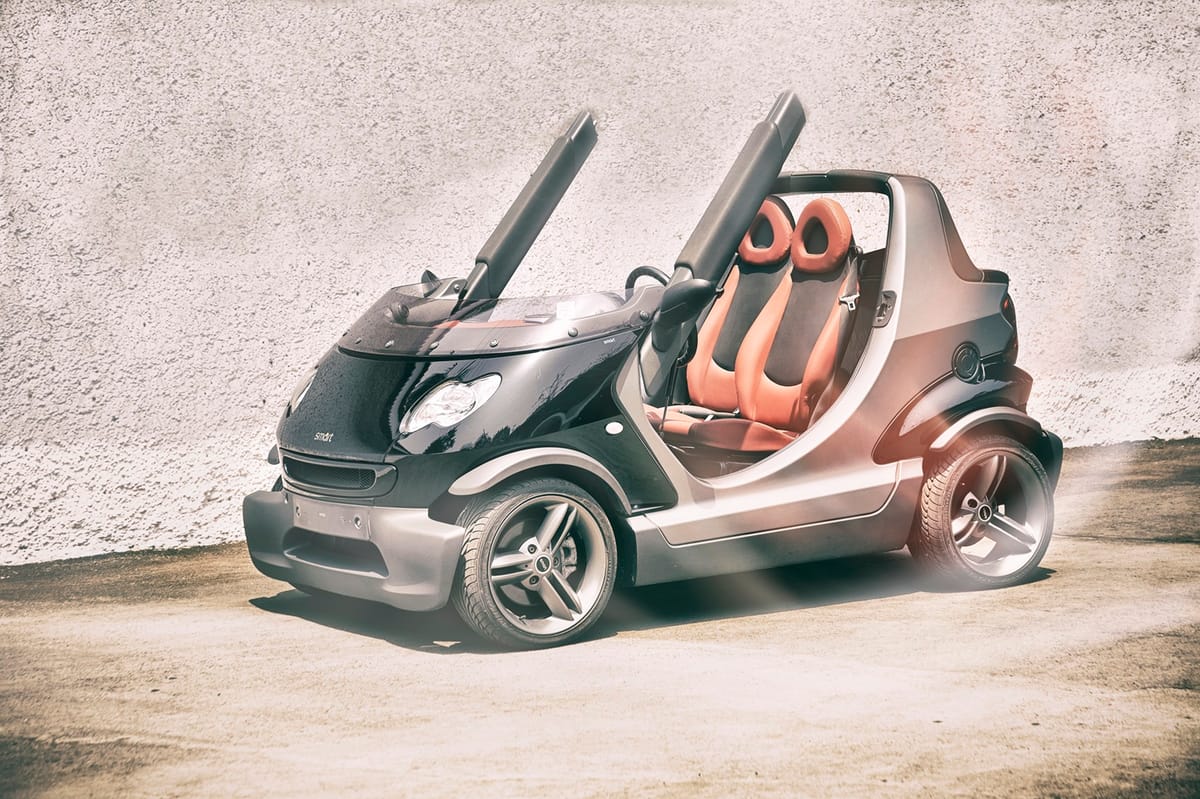
In the great European capitals - Berlin, London, Paris, and Rome - the diminutive two-seat smart car (always written in lower case) has long been a familiar presence. Designed for dense urban environments, the smart became a symbol of modern city mobility: compact, clever, and unmistakably contemporary. In India, however, the smart has always been something of an oddity. Never officially imported, it exists only in the form of a handful of privately brought-in examples, each one an automotive curiosity. Among these rare sightings is something altogether more extraordinary: the smart crossblade, one of the most radical production cars of the early twenty-first century.
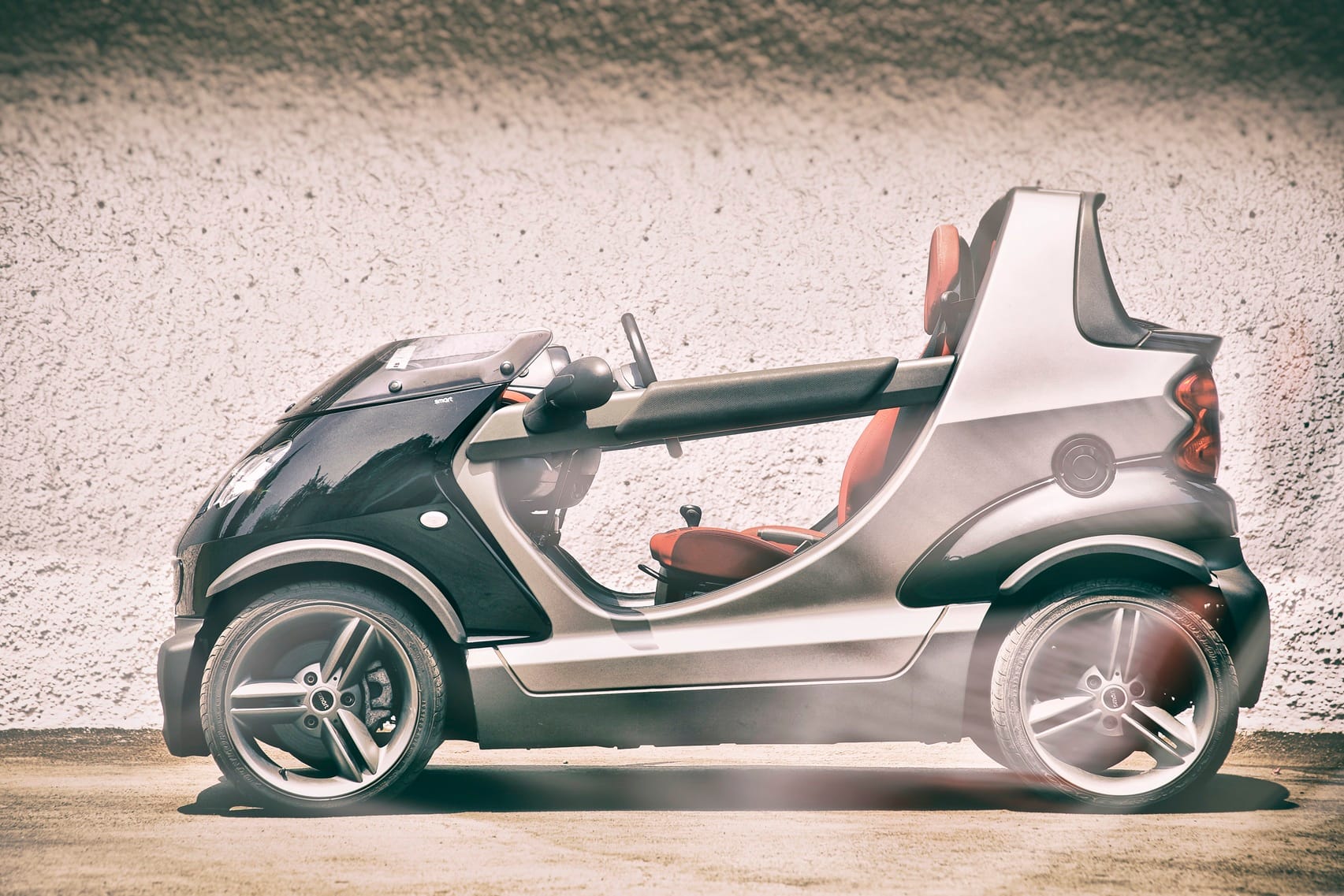
The crossblade first appeared as a concept car at the 2001 Geneva Motor Show, where it immediately stole attention. Created in accordance with smart’s design mantra “less is more” and “reduce to the max”, the crossblade stripped the idea of a car back to its barest essentials. Described by its creators as “an open leisure car uncompromisingly designed for blue skies and high spirits,” the concept boldly dispensed with convention. There was no roof, no doors, and not even a proper windscreen. Instead, the crossblade offered a pure, elemental driving experience that seemed closer to a motorised sculpture or a rolling beach toy than a traditional automobile.
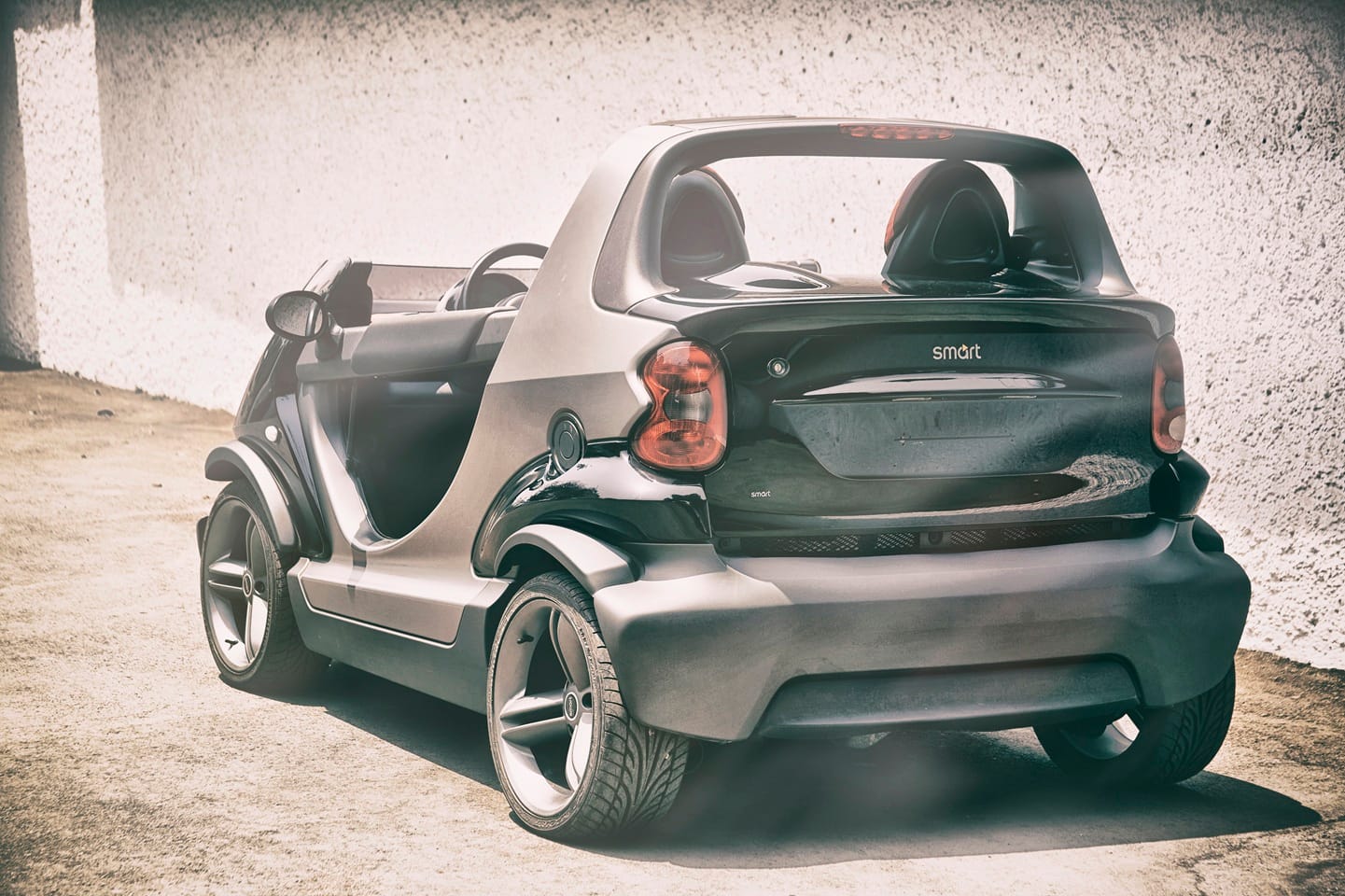
Unsurprisingly, the concept caused a sensation. Media reactions ranged from disbelief to delight, while showgoers crowded around the stand, captivated by the sheer audacity of the idea. Recognising the excitement it had generated, smart GmbH, then the youthful, experimental offshoot of Mercedes-Benz, made the remarkable decision to put the crossblade into limited production. To achieve this, smart enlisted the expertise of Stuttgart-based coachbuilder Binz, commissioning a strictly limited run of just 2,000 individually numbered cars.
The production version was unveiled at the Geneva Motor Show in March 2002, and deliveries began a few months later, in June. Remarkably, the road-going crossblade stayed almost entirely true to the concept. It remained completely open to the elements, with no roof, no windscreen, and no conventional doors. Driver and passenger sat exposed beneath the open sky, fully immersed in their surroundings, whether enjoying warm sunshine, battling strong winds, or enduring the occasional unexpected rain shower. A narrow, dark-tinted wind deflector stood in place of a windscreen, offering only minimal protection from the slipstream and reinforcing the car’s uncompromising character.
In place of traditional doors, the crossblade featured steel safety bars positioned at shoulder height. These bars opened vertically in a dramatic, scissor-like motion, assisted by gas struts, further enhancing the car’s sense of theatre. Every detail emphasised experience over practicality, turning even the act of getting in or out into an event.
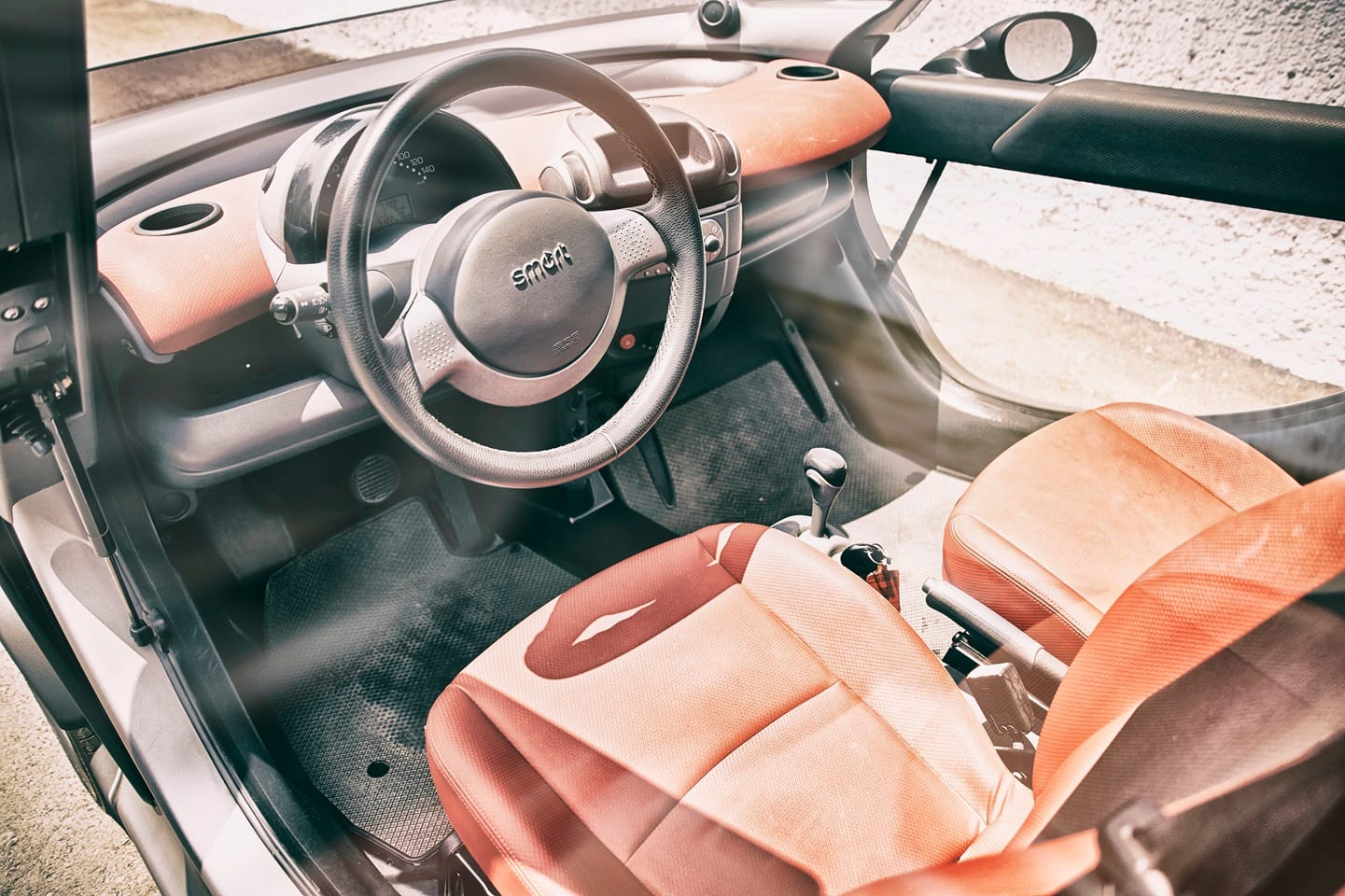
Beneath its playful exterior, the crossblade retained the mechanical layout of the first-generation smart. Power came from a rear-mounted, turbocharged three-cylinder engine driving the rear wheels through a robotised manual gearbox. With assistance from renowned tuning house Brabus, both power and torque were increased to 70bhp and 108Nm respectively. While these figures were modest, they were more than sufficient given the car’s low weight. Top speed, however, remained electronically limited to 135 km/h, underscoring that the crossblade was never intended as a high-speed machine, but rather as a celebration of open-air motoring.
Despite its unconventional nature, and a price tag of €21,000 (Rs 20 lakhs), nearly twice that of a standard smart, the crossblade sold out rapidly. Its exclusivity, striking design, and sheer novelty proved irresistible, attracting buyers from around the world, including well-known personalities such as pop star Robbie Williams. Many recognised early on that the crossblade was destined to become a collectible, not only as an automotive oddity but also as a bold design statement emblematic of a brief era when manufacturers were willing to take risks.
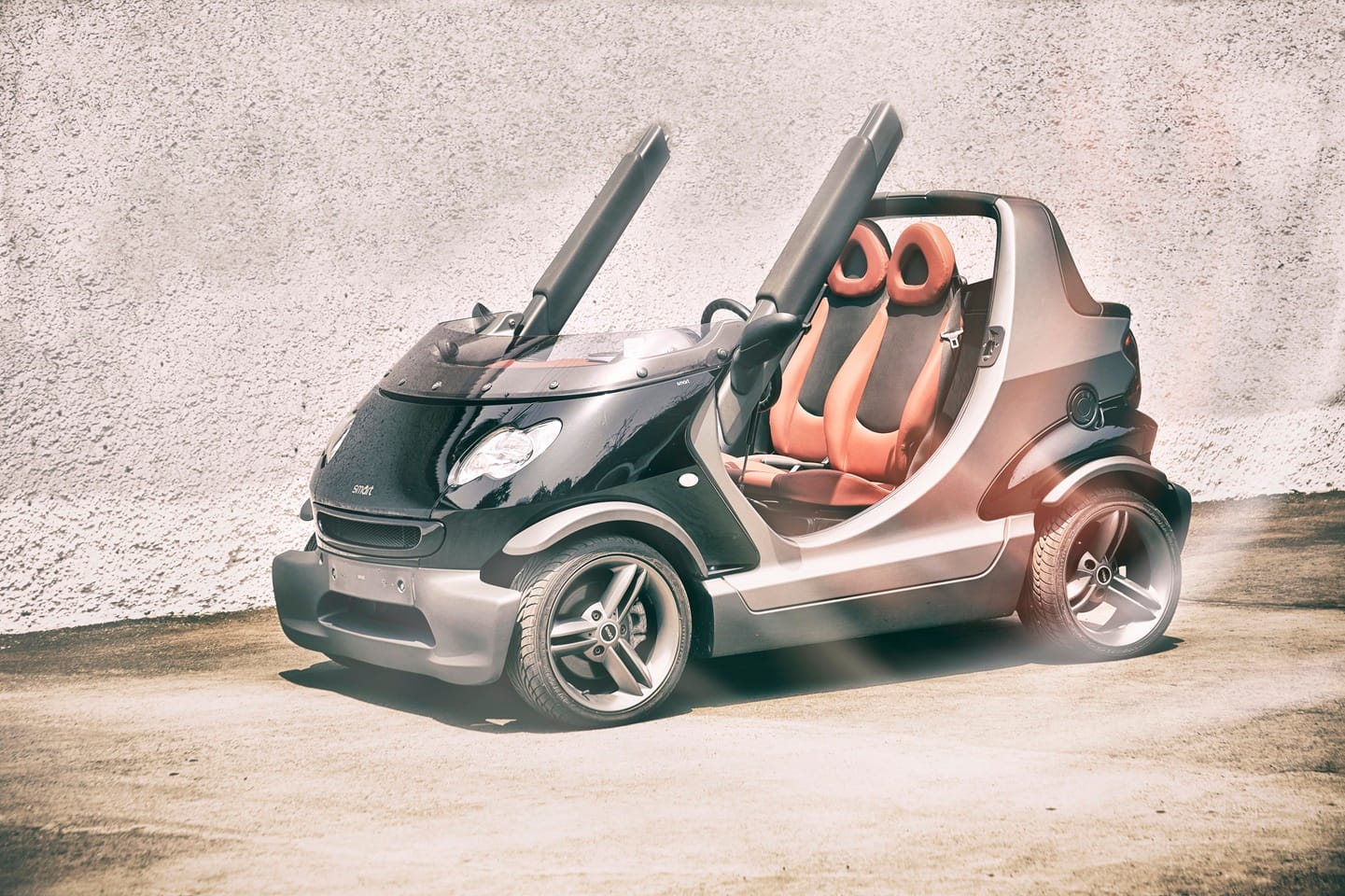
It was with this understanding that a prominent collector arranged for this particular crossblade to be imported into India. Today, it stands as both a rarity and a talking point, an uncompromising expression of minimalist automotive design, and a reminder that sometimes the most memorable cars are not those defined by speed or luxury, but by imagination and courage.
Comments ()