2008 Ariel Atom – Minimalism at its Brutal Best
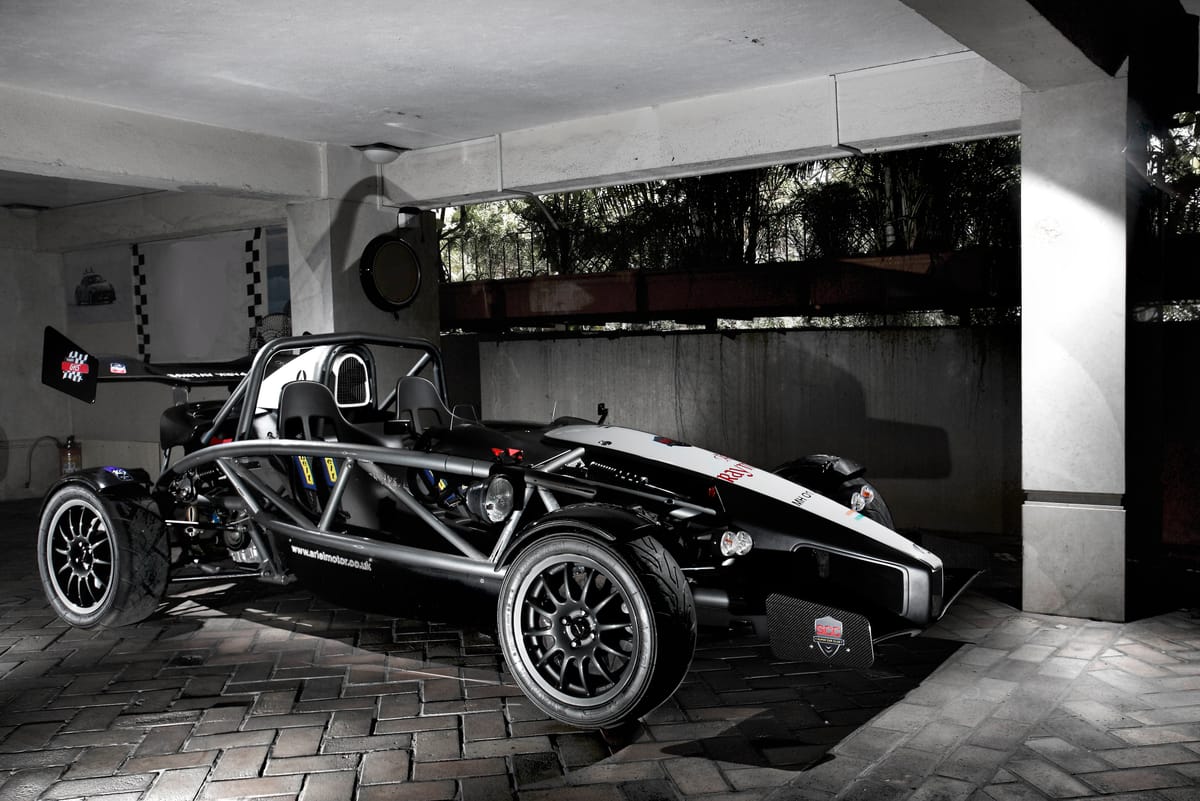
In essence, the Ariel Atom is a four-wheeled motorcycle, and an uncompromising performance machine capable of leaving many supercars far behind
Text: Gautam Sen Images: Makarand Baokar & Wheelsage
If the Smart Crossblade we featured earlier (2003 smart crossblade – reduce to the max) was about “reducing to the max,” then this is about reducing things to the absolute bare minimum.
That philosophy defines the Ariel Atom. In essence, it’s a four-wheeled motorcycle, an uncompromising performance machine capable of leaving many supercars far behind.
Bringing such an extreme rarity to India required a true supercar aficionado. Business magnate Gautam Singhania, known for his passion for high-performance Ferrari and Lamborghini models, is also the proud owner of this Atom.
In today’s automotive world – dominated by stringent emissions norms, safety regulations, and complex homologation requirements – the development of such individualistic vehicles has become nearly impossible. However, legislation specific to the United Kingdom still allows a handful of unconventional vehicles to be registered for road use. The Atom takes full advantage of this framework, known as Single Vehicle Approval (SVA).
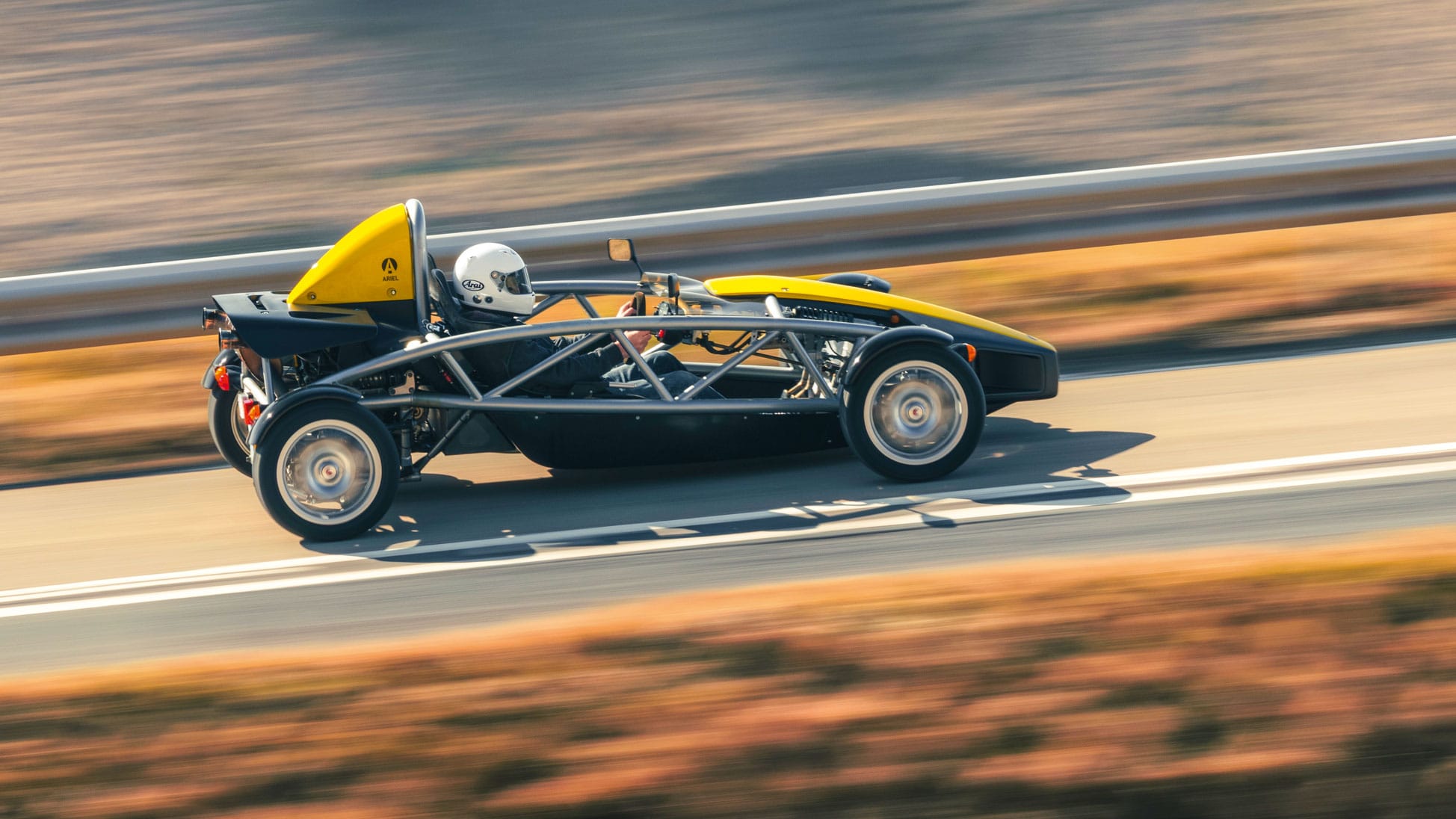
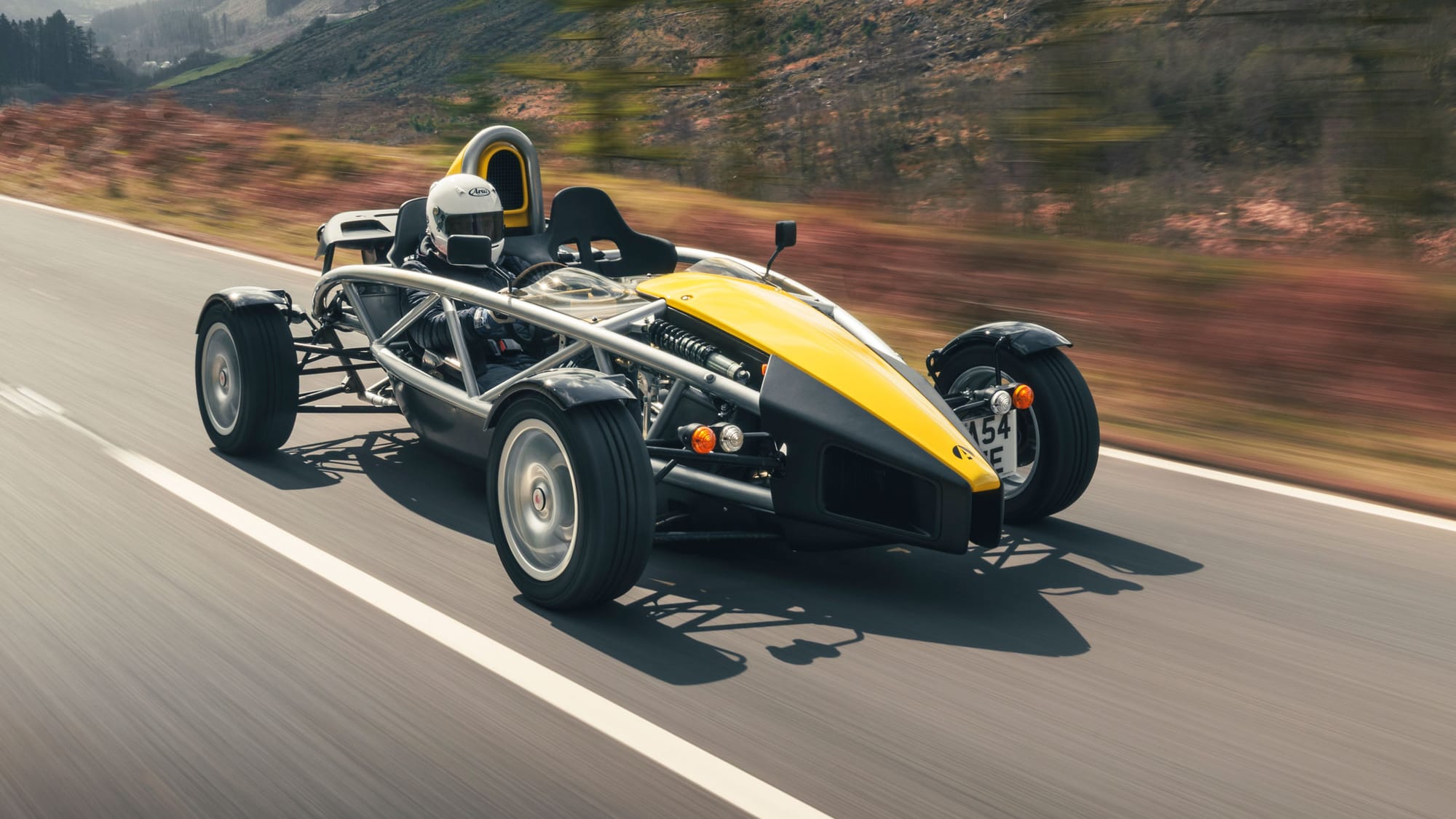
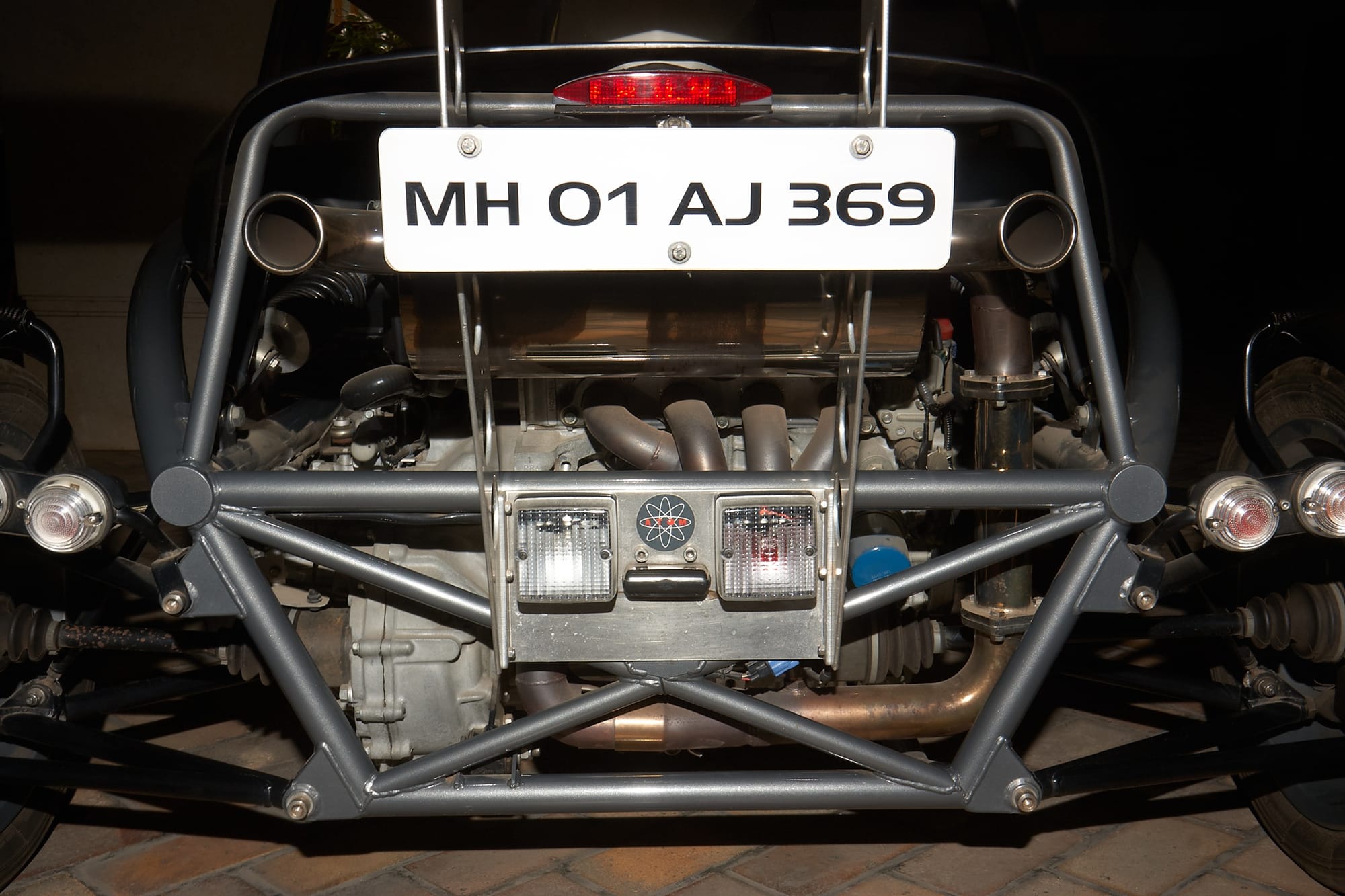
At its core, the Atom is remarkably simple: a road-legal, two-seater with an entirely open body, no windscreen, no side protection, and no enclosure around its occupants. Everything is built around a beautifully engineered tubular steel space frame.
Powering this featherweight machine is one of the finest production engines available: the unit from the Honda Civic Type R, force-fed by an Eaton supercharger. The choice of a supercharger over a turbocharger ensures immediate throttle response and linear power delivery. Even with deliberately low boost pressure to preserve reliability, the engine produces over 300bhp at 7900rpm, an astonishing figure when paired with a kerb weight of just 550kg.
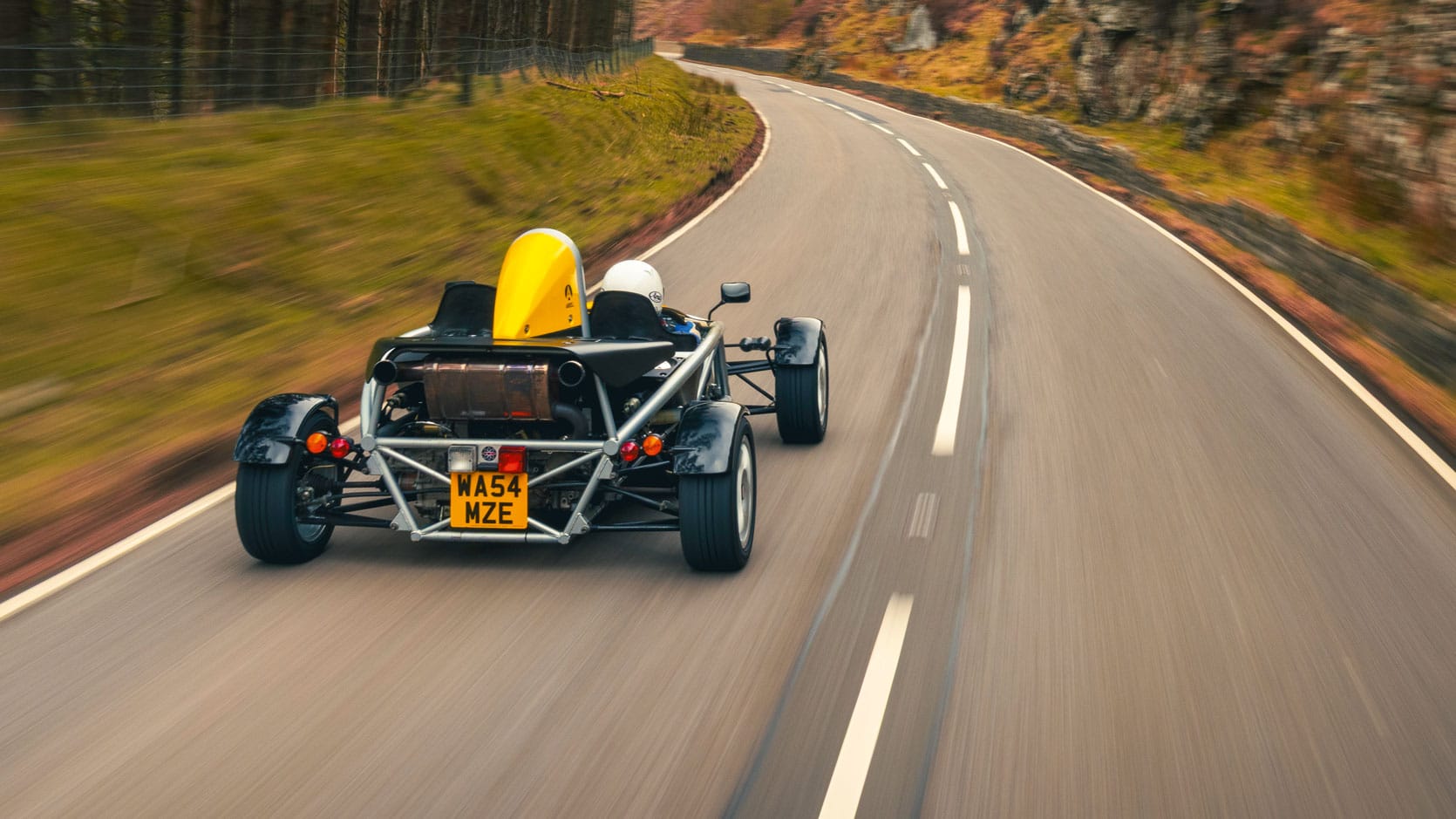
Weight savings define every aspect of the Atom. Anything deemed non-essential is eliminated. There’s no traditional ignition key – just a transponder. There’s no heating or air-conditioning, and even indicators, lamps, and number-plate mounts are optional extras included in the road pack (which Singhania’s car features). The seats are single-piece moulded plastic shells, completely unpadded.
With a driver onboard, the Atom weighs roughly 620kg, resulting in a staggering power-to-weight ratio of about 186bhp per tonne. That figure comfortably eclipses even icons like the Porsche Carrera GT and the Pagani Zonda S – and that comparison is made without their drivers.
On the road, the experience is reputed to be nothing short of extraordinary. The brutal acceleration snaps your neck back, while the sheer force of the wind makes conversation impossible. More than that, the sensory overload leaves you speechless is what testers have said.
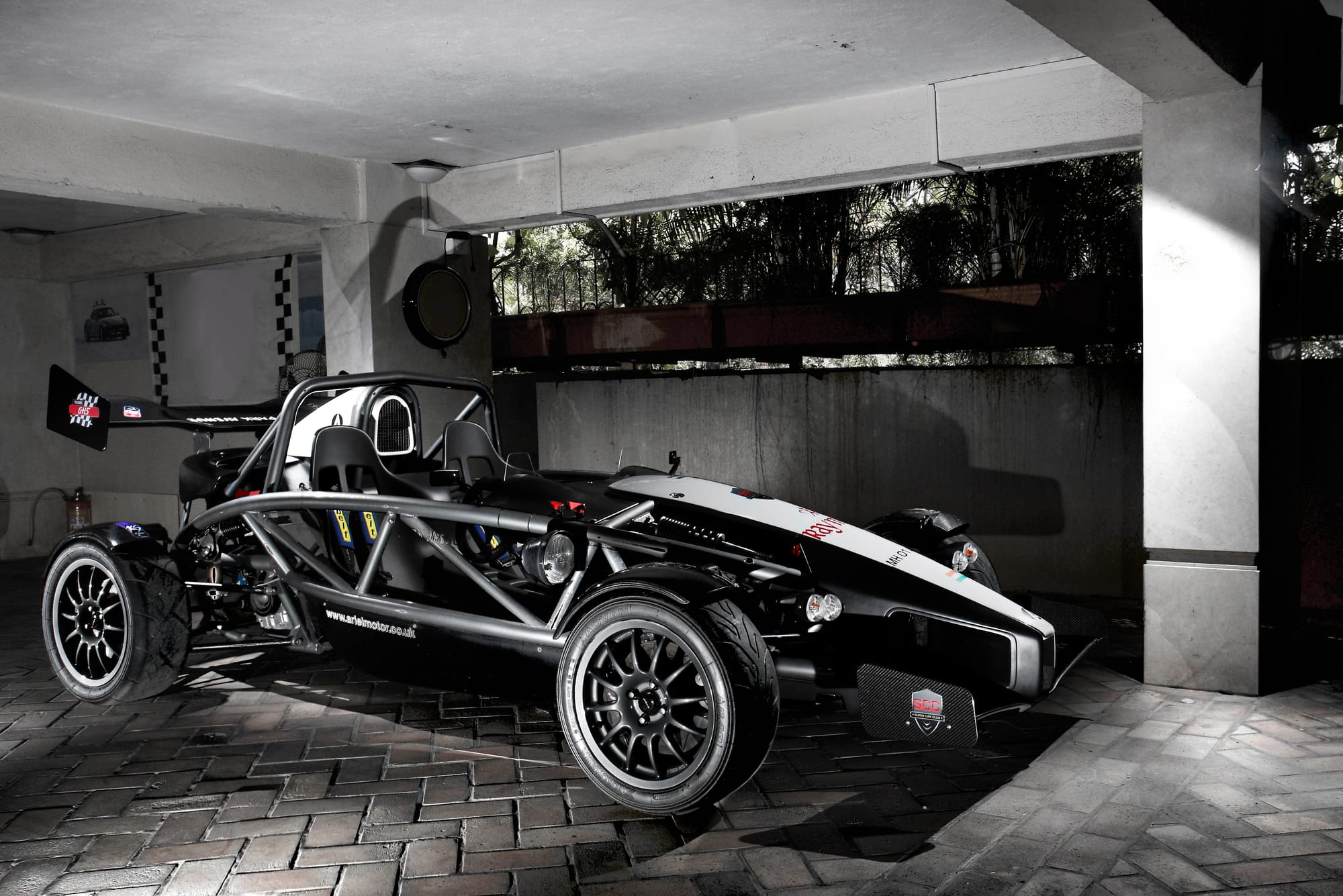
The Atom rockets from 0 to 100 km/h in under three seconds and continues to a top speed exceeding 225 km/h. As Singhania himself puts it: “It’s an incredibly fast car at a very affordable price. And it’s absolutely brilliant to drive.”
Comments ()