Fali & His 230SL
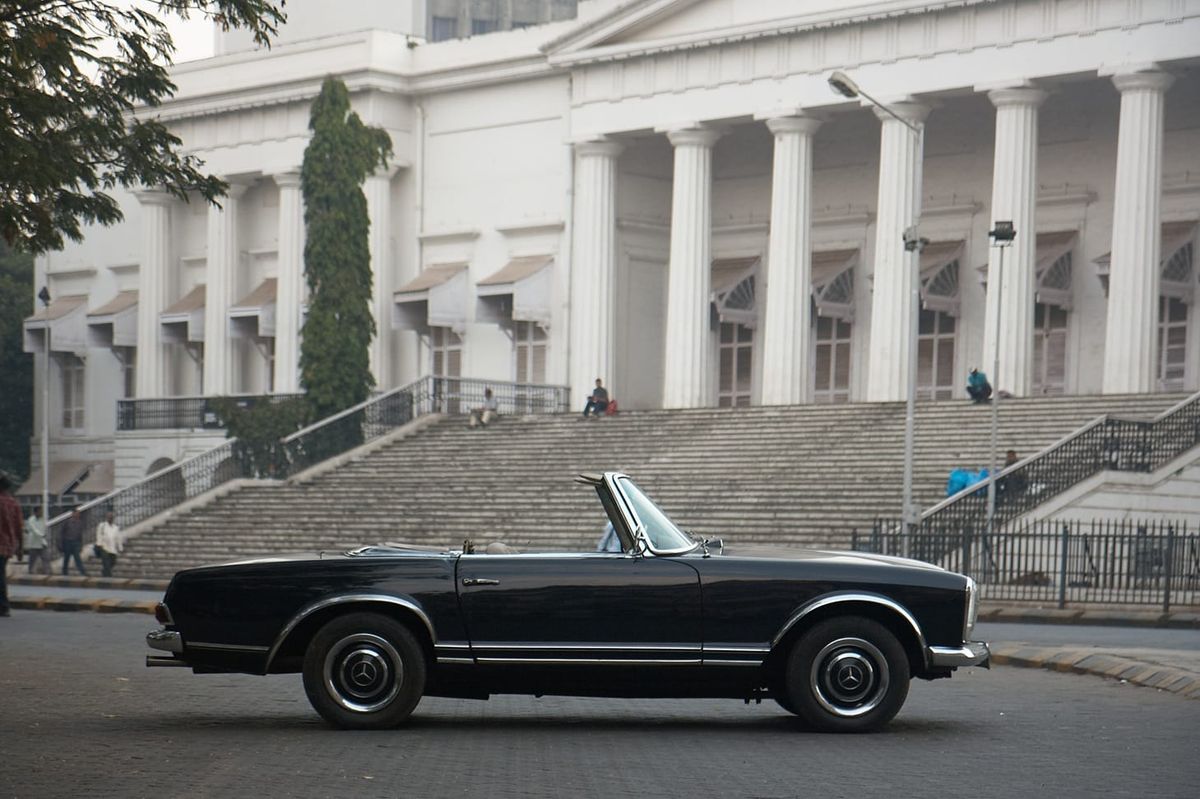
Fali Dhondy’s beloved Mercedes-Benz 230 SL reflects a lifelong passion for cars meant to be driven, not merely admired
Text: Gautam Sen
Images: Makarand Baokar
Though Fali Edul Dhondy (1942–2016) was born into a Zoroastrian Parsi family in Navsari, Gujarat, he grew up in Mumbai. Cars fascinated him from childhood. He was forever tinkering with things around the house, taking apart watches, repairing whatever he could get his hands on and, naturally, poking around cars to discover how they worked.
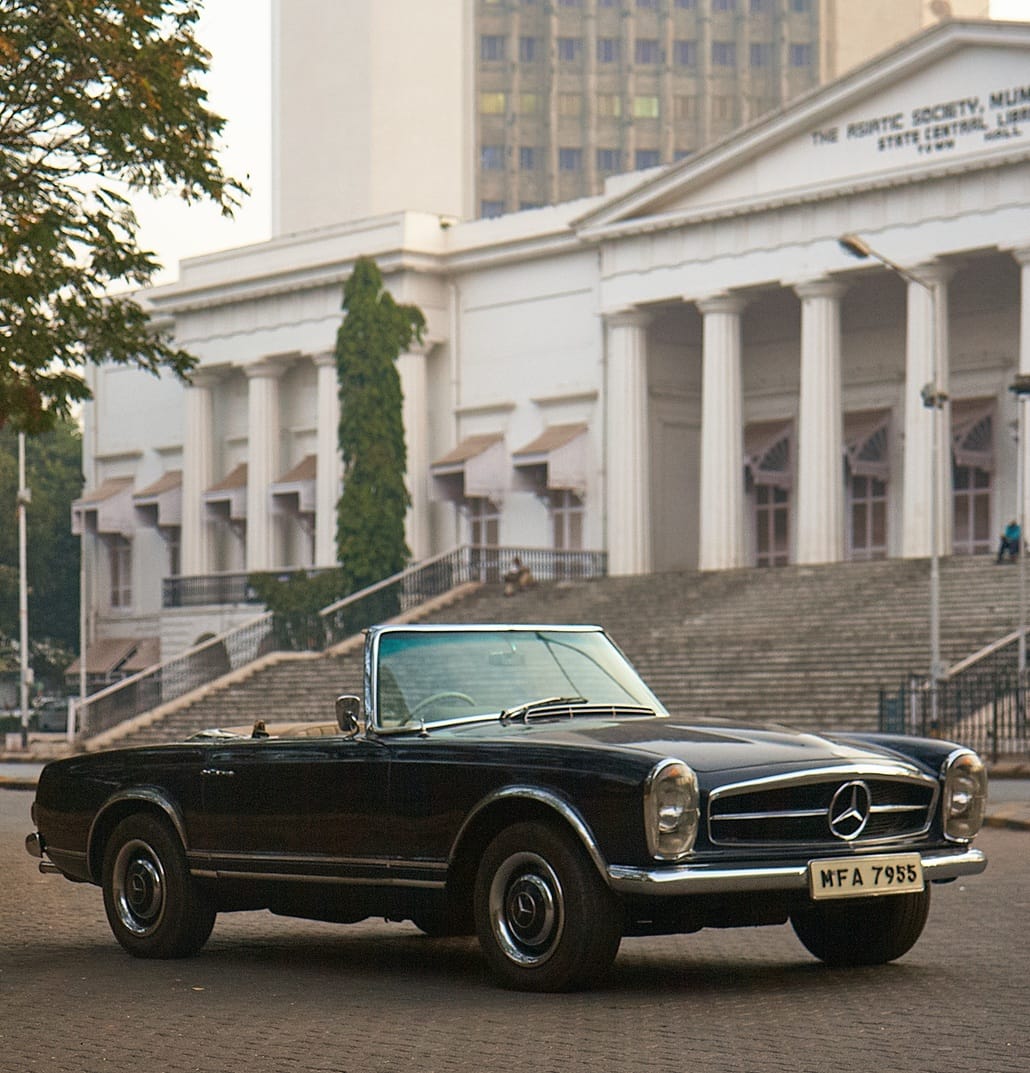
His parents favoured American cars, but Fali was drawn to something quite different. European sports cars were what really caught his imagination. As a young man, he got around on a Lambretta scooter until a friend presented him with a Fiat 1100. He later bought and sold several Mercedes-Benz W123s before acquiring his first sports car, a Volkswagen Karmann Ghia. Even after buying the Volkswagen, he could not resist a Mercedes-Benz 230 SL. That car would become his favourite, and remained so for the rest of his life.
The 230 SL was by no means his only automotive love affair. Fali went on to own two Alfa Romeo Spiders, including a rare 1967 right-hand-drive example with its factory hardtop, as well as two Austin-Healeys, a 100/6 and a 100/4. Other favourites included a Fiat 124 Spider, bearing a personalised signature from its designer Tom Tjaarda, and a Ferrari 308 GTS.
There was also a Ford Model A, given to him by a friend. In keeping with Fali’s approach to cars, he retained it in remarkably original working condition. A Rolls-Royce Twenty, restored by Soli Bhathena, was another addition to the collection. Fali’s daughter Rashna remembers it particularly fondly: the car took part in a tour from Delhi to Mumbai and, she recalls, drove “like a dream”.
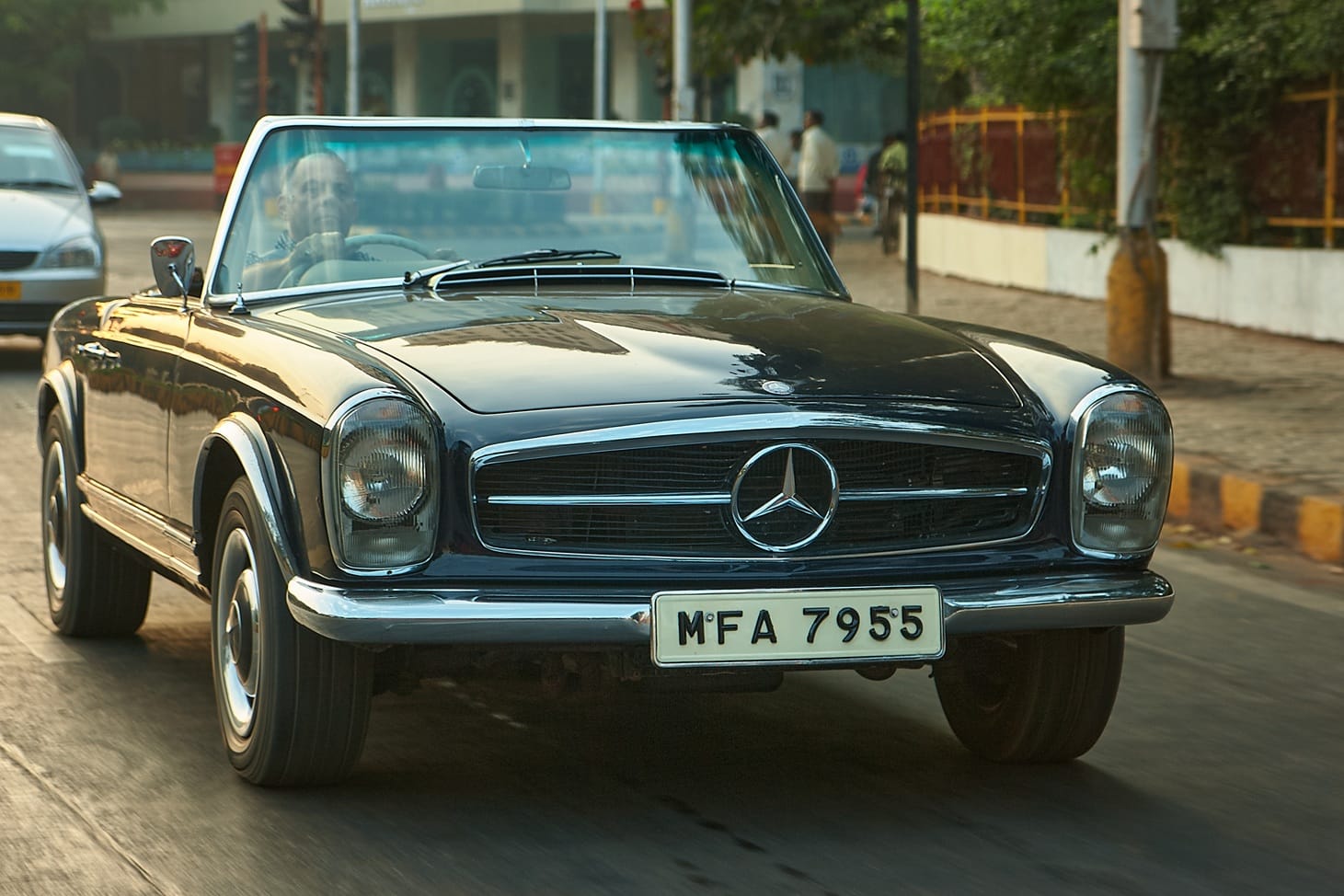
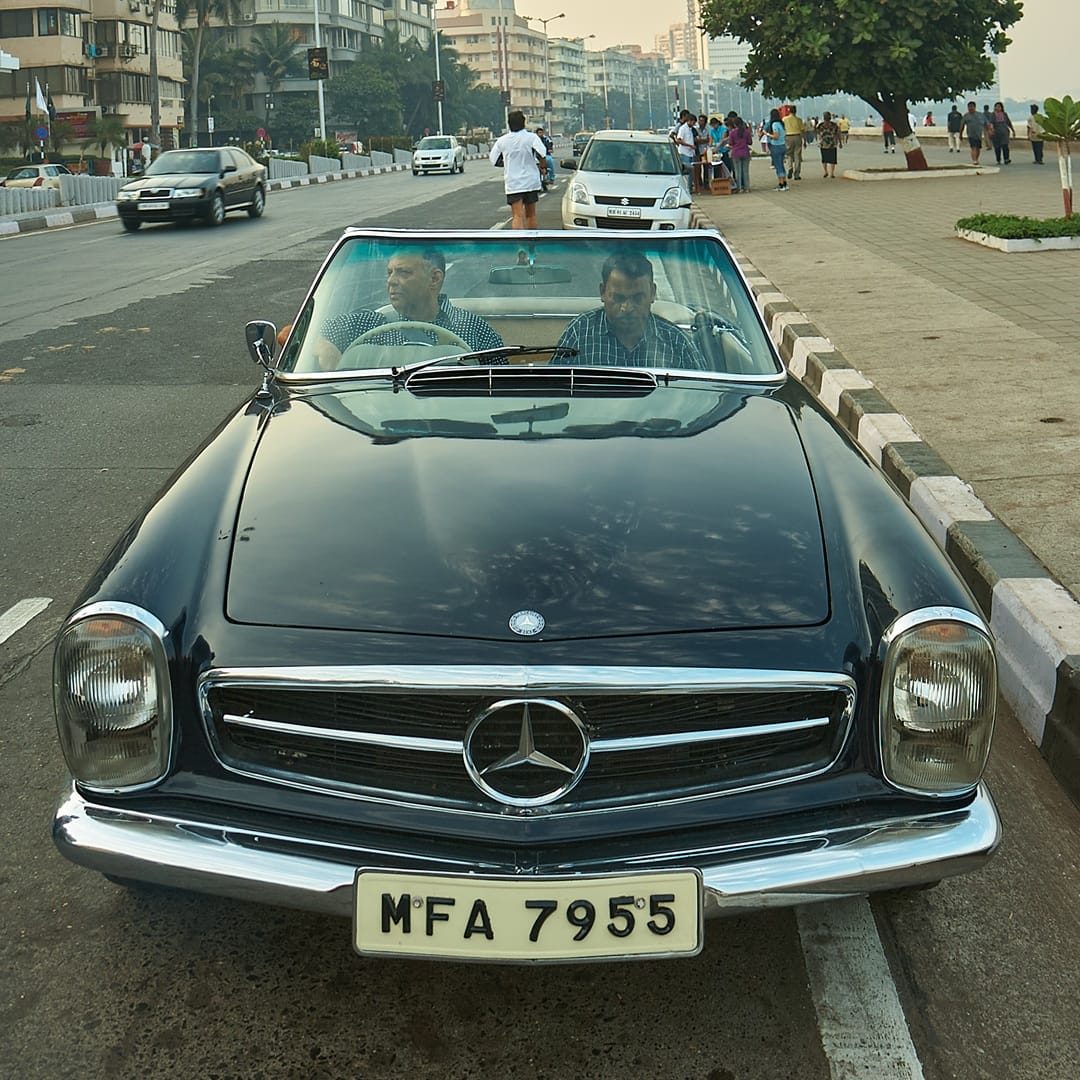
But it was the Mercedes that remained especially close to Fali’s heart. Indeed, his 230 SL was another daily driver, not a car to be admired from behind a velvet rope, but one to be enjoyed.
When Mercedes-Benz introduced the 230 SL in 1963, it represented something of a departure from the traditional image of the marque’s sports car. Designed to succeed both the relatively affordable 190 SL and the much more exotic 300 SL, the new W 113 exchanged the rounded forms of its predecessors for cleaner, more geometric lines. Smooth surfaces, generous glass and an almost complete absence of ornament gave it a modern, purposeful appearance.
The design was led by Frenchman Paul Bracq, under the supervision of Friedrich Geiger. Its distinctive concave hardtop, which soon earned the car the nickname ‘Pagoda’, was both elegant and functional. Yet when the car was first unveiled, some enthusiasts found it almost too modern.
There was good reason for this. The principal target market was the United States, and Mercedes-Benz wanted the new SL to appeal to American buyers, including those who might otherwise be tempted by the Chevrolet Corvette. Beneath its elegant skin was also a considerably more safety-conscious car. Based on the W 111 ‘Fintail’ saloon, but with its wheelbase shortened by 30 cm, the SL incorporated the saloon’s strong passenger cell and crumple zones front and rear.
The mechanical specification was equally modern. The 2.3-litre M 127 II six-cylinder engine received a revised injection system and developed 150bhp and 196Nm, giving the 230 SL a top speed of around 200 km/h with the four-speed manual gearbox. A four-speed automatic was also available. Suspension was independent at the front, while the rear used Mercedes-Benz’s single-pivot swing axle. Disc brakes were fitted at the front, with rear drums initially.
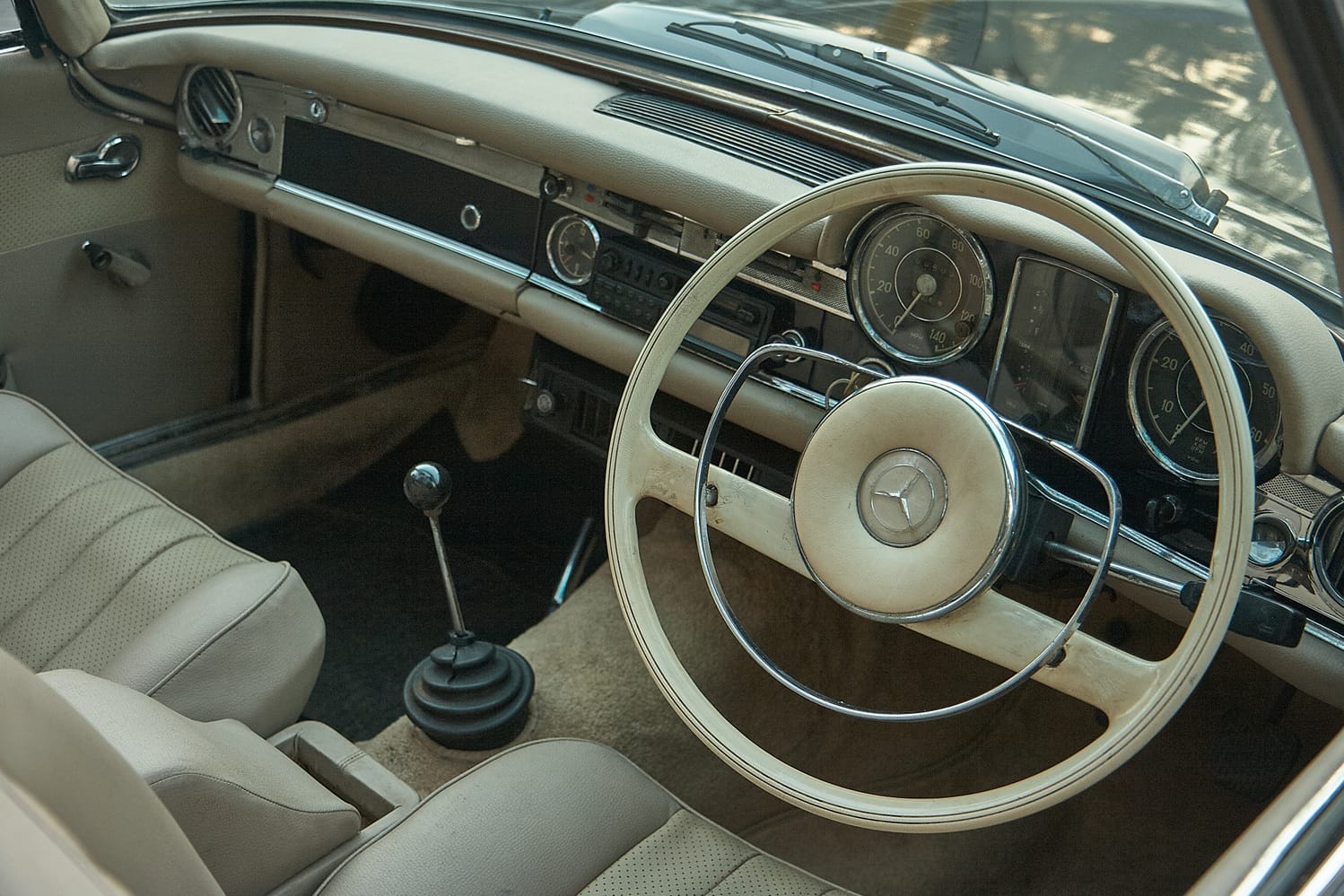
Not everyone was convinced. Some enthusiasts felt that Mercedes-Benz had sacrificed traditional elegance in favour of excessive modernity. The 230 SL’s credentials were soon demonstrated, however, when Daimler-Benz entered one in the 1963 Spa-Sofia-Liège Rally. Driven by Eugen Böhringer, it won the gruelling event, silencing many of its critics and establishing the Pagoda as a genuine sporting Mercedes-Benz.
The 230 SL was replaced by the short-lived 250 SL in 1966, followed by the 280 SL in 1968. By the time production ended in 1971, almost 49,000 W 113s had been built, a remarkable success that explains why more than a dozen eventually found their way to India.
Among them, Fali Dhondy’s 1966 230 SL is a particularly appealing example.
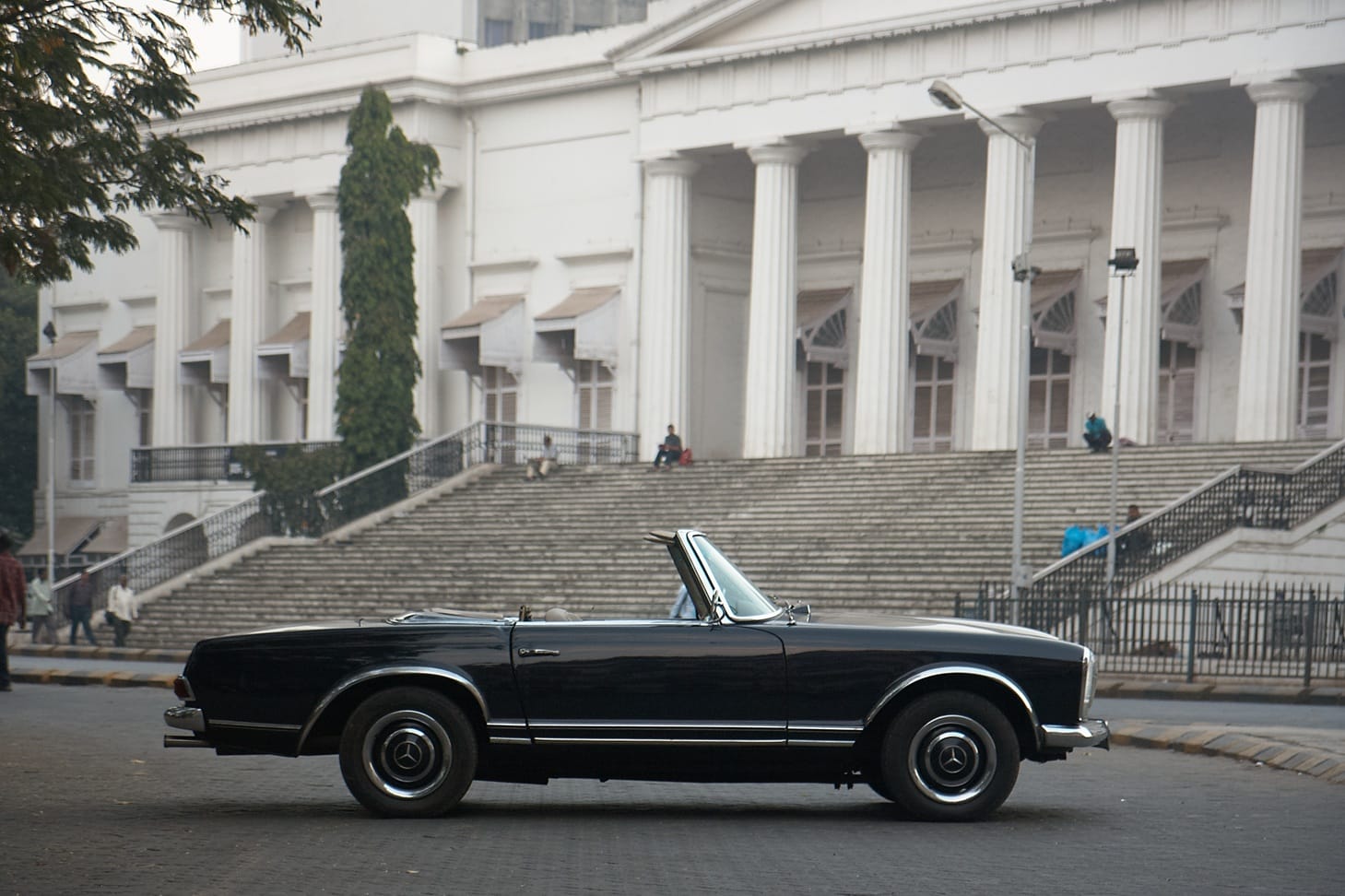
He acquired the car around the turn of the millennium from fellow collector Abbas Jasdanwalla, who had himself bought it from Mumbai architect Noshir Talati. Fali had the car restored and tidied up, but, crucially, he did not turn it into a museum piece. He simply used it, regularly driving his beloved Pagoda around Mumbai alongside the other cars he so enjoyed.
The 230 SL remains with the Dhondy family, as do the other cars in his collection. And perhaps that is the most fitting tribute to Fali. He did not collect cars merely to possess them. He loved understanding them, improving them and, above all, driving them.
For Fali Dhondy, a great car was never meant to sit still.
Comments ()