Tata’s Tiny-tot Tragedy: The Nano
India's misunderstood people's car deserved a far happier ending than reality
Text: Ranjit Lal
Images: Makarand Baokar & Ranjit Lal
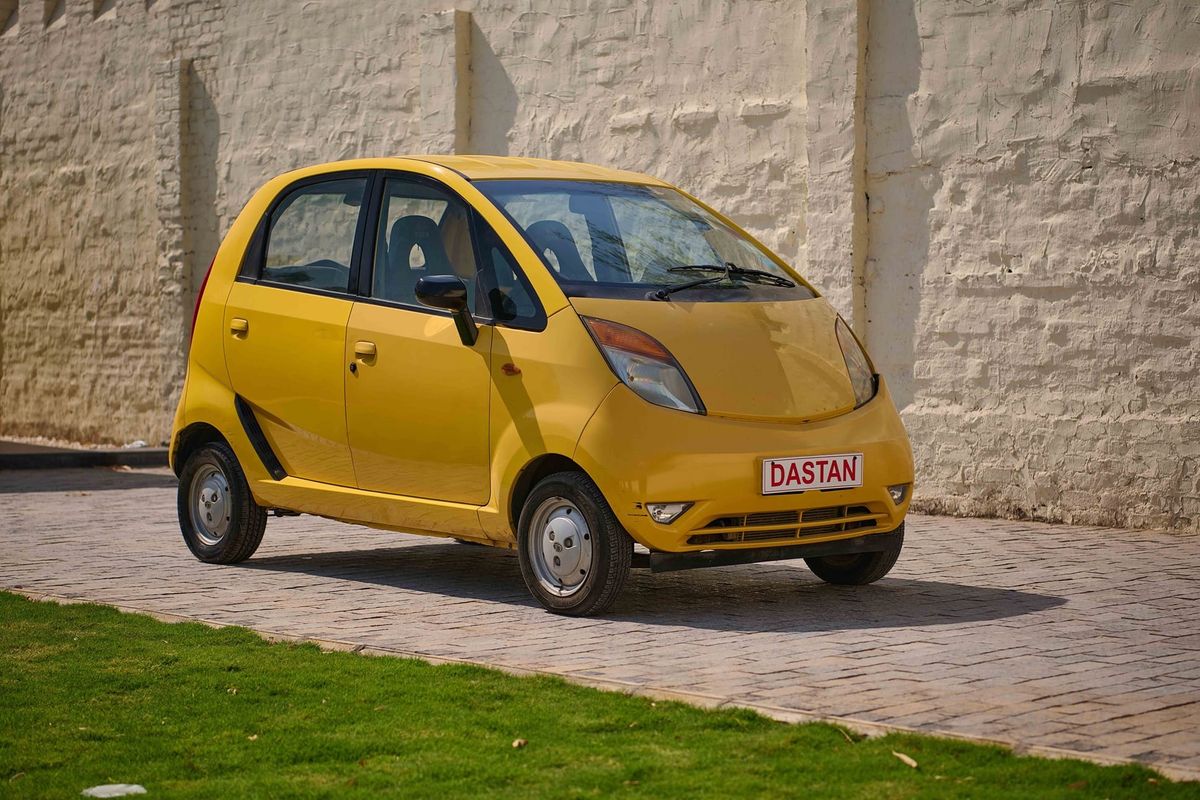
To my mind, no car in India has been subject to a graver injustice than Tata’s tiny Nano – that dinky little car that was supposed to make life safer for all those two-wheeler families that daily risked their lives on our cutthroat roads.
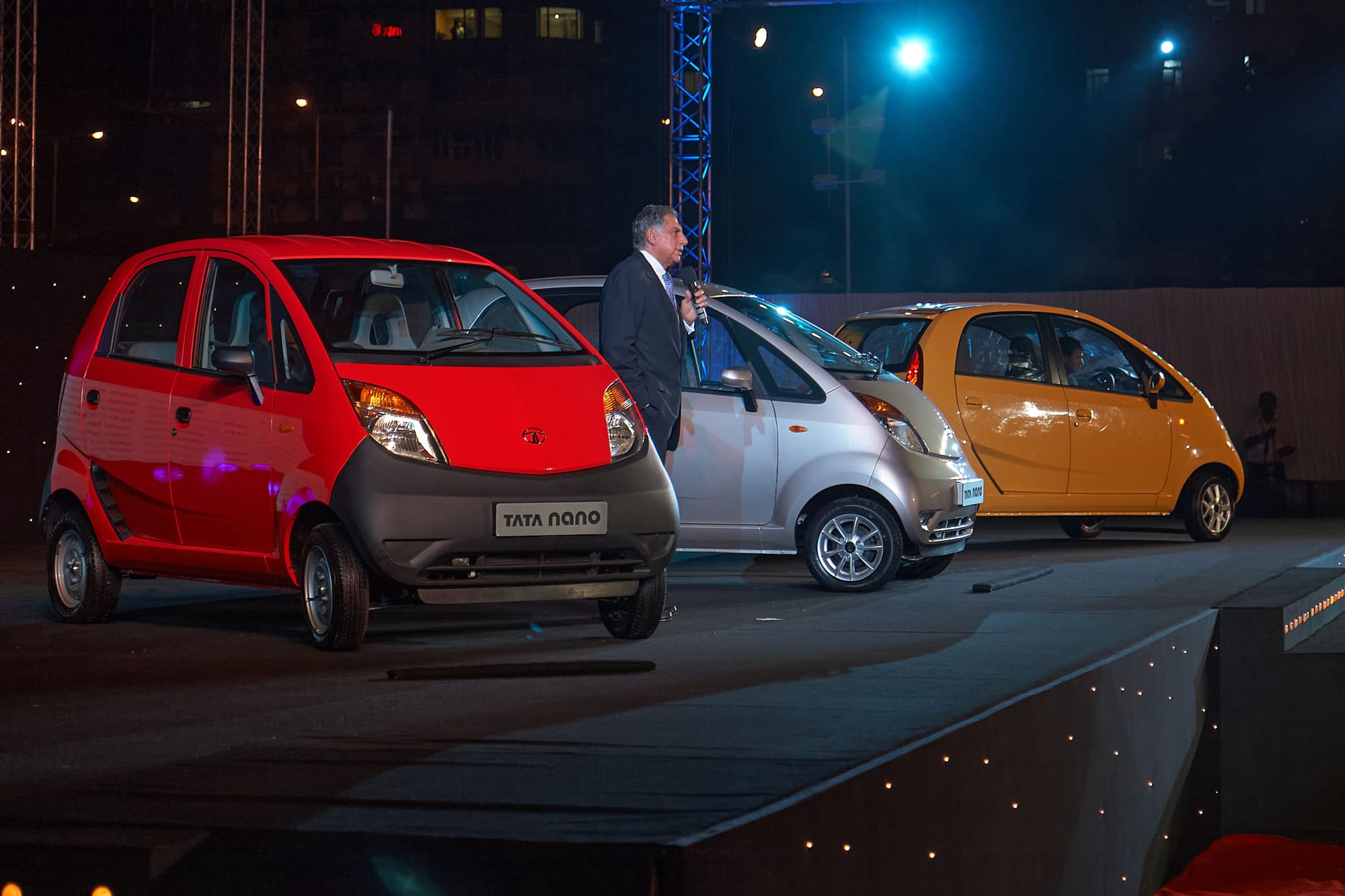
The story goes that Ratan Tata (the moving force behind the Nano) witnessed one such family on a two-wheeler, tumble from their vehicle on a slippery, wet road one evening in Mumbai and wondered how commuting could be made safer for them. A little car, costing not more than Rupees One Lakh, would do the job, he thought. Tata Motors had already put the larger Indica on the road, a sturdy vehicle that was competing with the other little Japanese hatchbacks (the Maruti Zen for example) on the road, and which was the first truly indigenous Indian car to be manufactured in the country. Perhaps a kind of miniaturised version of that would fit the bill…
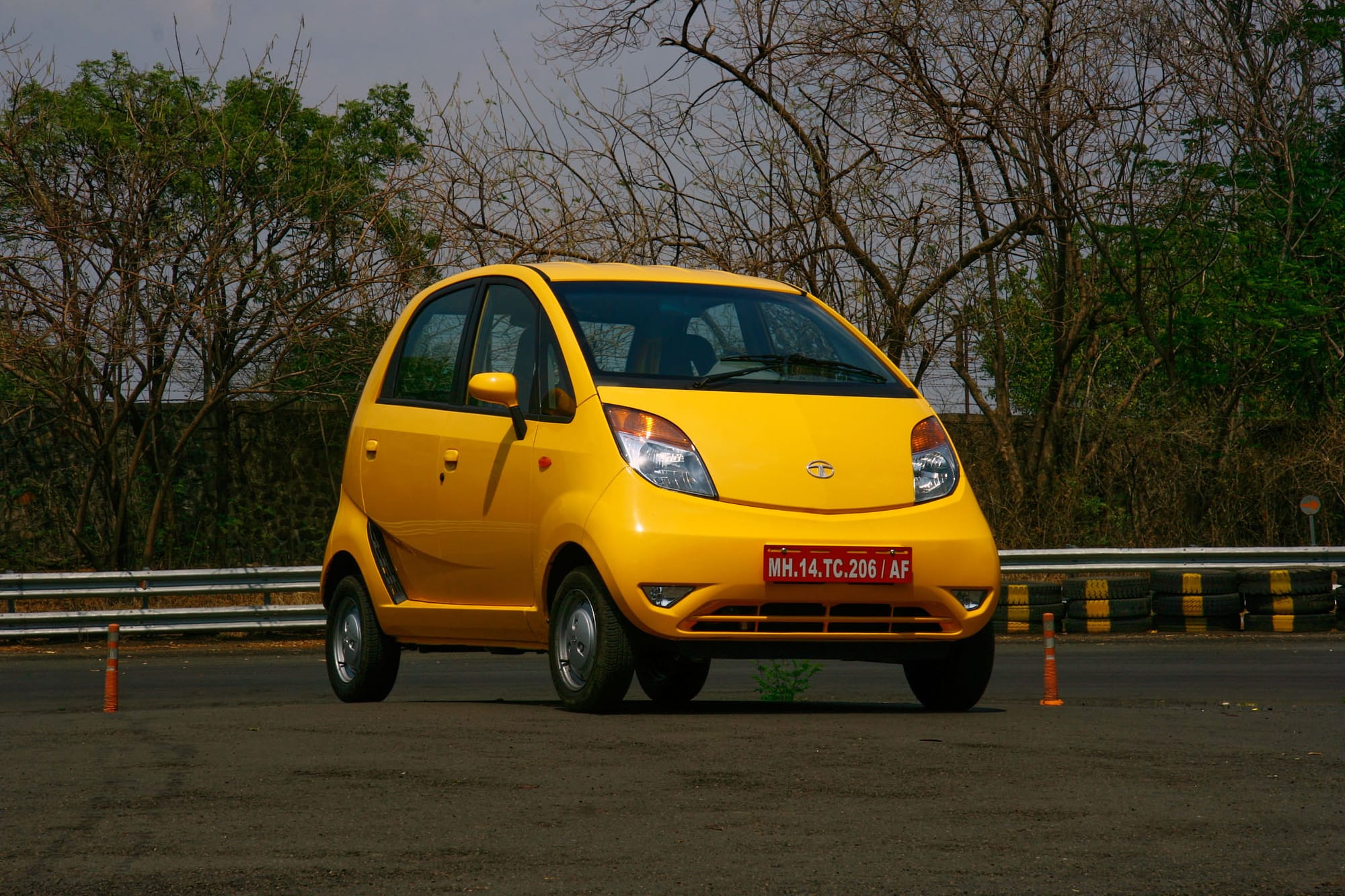
And so, the idea for the Nano (which means ‘one billionth’ – very, very tiny!) was born. I.DE.A of Italy (Institute of Development in Automobile Engineering), which had designed the Indica, was given the job to design the car and came up with the little Nano.
Huge challenges had to be overcome before the first Nano rolled off the assembly line on 10 January 2008. At first, slated to be manufactured in a plant in Singur, West Bengal, the project couldn’t get off the ground, ostensibly due to farmers protesting that their land – for the factory – had been forcibly acquired. This caused frustrating delays, before Tata Motors decided to move the entire plant lock, stock and barrel to Sanand in Gujarat, right across the country, which was no mean feat.
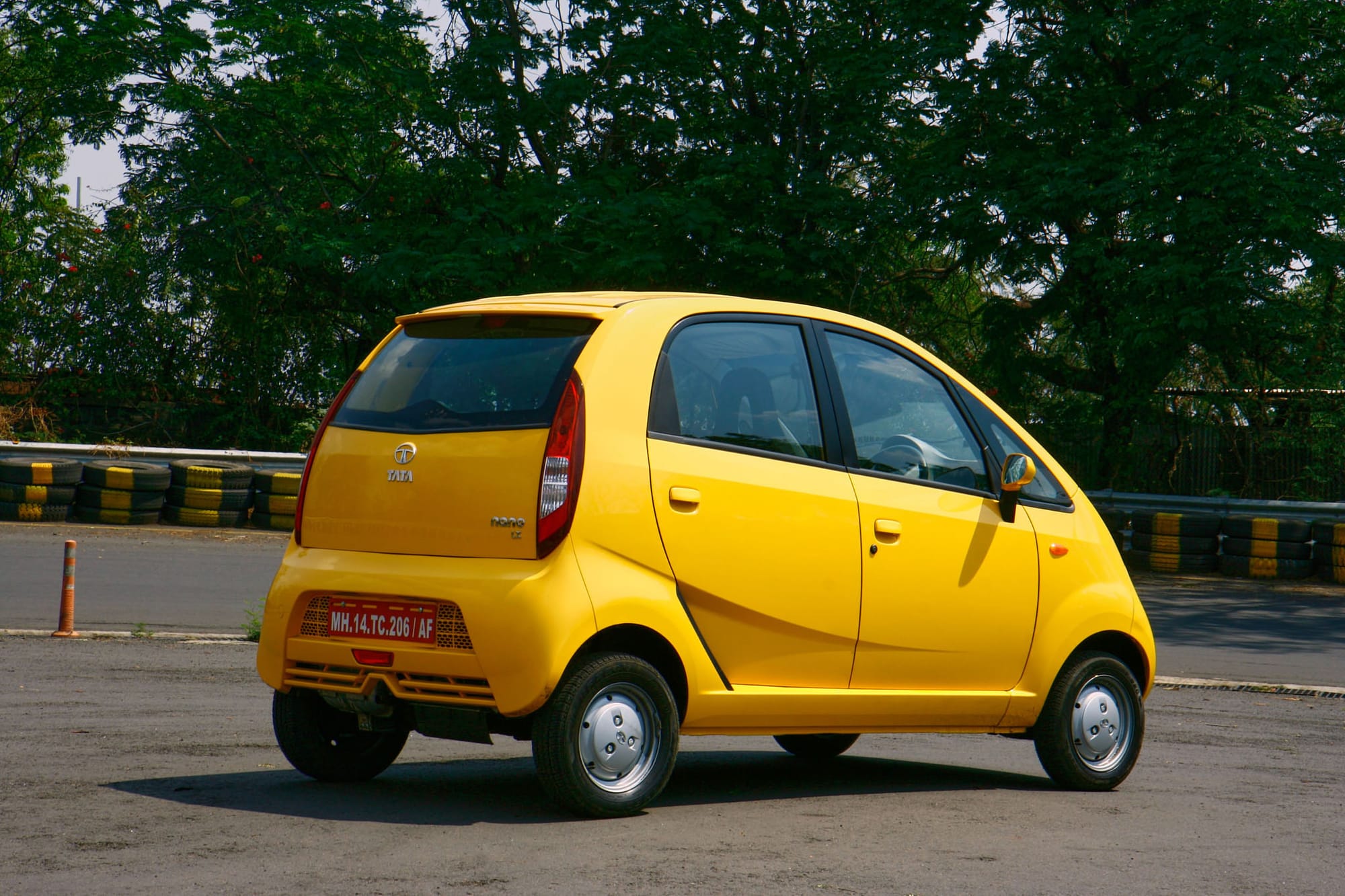
The other major challenge was to keep the sticker price to the promised Rs.100,000. This meant cutting costs in every possible way: hence the little Nano had just one wiper, three wheel lug nuts, one wing mirror, no openable hatch, and no petrol tank filler cap. Even so, only a few cars could meet this vital price point – before inflation as lethal as cancer began taking its toll.
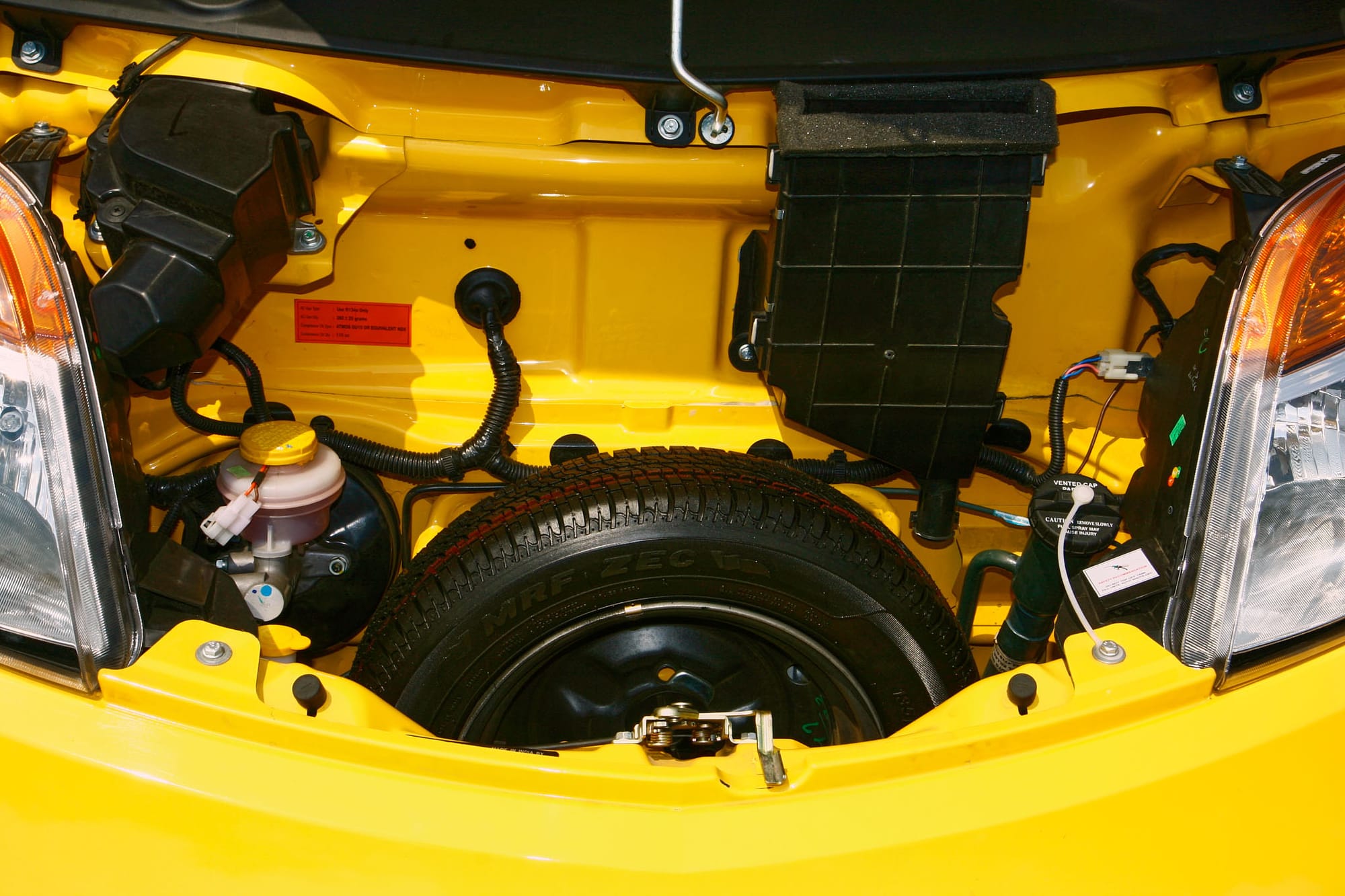
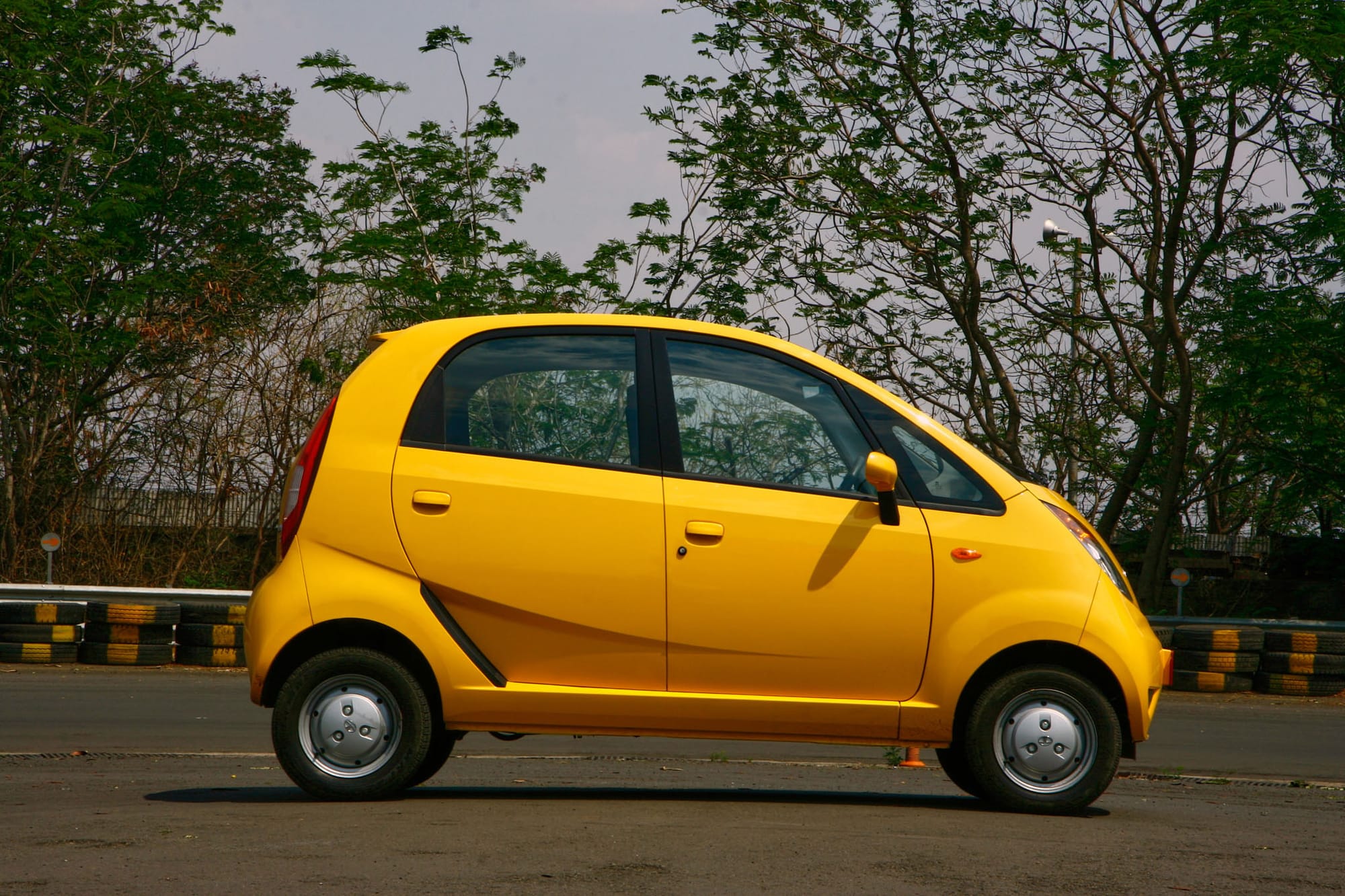
The Nano was powered by a 2-cylinder, 624cc, single overhead camshaft, petrol-injected, rear engine that produced 37bhp (28 kW) @ 5000 rpm and 51 Nm of torque @ 3000-3500 rpm and which could make the little car scamper to a top speed of 105 km/h, for which it took just over 30 seconds. As frugality was the name of the game, it returned over 25 km/l, which could rise to 29 km/l on the highway. It could cruise comfortably at 70 km/h. The car tipped the scales at 650kg and stood poised delicately as a ballerina, at 180cm, on its 12-inch wheels.
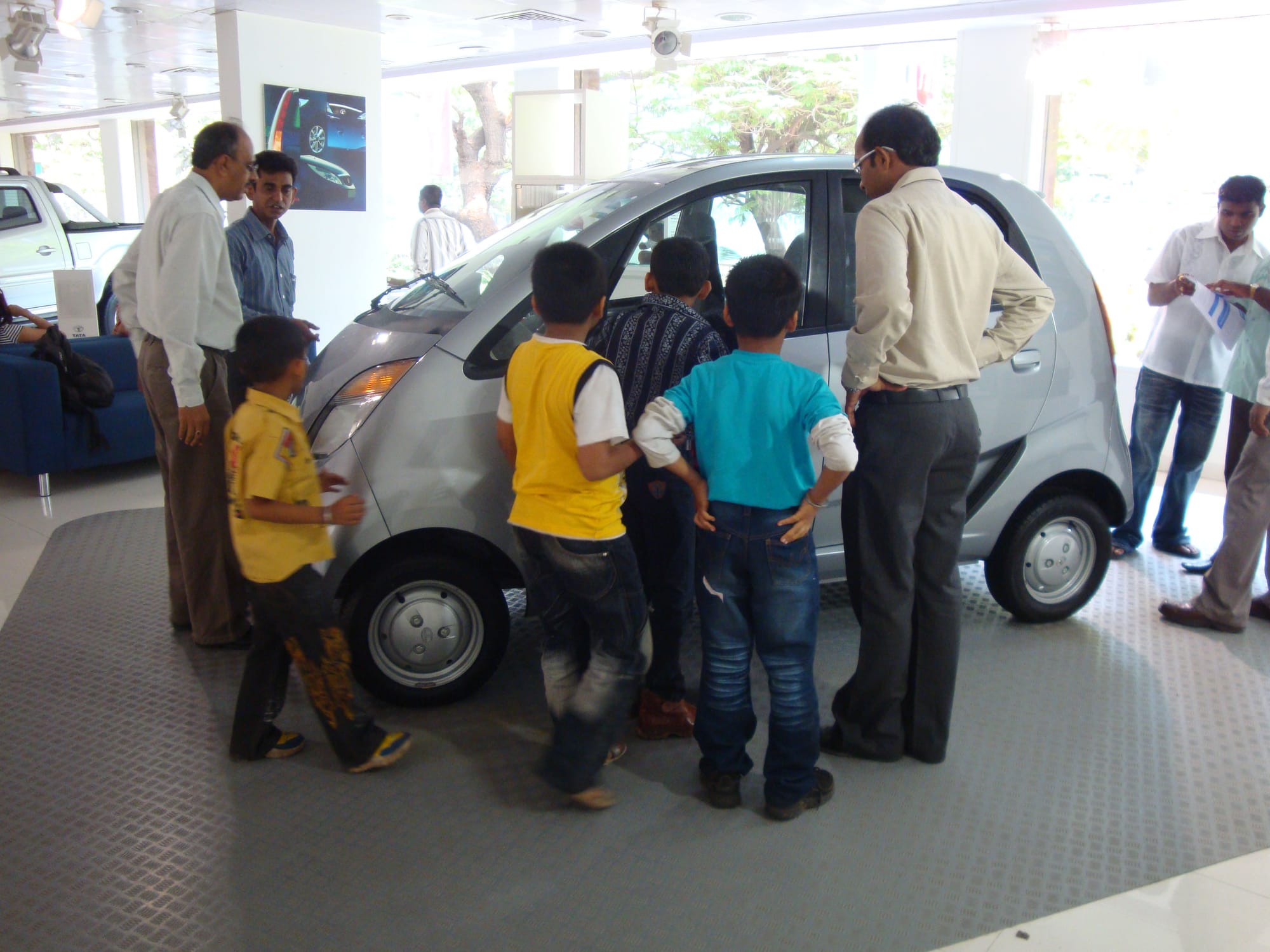
Seemingly, it had much going for it. Its tallboy design and four doors and ample passenger space made it comfortable to get in and out of and travel in. It had a tiny turning circle, perfect for our narrow streets, it was peppy and eager and well planted, it was indeed, as Ratan Tata said, a true ‘people’s car’ and perfect for city driving. Sure, it failed international safety norms and earned zero stars for both adult and child protection in the Global NCAP tests, but it was certainly safer than riding a motorbike or scooter with your precious family on board. Also, it had met the then-in-place Bharat IV fuel emission standards. Ratan Tata was confident it could sell 250,000 units a year and geared the plant for that production figure.
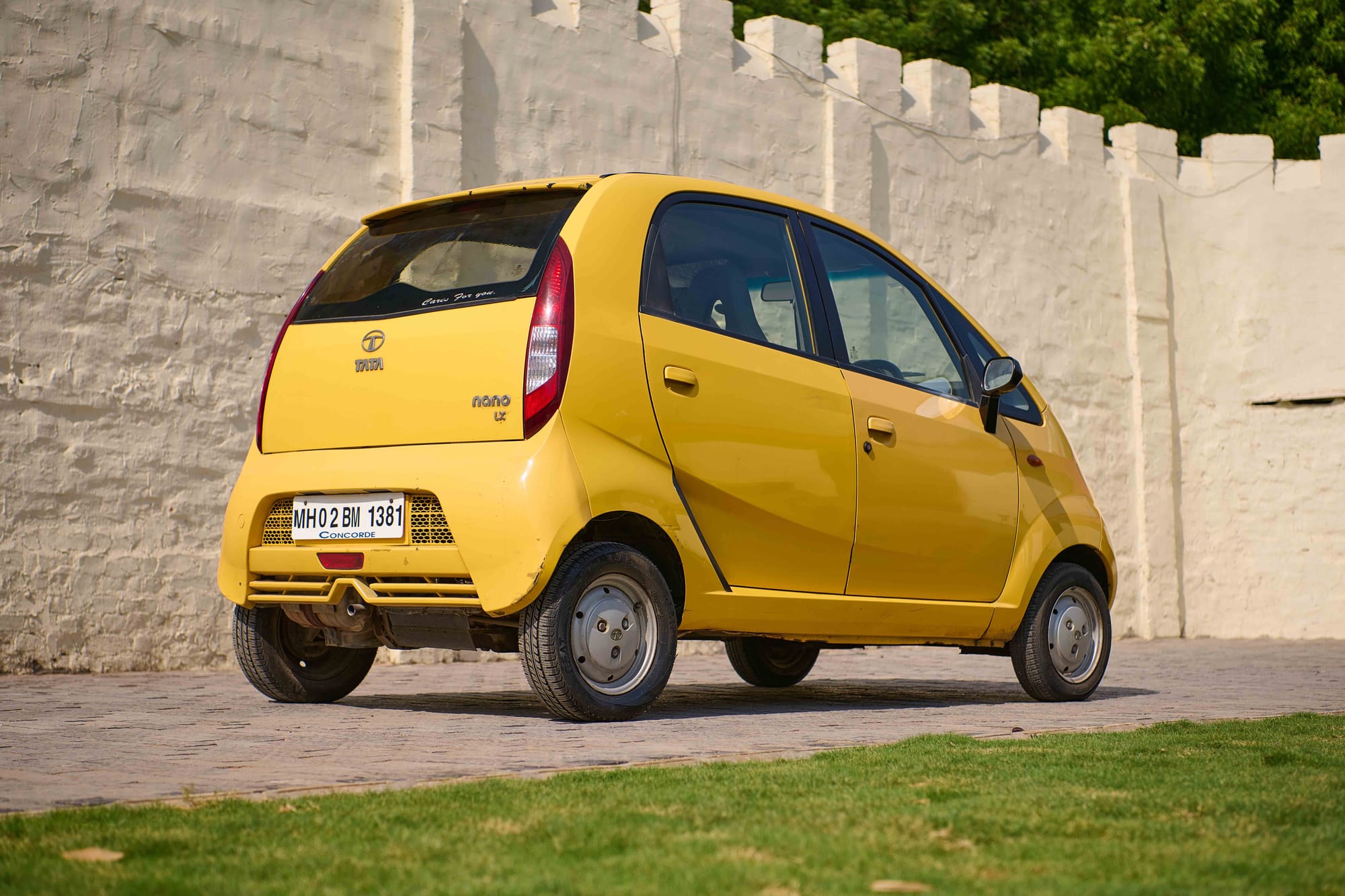
Alas, there were ominous clouds looming over the little car’s prospects and future. For one, due to rising input costs it was proving impossible to keep the price at the much-touted Rs.100,000 and by 2017 the price for a basic Nano stood at Rs.215,000. Secondly, it was being trolled for being a ‘poor man’s car’ and ‘the world’s cheapest car’, and Indians, with their fragile egos and misplaced sense of self (those famous, hypersensitive ‘sentiments’ again!), did not want to be seen behind the wheel of one. Thirdly, a few of the earlier models earned the Nano terrible publicity by catching fire, due to – according to Tata Motors – faulty imported electrical equipment on top of the exhaust system. In spite of evoking a great deal of interest at its launch, sales hovered around the 70,000 figure for the first two fiscal years, and total sales during its lifetime between 2009 and 2018 were around 276,000 units.
Tata Motors did their best to resuscitate their little car. In 2015, they brought out the facelifted Gen X Nano, with an openable rear hatch, a strengthened body, electric power steering, air-conditioning, Bluetooth radio and alloy wheels. As many as 21 versions were offered including one with a 5-speed automated manual transmission.
A 100,000 km, 10-year long-term report I read, featuring a papaya orange 2012 CX version, (with excellent air-conditioning), mentioned some of the joys and travails of owning the car: in the city, it was marvellous, nipping and tucking through traffic, but had relatively heavy steering. On the highways (not its ideal habitat) it was happy up to 70 km/h. It was noisy – the engine, road and wind noise all being contributors to this and during the course of its 10 years, several parts required changing – including the Electronic Management System, the clutch, radiator and fuel pump.
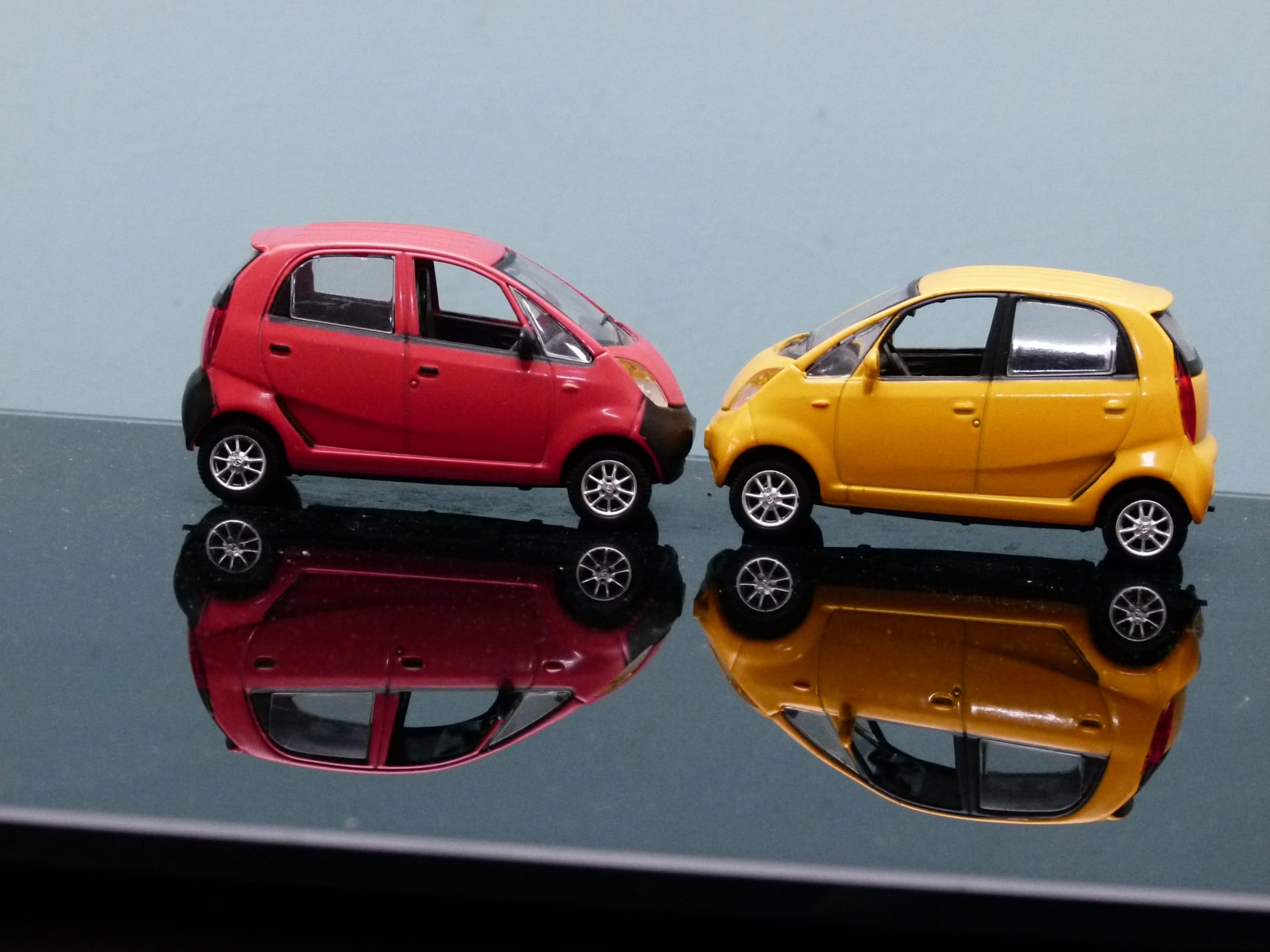
Unwittingly, Tata Motors had driven a spike through the little car’s heart right at its birth by billing it as ‘the world’s cheapest car’ (who likes being called cheap!) and ‘first car’ and should have just let the price do the talking. There is now talk of an electric Nano possibly waiting in the wings – if so, and if sensibly priced and with adequate range, who knows what might transpire? I still get hugely delighted when I see candy-coloured Nanos spritely trundling down our roads – those in Goa are tailor-made for it!
Surely this tiny car deserved the same hosannas as the VW Beetle, the Mini, the Fiat 500 and the Citroën 2CV.
Sadly, it was not to be.
Comments ()