The Beauty in the Beast: The Black Prince
The extraordinary story behind one of motoring's most beautiful masterpieces
Text: Ranjit Lal
Images: Ranjit Lal & Wheelsage
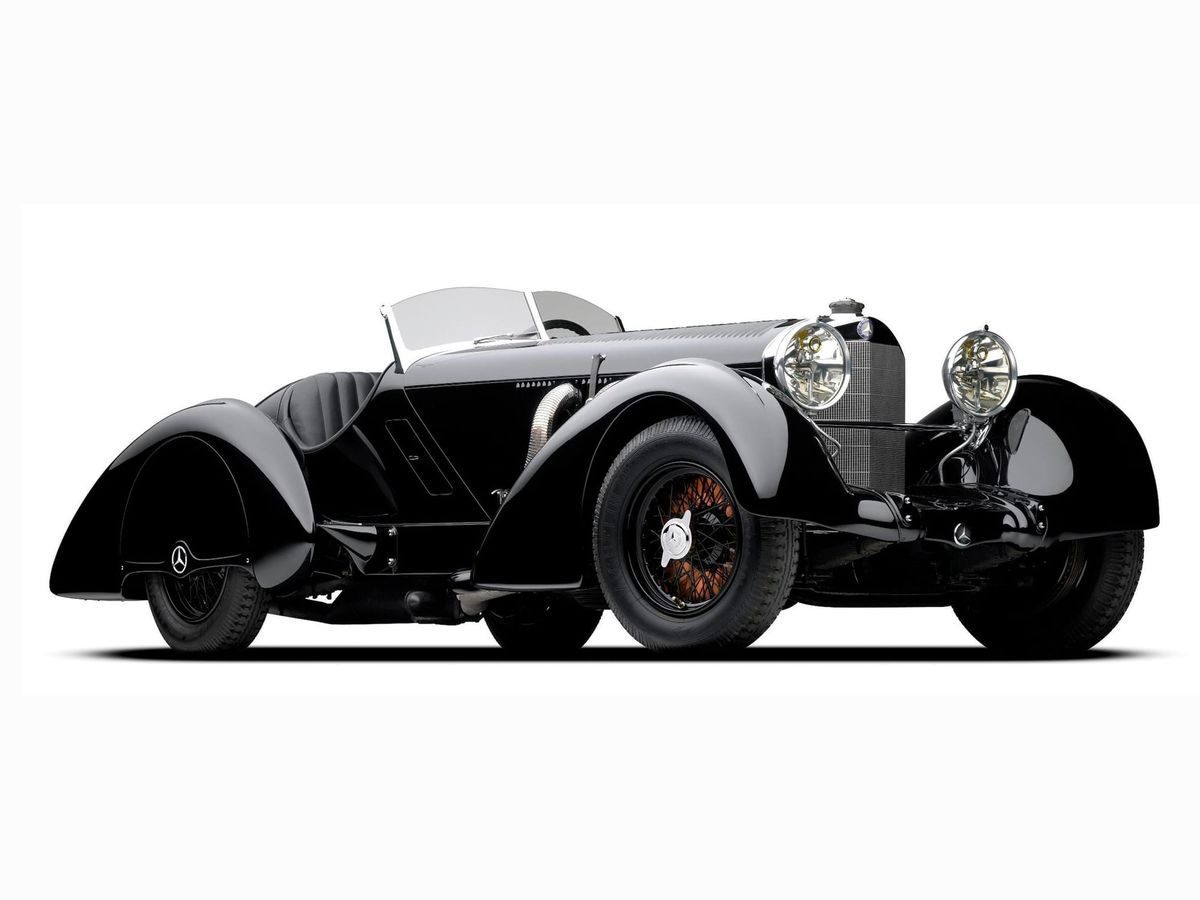
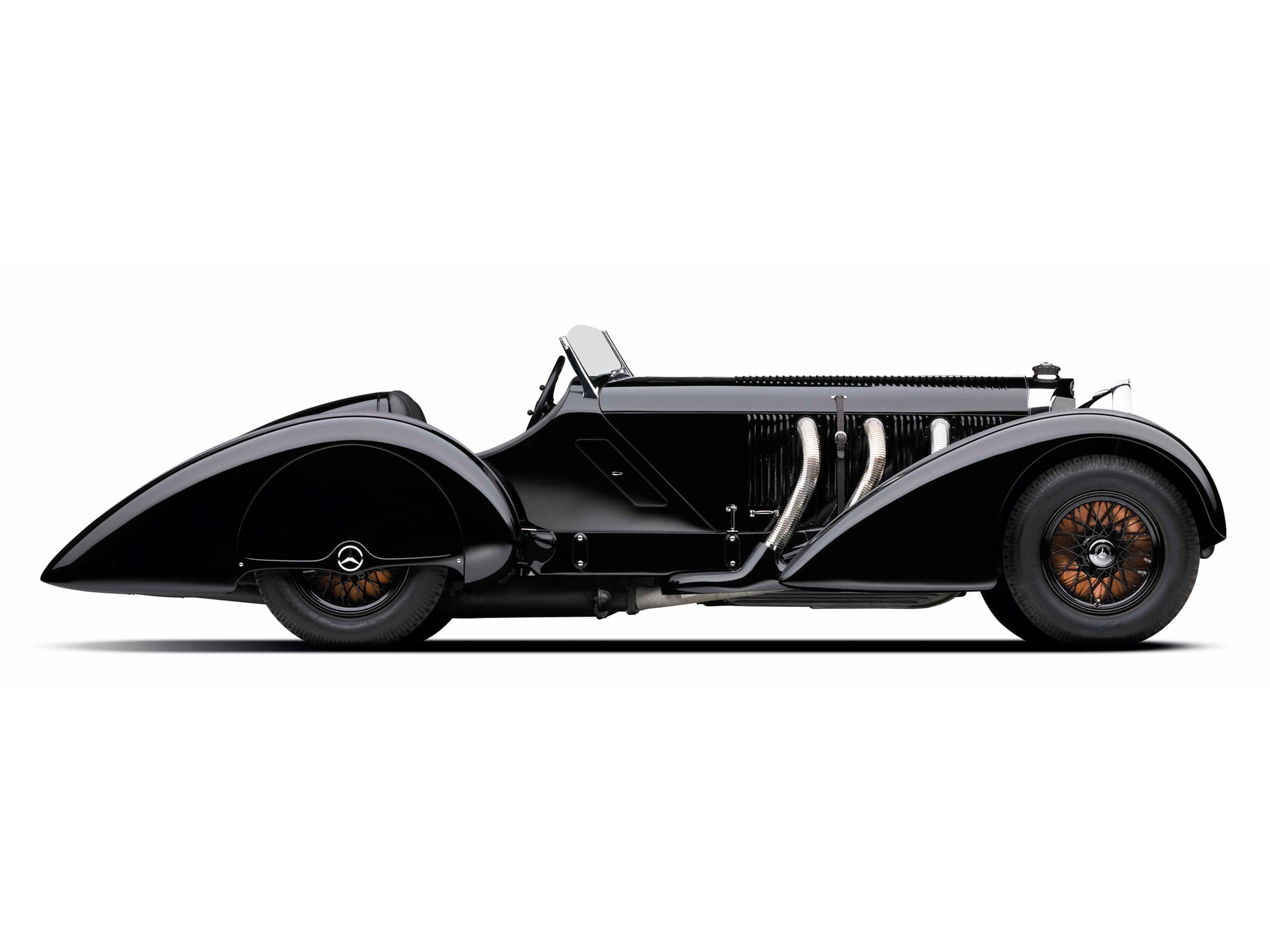
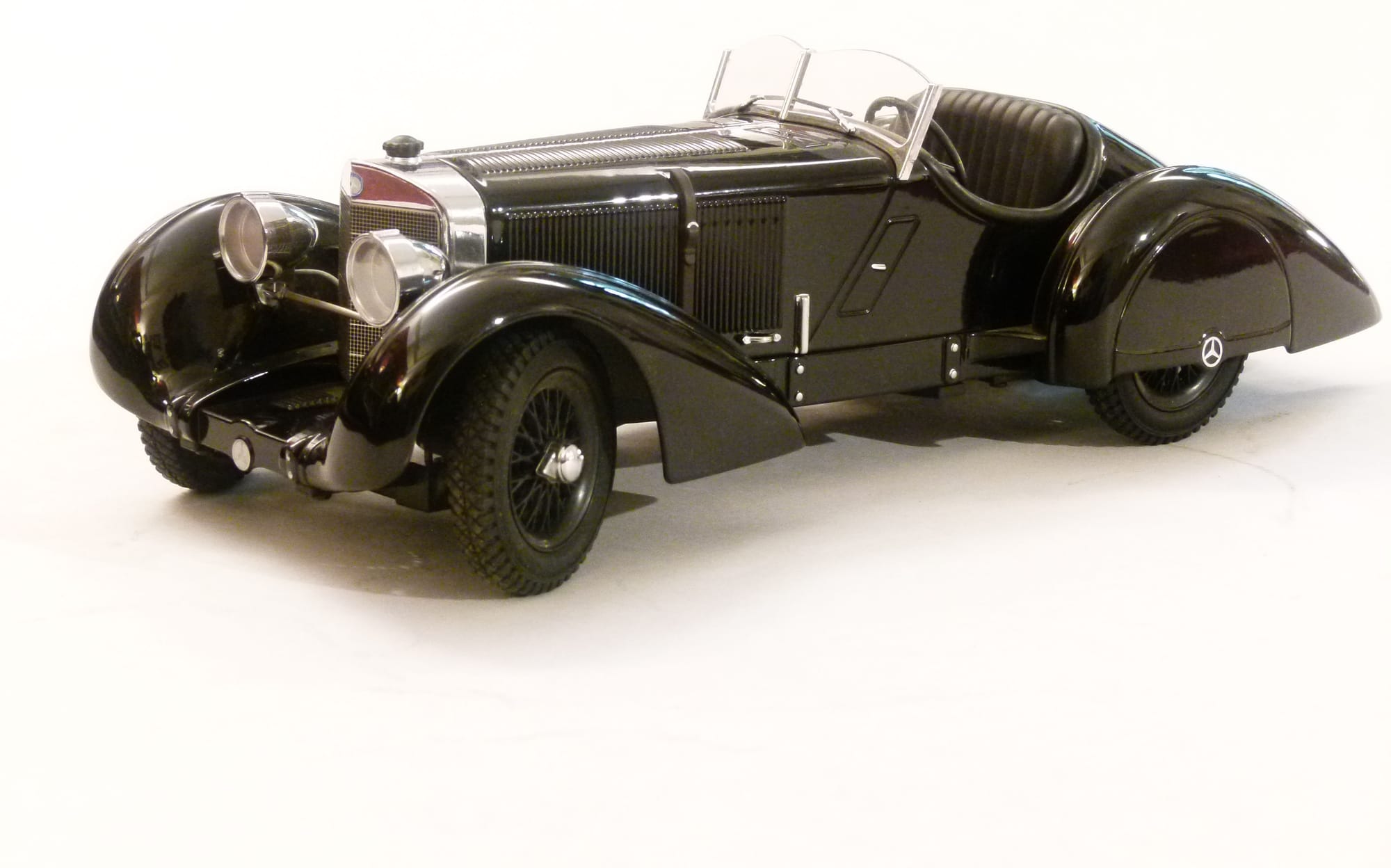
When I first saw the ‘Black Prince’ I knew I just had to have it. Low-slung, mean, a gleaming obsidian black teardrop, with sweeping lines, the 1932 Mercedes-Benz SSK ‘Count Trossi’ version was a paean to aerodynamic streamlining. The SSK series by Mercedes were built between 1928 and 1932, the last model to be designed by Dr Porsche before he left Mercedes to first join Auto Union Racing before forming his own company.
The SSK inherited its genes from the 1927 SK model, wherein ‘S’ stood for ‘sport’ and ‘K’ for Kurzer Radstand, which meant short wheelbase. (In the later, 1934-born extravagant 500K model, the K stood for Kompressor – German for supercharger.)
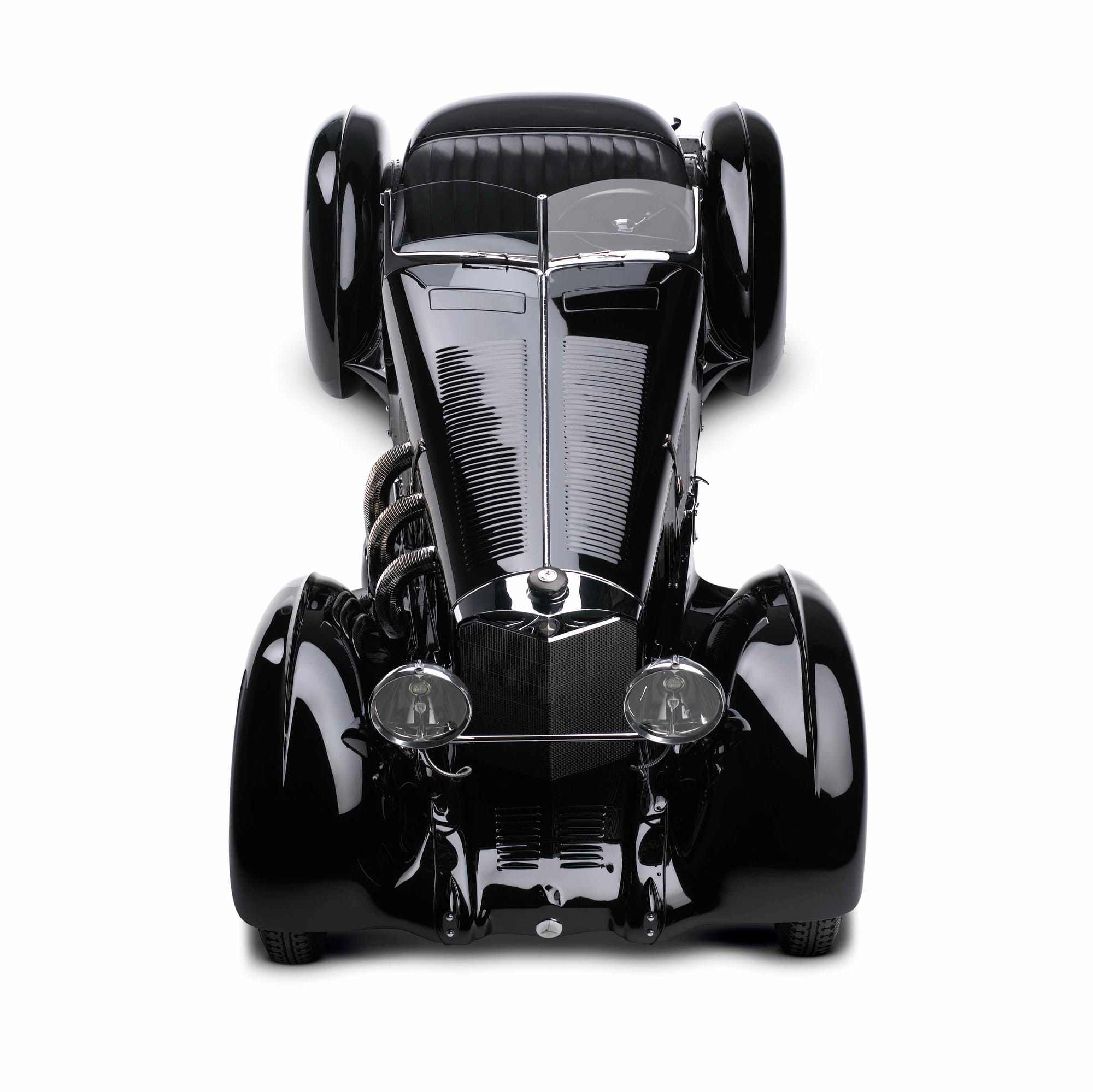
At any rate, the SSK was a ferocious machine. Its 7-litre straight-six engine (six cylinders all in a row), producing as much as 300 hp and a massive 500 lb. ft. of torque, propelled the beast to a top speed of 120 mph or around 200 kmph. To awaken the Roots ‘elephant’ type supercharger (presumably from which the cars got their ‘white elephant’ nickname) you had to stamp down on the accelerator. Take your foot off it and the supercharger would disengage.
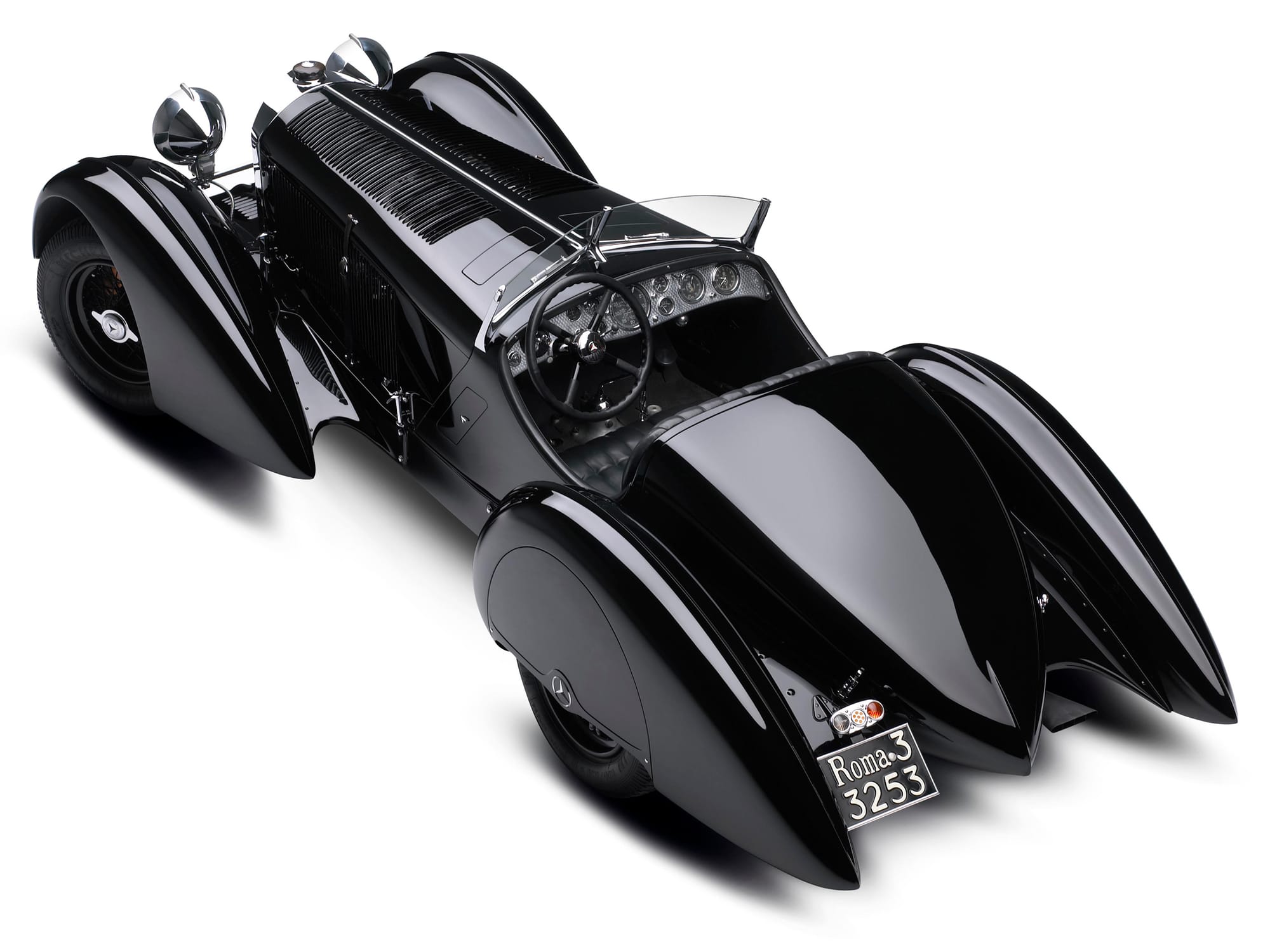
The short wheelbase made the car nimble and easy to handle, a racing driver’s dream. Less than 40 SSKs were apparently built (30 according to one estimate, 42 according to another), so the surviving five odd cars are now worth their weight in much more than mere gold. None more so than perhaps the ‘Count Trossi’ version of 1932, Chassis No. 36038, which came to be known as ‘The Black Prince’.
Count Carlo Felice Trossi was a part of the Nobilta Italiana (the Italian aristocracy). He hailed from a banking family and bankrolled Scuderia Ferrari before becoming its President in 1932. He also was a keen race-car driver (and Grand Prix winner) and constructor, with a love of speed and had obviously inherited the Italians’ inherent flamboyant sense of style and design.
The ‘Black Prince’ was born in 1930, and in chassis form, was sent off to Tokyo to find a buyer. (Most cars in those days were supplied in bare chassis form, so the owners could have the bodies custom-built by specialised coachbuilders).
None was forthcoming and the car was returned to Germany from where it was sent to a dealer, Carlo Saporti in Milan. Its first buyer was Signor Antonio Maino, who fitted it out in a two-seater ‘spyder’ body from Carrozzeria Touring and raced it in the Mille Miglia among other events. In June of 1933 it was bought by Count Trossi, who retired it from racing and completely transformed it.
According to some sources, it is still unclear exactly who designed the gorgeous wave-like lines of the car. One school of thought is that Count Trossi himself roughly sketched out the car’s lines, on the basis of which American (one source says British!) coachbuilder Willy White built the car.
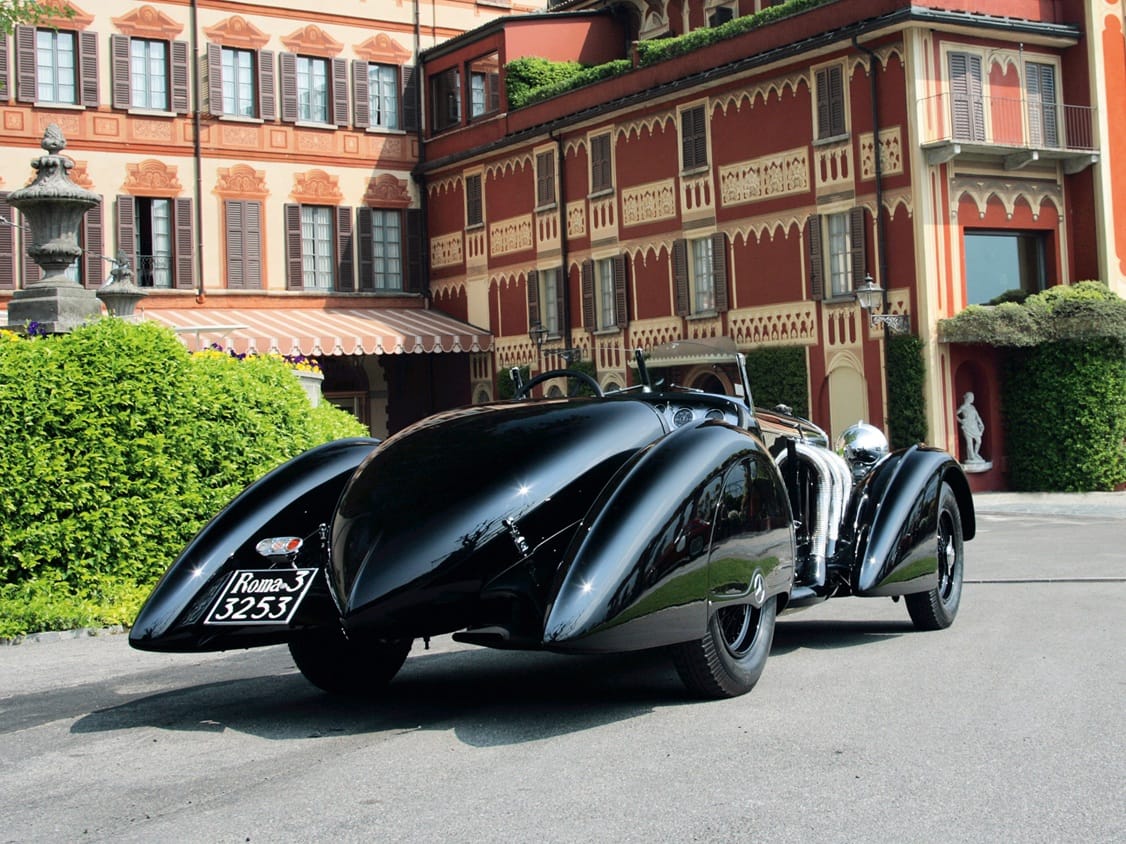
With its sweeping sculpted lines, gleaming black veneer, and tapering teardrop shape, it was a work of art in metal – and one that went like stink. The massive Mercedes radiator is somewhat brutal and business-like, topped with a very heavy-duty looking radiator cap – not the usual delicate three-pointed star of the marque.
Count Trossi, though Italian, was obviously only part-sentimentalist: he sold and bought back his gleaming black beauty several times between 1933 and the time of his death in 1949. It was then bought by one Ricardo Polledo of Argentina, who was unable to get the car into the country, so it ended up with a Manhattan dealer Carlie Stich, in 1952, who passed it on to Carter Schaub, an American collector. Eventually in 1988 it was bought by Ralph Lauren. By now it probably needed a head-to-toe restoration.
That restoration was taken up by Paul Russell & Co. Russell during his research of the car’s history unearthed two sketches of the car; one apparently made by the coach-builder Willy White, and the other by Count Trossi himself. The Trossi family had kept documents (and photographs) of the car, which helped in restoring it back into its original, pristine condition.
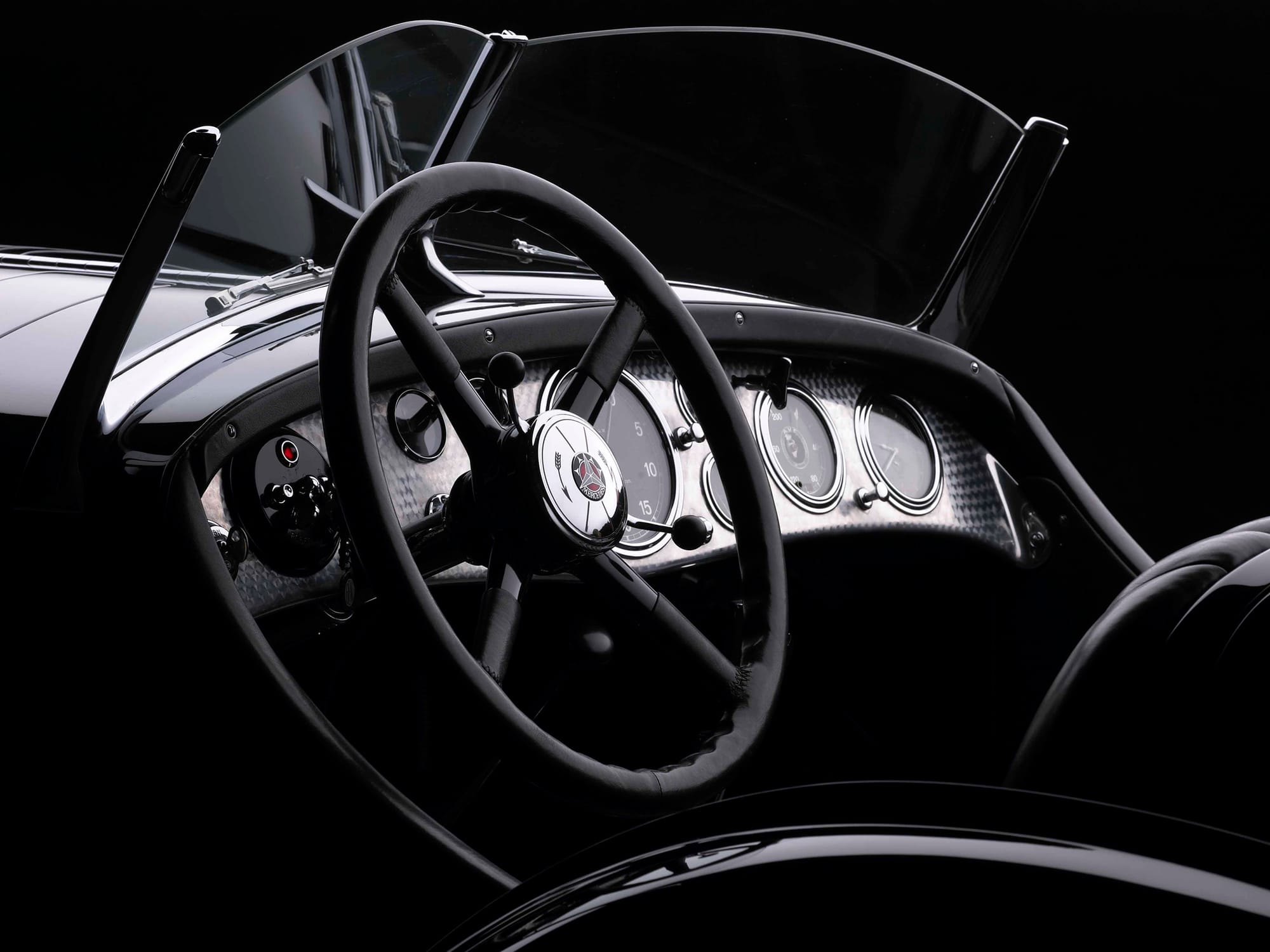
Russell was even able to reunite the engine with the car’s original sump (the tank for the engine oil). A photo of the car in front of the Trossi residence showed the dashboard and tachometer on which Count Trossi had personally hand-painted marks indicating the speed. (According to another version, the speedometer had been marked by Count Trossi to indicate the engine rpm!)
The restoration was completed in 1993 after two years and 5000 work-hours. That same year it was re-introduced to high society and promptly won the Concours d’Elegance at Pebble Beach. In 1995 it took the Meadows Brook Hills Concours d’Elegance. In 2007, the car won ‘best in show’ at the Villa d’Este Concours.
There’s a purposeful stance the car takes as it squats on my desk, among other models of its time, gleaming darkly; you almost expect it to roar into life; to hear the supercharger scream and the raucous snarl emanating from the three huge coiled exhaust pipes emerging like pythons from the engine as the two-ton missile rockets away.
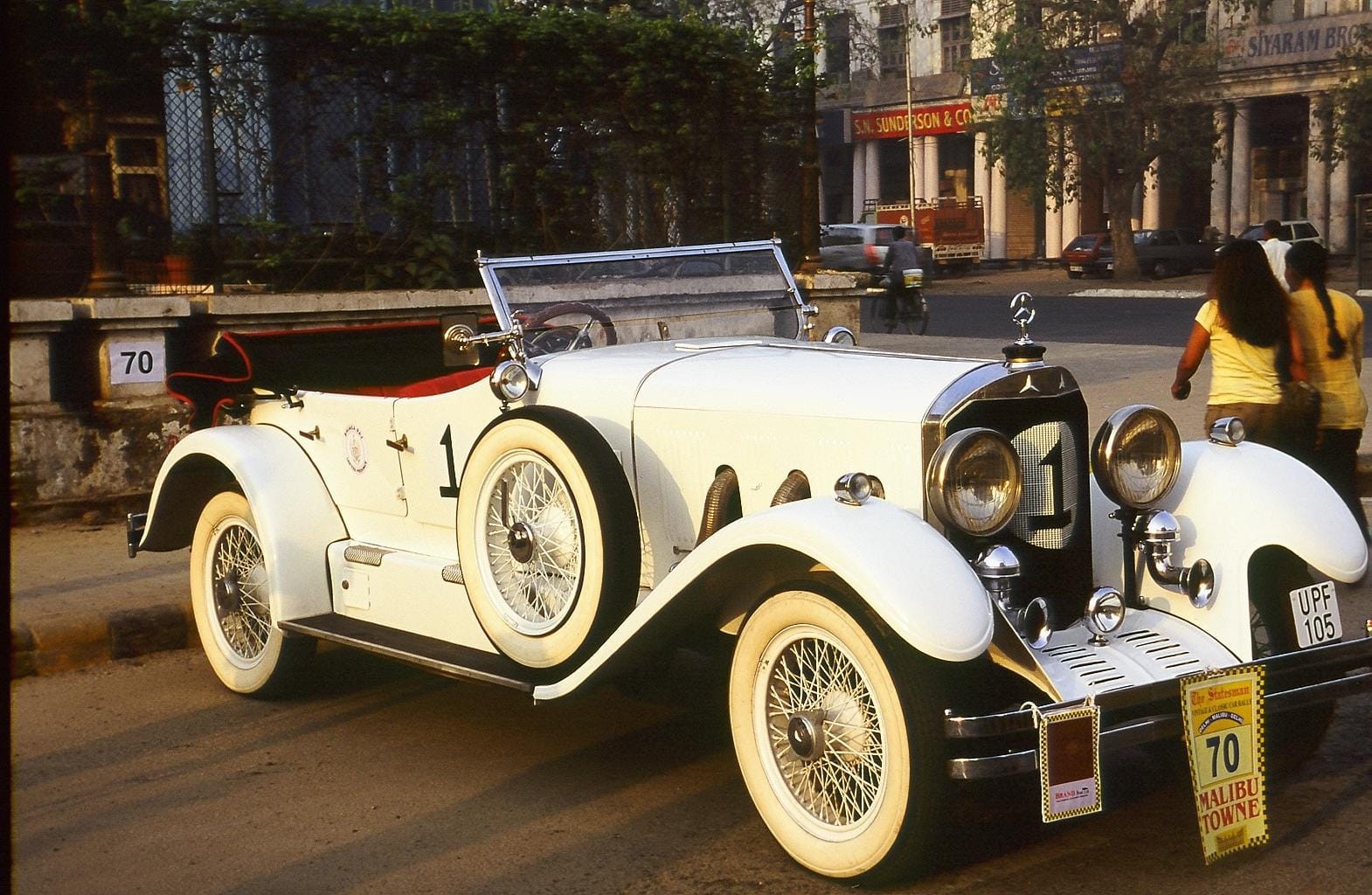
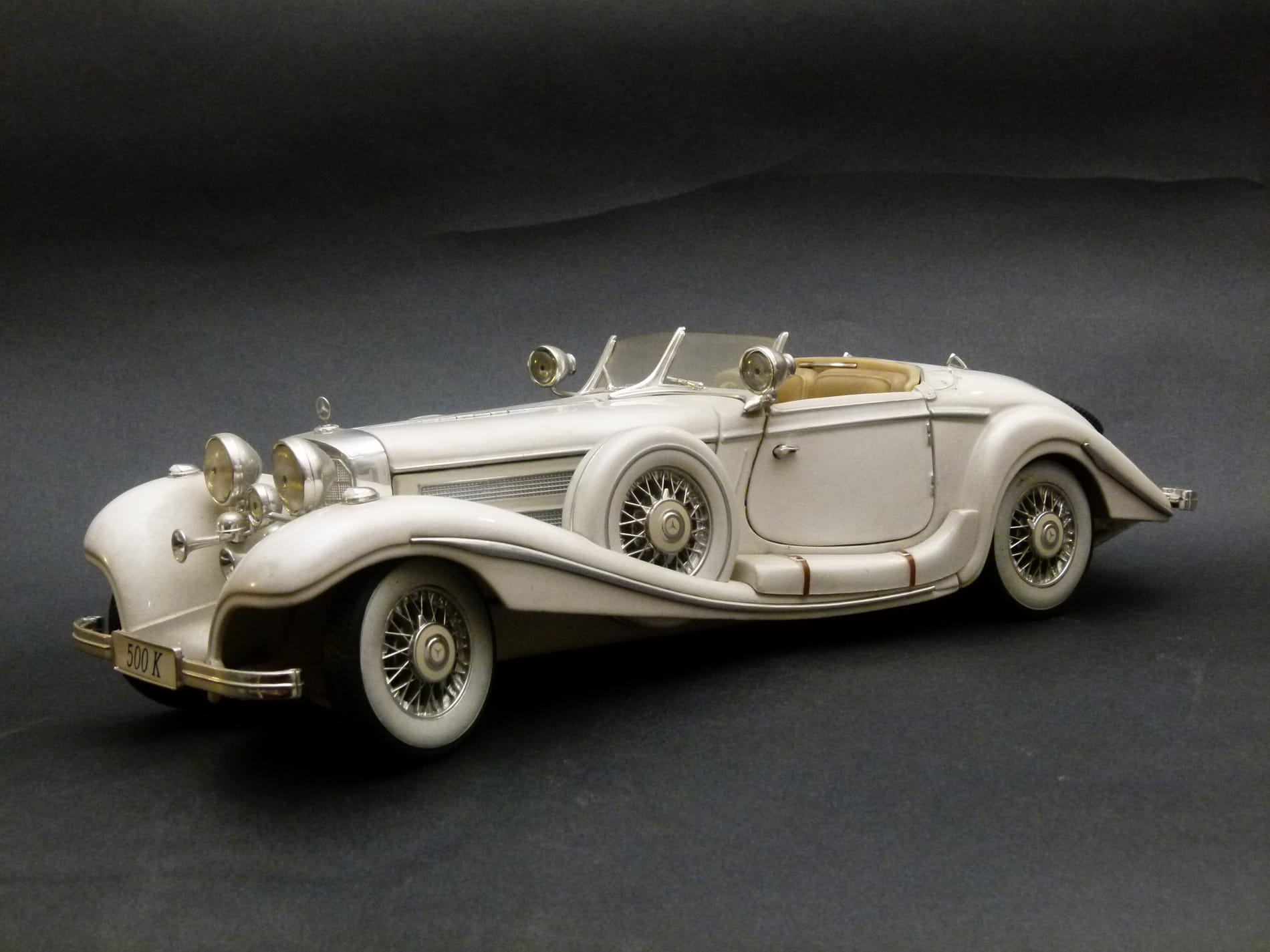
Parked next to it is its larger and more extravagantly opulent (almost dowager like) sister-car, the powerful 1936 Mercedes 500 K finished in creamy-white and with a ‘mother-in-law’s seat’ to die for and all the bells and whistles! Even so, it looks like the Black Prince would have her for breakfast!
Comments ()